
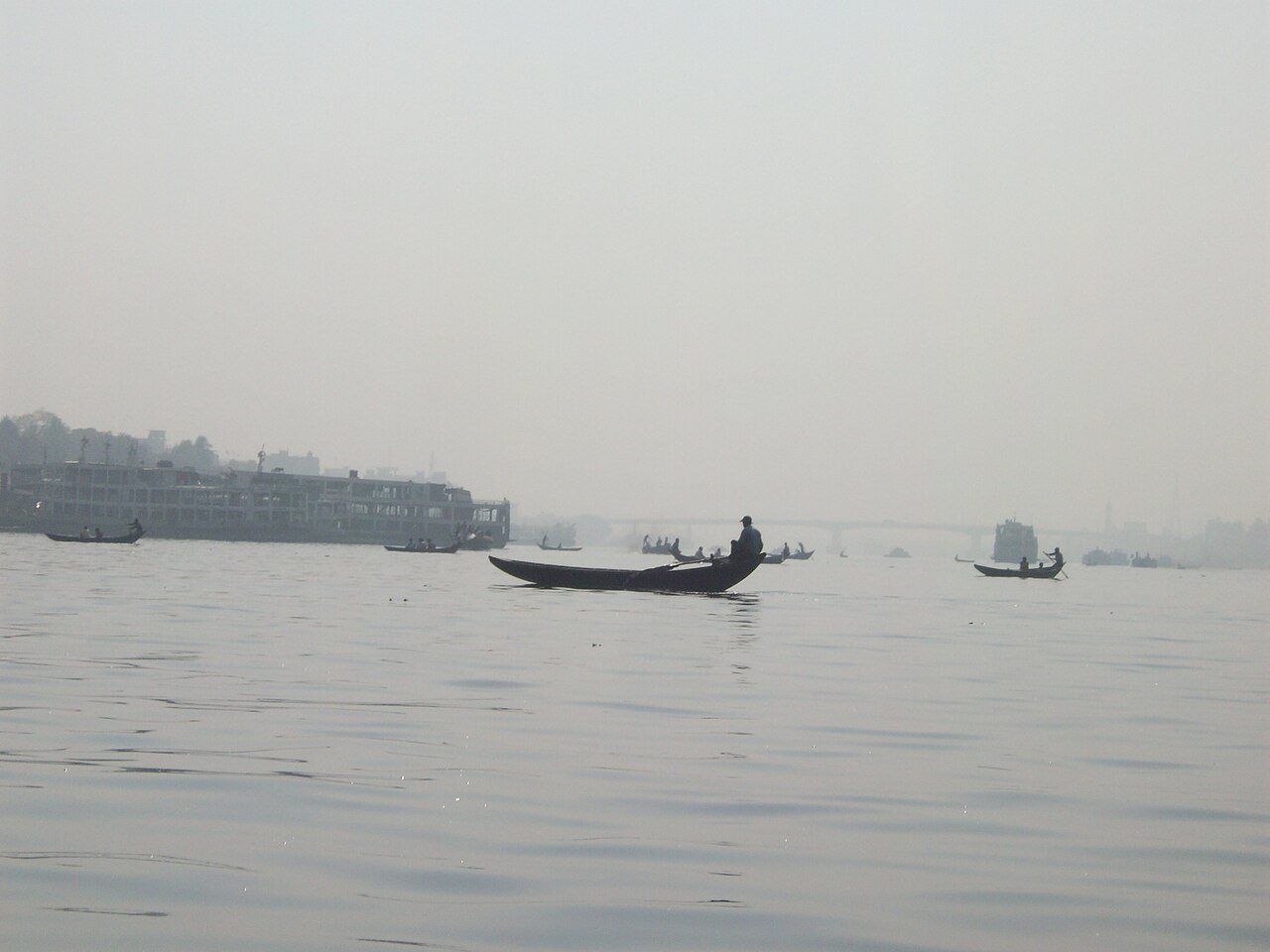
The government has decided to stop approving any new public or private structure within 100 metres (300 feet) of both banks of the rivers around Dhaka. The decision was taken at a meeting of a central cell at the Prime Minister's Office to prevent river pollution, protect navigability and make room for the proposed Inner Circular Road and circular waterway. The directive takes effect immediately, with the housing and public works ministry and the capital development authority, RAJUK, chiefly responsible.
According to the state news agency BSS, the policy decision to create a 100-metre protective belt on both banks was taken on 4 October at a meeting of the central cell on controlling pollution of Dhaka's rivers, canals and drains, removing waste and developing the circular waterway.
Shahinur Alam, RAJUK's member for administration and finance, said the 100 metres will be measured from the boundary pillars set by the Bangladesh Inland Water Transport Authority (BIWTA). Because maintaining riverbanks and removing illegal structures fall to BIWTA, the ministry, RAJUK and BIWTA will work together, and final guidance will be set at an inter-ministerial meeting soon.
Md Mobarak Hossain Majumder, joint director of BIWTA and the officer in charge of Dhaka river port, said that under a 1950 law the protected strip has been 50 metres (150 feet) from the river boundary, within which building needed BIWTA's permission. The government is now widening it to 100 metres, and BIWTA will act once the formal circular is issued.
Urban planners say that, if carried out properly, the decision will strengthen Dhaka's green-blue network, the linked system of parks and green spaces with rivers, canals and water bodies, helping to cool the city and reduce waterlogging. Professor Akhter Mahmud of the urban and regional planning department at Jahangirnagar University told BSS the step should have come long ago, since buildings stop water draining away in the monsoon. He recommended marking the boundary on both banks and creating public spaces and green belts there.
Sharif Jamil, member secretary of the environmental group Dhorittri Rokkhay Amra (Dhora), welcomed the decision as a good signal for keeping rivers free of encroachment, but said much tougher steps are needed to stop encroachment and pollution altogether. Experts say the measure will last only if boundaries are set scientifically, taking account of rivers' natural courses and seasonal changes, with regular monitoring and long-term maintenance.
The report is by a Dhaka Mail staff correspondent, with information from BSS.
Photo: David Brewer / Wikimedia Commons (CC BY-SA 2.0)
Source: Dhaka Mail



Comments
(0)