
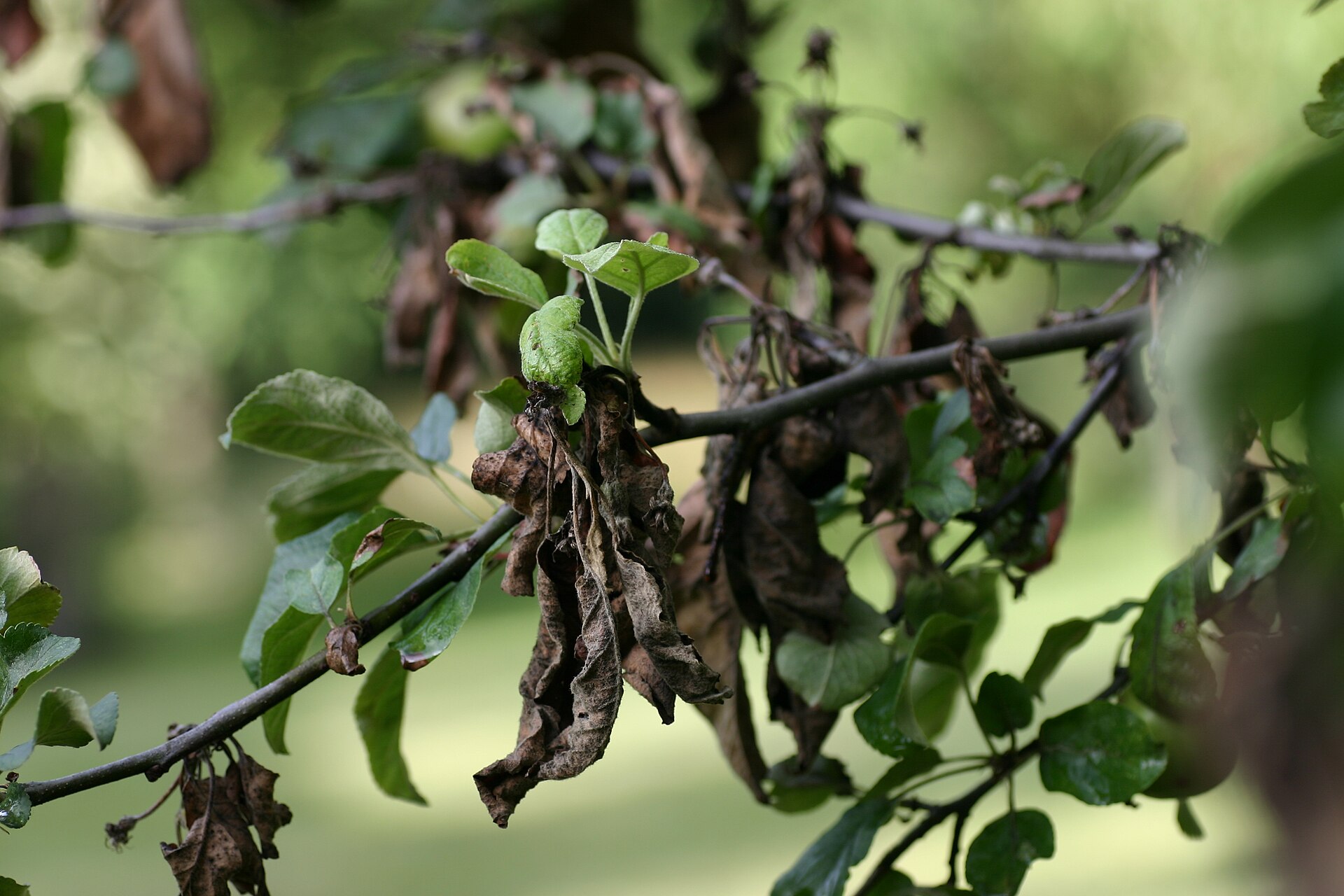
A Canadian fruit company says it has produced the first gene-edited apple tree able to tolerate fire blight, the bacterial disease that kills apple and pear trees and that growers have fought for more than two centuries with pruning saws, bloom sprays and antibiotics. Okanagan Specialty Fruits, the British Columbia company behind the non-browning Arctic apple, announced the tree on 24 November 2026 in a release datelined Bolzano, Italy, a day before the Interpoma apple fair opened in the same city.
The company says the tolerance was built with a platform it calls GenShield, that its plant genomics laboratory in Saskatoon, Canada, switched off the genes that make apple and pear susceptible to the disease, and that it is now preparing to license its first disease-tolerant apple variety to growers in North America. What the announcement does not contain is almost as important as what it does: no variety name, no trial data, no regulatory filing and no date when a grower could plant one of these trees.
What the company says it changed inside the tree
Fire blight is caused by the bacterium Erwinia amylovora. It enters through blossoms, young shoots or wounds, moves down the shoot, and in a bad year can girdle limbs and kill a tree. Okanagan Specialty Fruits, usually shortened to OSF, describes its approach as removing the tree's own contribution to that process: the pathogen will still enter and cause a small lesion at the point of infection, the release says, but the disease will not spread, because the genes that allow the bacteria to persist in a tree after the first infection have been knocked out.
That is a susceptibility-gene strategy rather than a resistance-gene strategy: instead of adding a gene that fights the bacterium, the breeder disables a gene the bacterium needs. OSF has not said which gene or genes it edited, how many lines it made, how the trees performed when they were deliberately inoculated, or in which varieties the edits sit. Its GenShield page sets out a four-step pipeline, from identifying a grower's problem to evaluating selected trees "through greenhouse and field trials to assess performance and stability" and then licensing, but publishes no results from either stage.
"As apple growers, we know first-hand the difficulty and expense of trying to prevent and control fire blight through pruning and chemical programs," Neal Carter, OSF's chief executive and co-founder, said in the release. "GenShield solves that problem because the fire blight tolerance is built directly into the tree itself." Carter added that the company chose fire blight first "since fire blight is a major problem for apple and pear growers".
Two outside voices appear in the same release, both favourable and neither presenting independent test results. Max Teplitski, chief science officer of the International Fresh Produce Association, an industry body, said gene editing "gives breeders another way to help a crop withstand pests and diseases so more of what growers plant can make it to the table, with fewer inputs". Walter Guerra, who leads the Institute for Fruit Growing and Viticulture and is deputy director of Italy's Laimburg Research Centre, said the development comes as the European Union updates its rules to allow certain gene-edited crops. The announcement was picked up on the day by the trade title Fruit Growers News, and otherwise travelled through press-release distribution.
A disease with no cure, and a bill that is hard to pin down
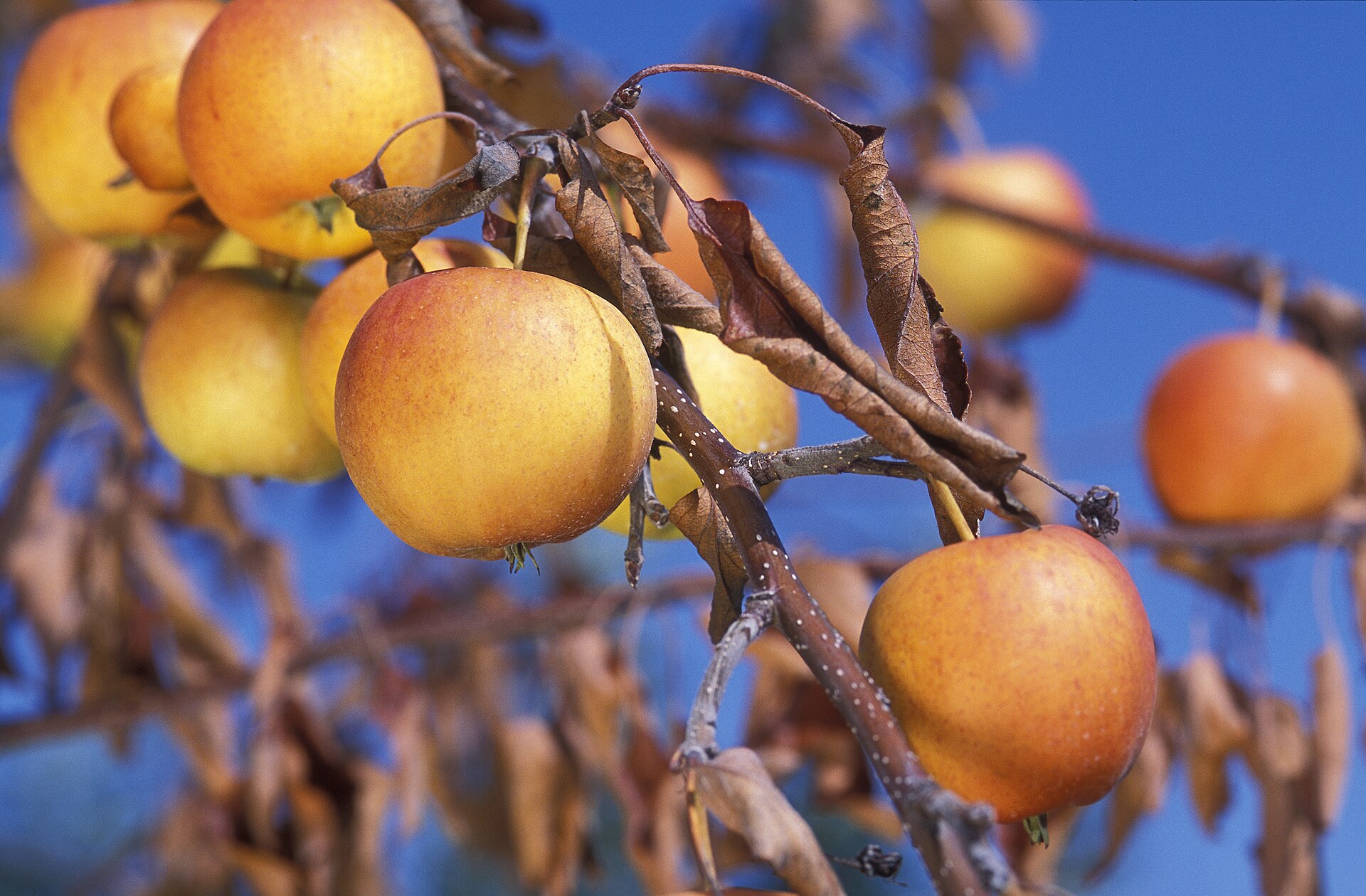
The scale of the problem is not in dispute, though the numbers vary with who is counting. OSF's release calls fire blight the costliest disease in apple and pear, puts global damage at an estimated 3.2 billion to 5.6 billion US dollars a year, says it can cut yield by up to 40 per cent and states flatly that it has no known cure. Those are company figures, with no source given.
Independent estimates are older and smaller in scope. The European and Mediterranean Plant Protection Organisation, in its datasheet on Erwinia amylovora, cites crop losses and control costs in the United States of more than 100 million dollars a year, attributing the figure to Norelli and colleagues in 2003, and control costs plus compensation for destroyed plants in Switzerland of about 35 million euros over the fourteen years from 1989 to 2003, from work by Duffy and colleagues in 2005. Extension services at Cornell University and Virginia Tech use the same figure of more than 100 million dollars a year for the United States, and Virginia Tech puts the cost in the north-eastern states alone at 8 million to 16 million dollars in 2016.
The part of OSF's statement that stands up without qualification is the absence of a cure. The plant protection organisation's datasheet says no adequate chemical or other treatment exists that can clear the pathogen from plant material without destroying the tissue, which is why the standard answer to an outbreak is a saw. Growers cut out infected shoots, and when a young tree is girdled they pull it. In the United States they also spray antibiotics during bloom. Cornell reports that streptomycin-resistant fire blight, first identified in California in 1971, has since turned up in Washington, Oregon, Missouri and south-western Michigan. Michigan State University's extension guidance notes that kasugamycin is not cross-resistant with streptomycin and so works against resistant strains, but cannot stop an infection once the bacteria reach the nectaries, and that oxytetracycline only holds the bacteria in check rather than killing them.
What the published science already shows, and what it does not
OSF's claim to a world first should be read against a published record that is six years old. In a paper in Plant Biotechnology Journal, dated March 2020 and published online in October 2019, Valerio Pompili and colleagues at the Fondazione Edmund Mach in Italy reported knocking out the apple susceptibility gene MdDIPM4 with CRISPR/Cas9 in two commercial cultivars, Gala and Golden Delicious. The gene matters because the bacterium's DspA/E effector interacts with the MdDIPM4 protein. The team screened 57 transformed lines, reported an editing efficiency of about 75 per cent, inoculated seven edited lines carrying a loss-of-function mutation and found what the paper calls a highly significant reduction in susceptibility compared with controls. Sequencing of five likely off-target sites showed no mutations.
The same paper also solved a problem that matters for regulators. Its construct carried a heat-shock inducible FLP/FRT recombination system designed to cut out the inserted DNA that carried CRISPR/Cas9, the marker gene and the recombinase itself, so that the finished plant keeps, in the authors' words, a minimal trace of exogenous DNA. The removal was quantified in six plants and confirmed by sequencing in one line.
Those results are strong, and their limits are equally clear. The work was done on young plants under controlled inoculation, not in a commercial orchard over several seasons, and transformation efficiencies were low, 1.55 per cent in Gala and 2.55 per cent in Golden Delicious. A knockout that reduces susceptibility in a greenhouse has still to prove that it holds up against the bacterial populations of a real orchard, and that the edited tree carries no cost in fruit quality, vigour or tolerance of other diseases. The paper points to knocking out two susceptibility genes at once as the next step, noting that Campa and colleagues in 2018 had silenced a different one, HIPM, and obtained around a 50 per cent reduction in symptoms.
A second route is being tested in France. Writing in Horticulture Research in October 2025, Alexandre Bodelot and colleagues at INRAE and the University of Angers reported that apple lines in which a family of defence lectins called MdAGG had been edited out could no longer mount a full defence, confirming that those genes matter, and that lines in which one of them was placed under a promoter which switches on quickly when Erwinia amylovora arrives resisted the disease significantly better. Their conclusion is about timing rather than brute force: the defence works when it comes early.
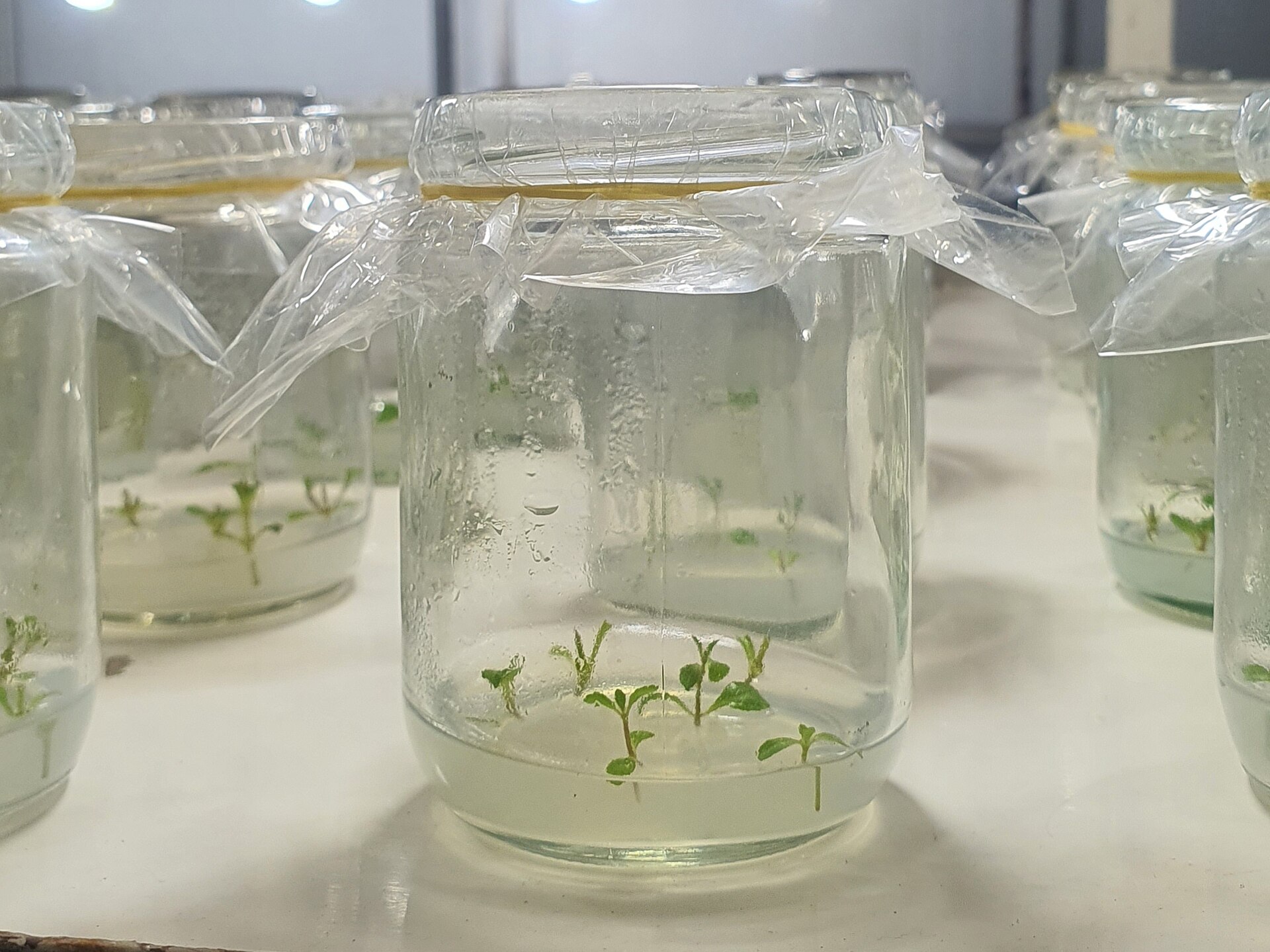
So laboratories have had gene-edited apple plants with reduced fire blight susceptibility for years. What OSF is claiming is narrower and, in commercial terms, larger: a platform aimed at delivering the trait in varieties growers actually plant, and a licence it says it is preparing to offer in North America. Neither the release nor the company's site carries data that would let a grower or a regulator judge how well the trait works.
The approvals the announcement does not mention
A tree in a greenhouse is not a tree in an orchard, and the gap between them is filled with paperwork. In the United States the ground moved against developers in December 2024, when a federal court in California vacated the Department of Agriculture's 2020 SECURE rule. The department reverted to its pre-2020 framework under part 340 of its regulations, and the exemptions it had granted for engineered plants whose changes could also have been produced by conventional breeding were set aside. A Congressional Research Service report in March 2026 lists a further interim final rule, "Regaining Lost Efficiencies for Products of Biotechnology", as expected during 2026. OSF knows the older route well: its non-browning Arctic apples were cleared through the petition process, with a determination of non-regulated status in 2015.
Europe is moving the other way, which is why the company's release quotes an Italian researcher on the point. The European Union has adopted a regulation on plants produced with new genomic techniques, announced by the Council in spring 2026 and completed by the European Parliament in June 2026, according to a report that month from the United States Department of Agriculture's Foreign Agricultural Service. Category 1 plants, judged equivalent to conventionally bred varieties, leave the GMO regime and carry no consumer label, though seed and other reproductive material must be labelled. Category 2 plants stay inside the GMO rules, are excluded from organic production, and member states may refuse to allow them to be grown. The Council expects the framework to apply from the middle of 2028, so a European grower could not plant a category 1 apple on the strength of the new rules before then.
Canada's position, and which of these doors OSF intends to walk through, are not addressed in the announcement.
Where fire blight is spreading, and where it has not arrived
Fire blight travels, and its history explains why a tolerant tree would matter well beyond Washington State and British Columbia. The plant protection organisation's datasheet traces it from its first description in the United States in 1780, to New Zealand from 1920, to England in 1957 and from there rapidly through western Europe and the Middle East, and to Egypt in 1964, its first record in Africa. Its distribution list today includes Algeria, Morocco and Tunisia, and in Asia Iran, Iraq, Israel, Jordan, Lebanon, Saudi Arabia, Syria, Kazakhstan, Kyrgyzstan and parts of China.
The newest front is Central Asia, and the detail matters. In a paper in Phytopathology Research in November 2024, Fabio Rezzonico, Saykal Bobushova and colleagues report that the disease reached Kyrgyzstan and Kazakhstan almost simultaneously in 2008, appeared in Georgia's Mtskheta-Mtianeti region in 2016, and that their survey provides the first confirmed records in Uzbekistan, Tajikistan and China. They attribute the arrival to the massive import of seedlings from countries with a fire blight history, combined with weak quarantine controls. What is at stake there is not only orchards: wild apple and pear are dominant forest species in the mid-altitude mountains of Kyrgyzstan and Kazakhstan, and the authors describe those populations, including the wild apple Malus sieversii from which the cultivated apple descends, as now endangered by the disease's expansion.
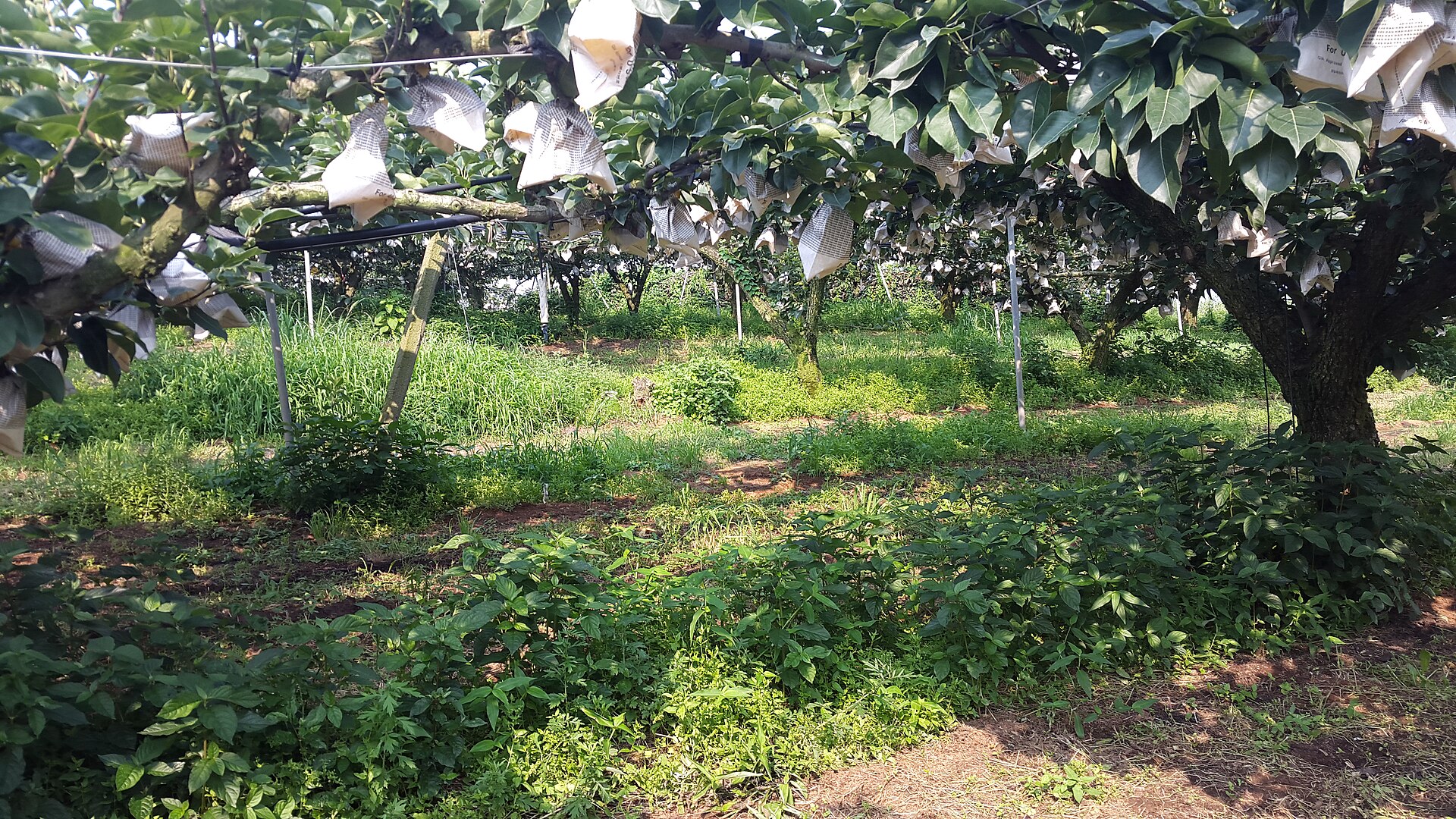
South Korea shows what a first outbreak costs. In an official pest report filed with the International Plant Protection Convention in December 2015, the country's Animal and Plant Quarantine Agency recorded Erwinia amylovora in 1,092 trees, 768 pear and 324 apple, across 46 orchards, and all 46 were destroyed: 34 in Anseong, 11 in Cheonan and one in Jecheon. The agency drew infected areas within 100 metres of an infected tree, control areas within two kilometres and regulated areas within five, destroying every host plant in the first ring and spraying in the others. Its assessment names plants for planting as the pathway and says introduction through commercial fruit is unlikely.
That last sentence is the one worth reading twice in South Asia. The plant protection organisation's database records India as absent with an unreliable record, and carries no entry at all for Pakistan, Bangladesh or Nepal; Japan and Taiwan are listed as absent. For apple growers in Himachal Pradesh, Jammu and Kashmir or Gilgit-Baltistan, and for the nurseries that supply them, the lesson of Central Asia and Korea is about quarantine on imported planting material rather than about a tolerant variety. For Bangladesh, which grows almost no apples and buys them in, it is a question for the plant quarantine wing rather than for farmers.
What a tolerant tree would be worth, and who could afford one
If the trait works in the field, the value to a grower is straightforward and large. It is the bloom sprays not applied, the labour not spent cutting out strikes in June, the young trees not pulled and replanted, and the years of lost production after a replant. OSF's own figures show the exposure: it puts its Othello orchard in Washington at about 1,250 acres carrying nearly two million trees, so losing even a tenth of a block to a hailstorm followed by an infection is a serious capital event.
The harder question is who gets the trait. OSF's model is licensing, to growers in North America first and then to variety owners who want it in their own apples and pears, and the varieties that attract licence deals are the ones with commercial weight behind them. Growers in Morocco, Egypt, Lebanon or Kyrgyzstan, who have the disease, are not the first market for a licensed North American variety, and their orchards often hold older varieties and seedling rootstocks that no variety owner will pay to edit. A platform that can be pointed at any variety, which is what OSF says GenShield is, could serve them later. Nothing in the announcement says it will.
Tolerance is also not immunity. OSF's own description, a lesion at the point of infection that does not spread, means an edited orchard still carries the bacterium, and a tolerant block beside a susceptible one, or beside the hawthorn and cotoneaster hedges that the plant protection organisation names as important sources of inoculum, remains part of the region's disease problem. Fire blight management, as the datasheet describes it, is a system of certified clean planting material, monitoring, forecasting and sanitation, and a tolerant tree would change one part of it rather than replace it.
The tests the tree still has to pass
Three things would turn this announcement into news a grower can act on. The first is data: inoculation results and multi-season field trials in named varieties, shown at least to independent researchers, with the edited gene or genes identified. The second is a regulatory filing, in the United States, Canada or the European Union, that puts the tree in front of an authority with the power to say no. The third is a price and a variety, because a licence that exists only in a press release does not plant an orchard.
OSF has reasons to be in a hurry. Neal Carter bought the company back in June 2026, three decades after founding it with Louisa Carter in 1996, having sold it to Intrexon in 2015 and seen it change hands again in 2020, and a proven disease-tolerance platform is worth more to such a company than any single apple. For everyone else, the position the science supports is this: a susceptibility-gene approach to fire blight is real, it has worked in the laboratory in two independent lines of research, and a commercial tree carrying it has now been announced but not yet shown.
Photo: Sebastian Stabinger / Wikimedia Commons (CC BY-SA 3.0). The top picture shows an apple tree with fire blight, photographed on 19 June 2007; the place is not recorded, and it stands as background.
Comments
(0)