
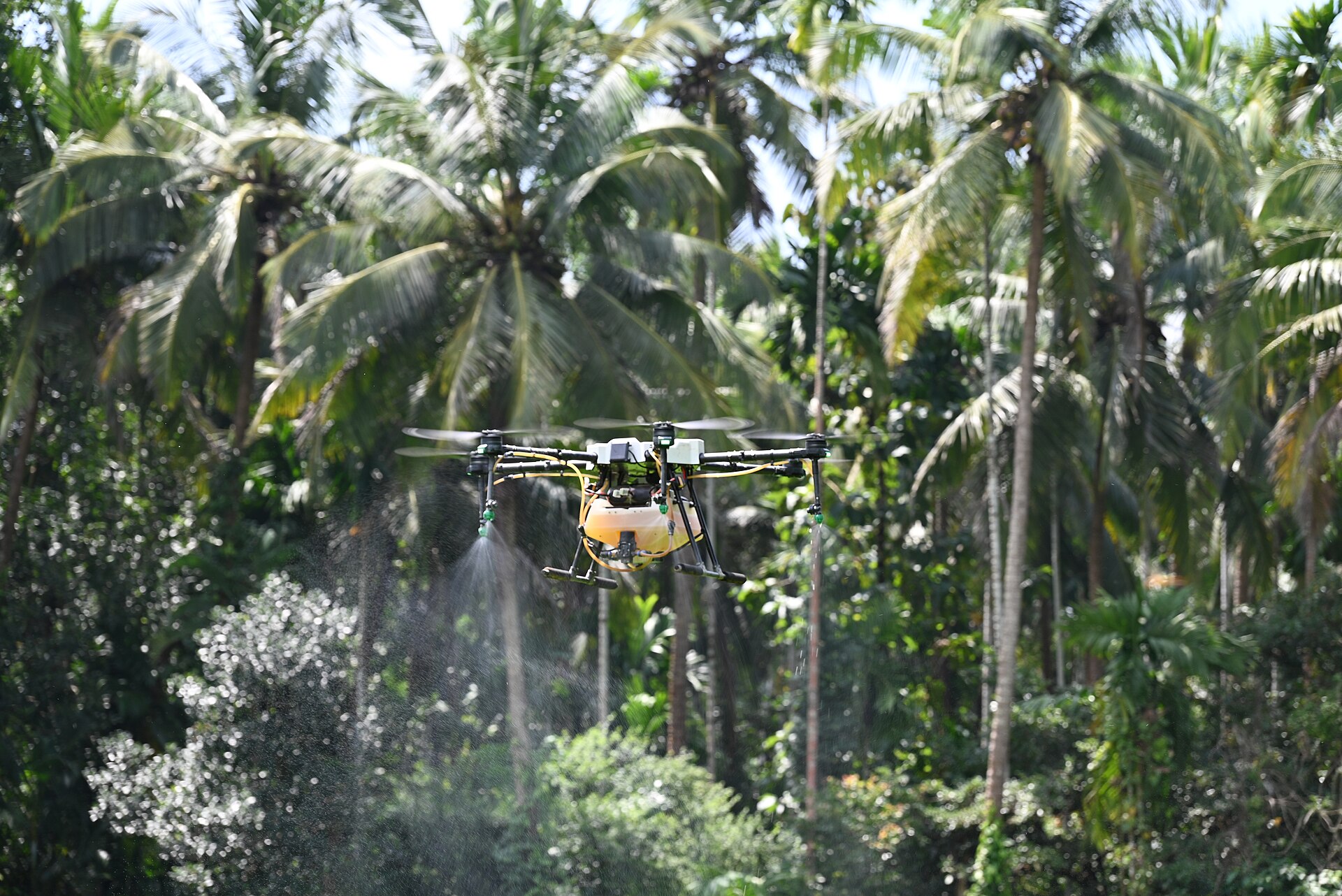
Braiin Limited, a Nasdaq-listed artificial intelligence company that runs crop-spraying drones in Sri Lanka, plans to take control of Marut Drones, a Hyderabad maker of agricultural drones, in a deal it values at about US$40 million. The two companies signed a non-binding term sheet, announced on Monday 23 November, under which Braiin would buy a majority stake when the deal closes and the rest of Marut later, in phases tied to performance.
Nothing has been bought yet. The deal still depends on due diligence, final contracts, an audit of Marut's accounts to US standards and Indian approvals, including clearance for foreign investment and from the Directorate General of Civil Aviation (DGCA), India's aviation regulator. But the proposal puts a price on something farmers in South Asia already see in their fields: drones that spray rice, cotton and vegetables in minutes, hired by the acre, and a fast-growing industry that is still lightly measured and lightly policed.
What Braiin and Marut Drones have agreed, and what they have not
According to Braiin's announcement, distributed by GlobeNewswire from New York, the deal would happen in stages. Braiin would take a majority stake in Marut Dronetech Private Limited, which trades as Marut Drones, at completion. It would buy the remaining shares in later phases linked to Marut's performance, and it would also put growth capital into the company under an annual operating plan both sides agree.
The figure of about US$40 million is a total. It covers the upfront payment, the earn-out payments and the capital Braiin would invest in Marut. The announcement does not say how that sum is divided, what share of Marut Braiin would hold at the start, or when completion is expected. The term sheet is binding only on confidentiality, exclusivity, costs and governing law; everything else is a statement of intent.
After completion, Marut would join Braiin's Robotics and AI division and be combined with Raptor300, the autonomous spraying drone Braiin operates in Sri Lanka. "Agriculture drones are a business we already know well through our Raptor300 brand, and India is one of the fastest-growing agri-drone markets in the world," said Natraj Balasubramanian, Braiin's founder and chief executive. He said the aim is to bring Braiin's "autonomy, computer vision and analytics" onto Marut's certified drones and build "a leading AI-led aerial intelligence business, first across India and then across our international markets."
Prem Kumar Vislawath, Marut's co-founder and chief executive, is quoted in the same release: "We set out to build drones that work for Indian farmers, and eight DGCA type certificates later we have one of the most certified fleets in the country." Braiin, he said, "would give us AI capability, growth capital and a global footprint, while our customers continue to receive the same products and service they trust today." By the morning of 24 November, Dhaka time, the reports this desk found, in India and abroad, were based on the release itself; neither company had added to it.
Marut Drones: from a Hyderabad start-up to eight DGCA certificates
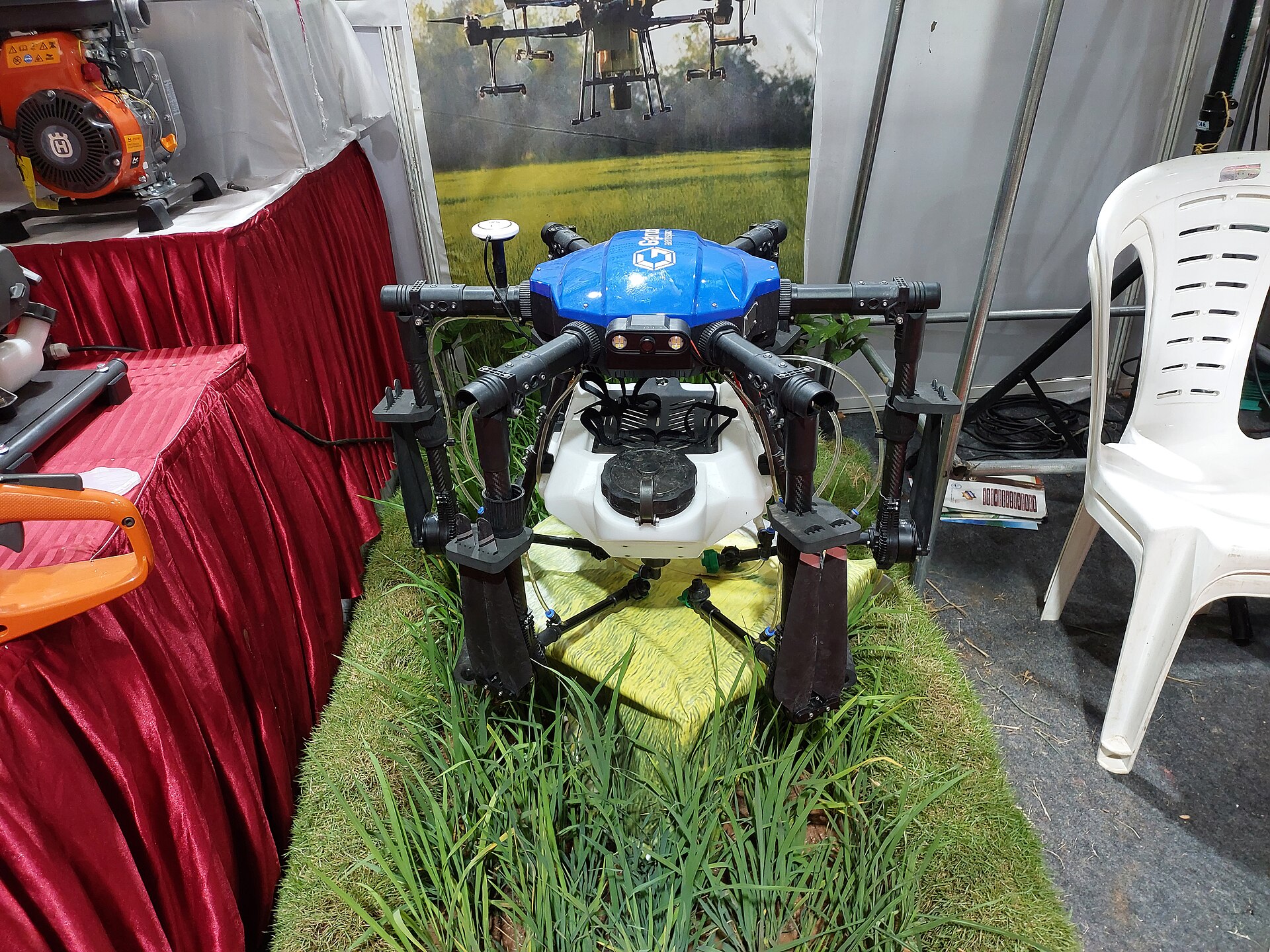
Marut was founded in 2019 by graduates of the Indian Institute of Technology Guwahati and is based in Hyderabad. In late December 2022 it received a DGCA type certificate for its AG 365 agricultural drone, as Telangana Today reported on 27 December that year; some reports name the certified version AG-365S. Certification mattered to buyers: at the time, reports said farmers and entrepreneurs buying the certified drone could seek loans of up to Rs 10 lakh from the Agriculture Infrastructure Fund.
In May 2024 Marut and the fertiliser cooperative IFFCO announced a spraying programme covering about 500,000 acres in Andhra Pradesh and Telangana, in which rural entrepreneurs who own drones sell spraying to farmers by the acre, according to DroneLife. In November 2024 Marut raised US$6.2 million in a Series A round from Lok Capital, with plans to raise manufacturing capacity to up to 3,000 drones a year; it then described a fleet of 750 drones and more than 1,000 drone pilots across 14 states.
Braiin's announcement now lists eight DGCA type certificates, seven remote pilot training schools approved by the regulator, more than 100 dealers and more than 500 customers. Besides farmers, dealers and cooperatives, these include Karnataka Police, the Indian Army and Indian Railways. Marut has filed 50 patents, of which nine have been granted, makes its own ground-control and fleet software, called Swift, and has supplied drones to Fiji and Myanmar. Its Aquacopter has been used for fisheries work with the ICAR-Central Inland Fisheries Research Institute. Its business today is concentrated in Telangana, Karnataka, Uttar Pradesh, Maharashtra and Odisha. These figures come from the two companies and have not been independently checked.
Who is Braiin, and how a US$40 million deal compares with its accounts
Braiin describes itself as "a global applied AI platform company" working across customer experience, AgTech, property technology and what it calls living infrastructure. Its annual report on Form 20-F, filed with the US Securities and Exchange Commission on 12 November, gives its principal office as Subiaco, Western Australia. Its shares began trading on the Nasdaq Global Market on 12 February 2026 through a direct listing, from which, the report says, "the Company received no proceeds."
The same report shows a young and fast-changing group. Revenue for the year to 30 June 2026 was US$25.85 million, against nothing the year before, almost all of it from four businesses Braiin bought on the day it listed. It recorded a loss after tax of US$24.66 million, which, according to third-party summaries of its results, includes about US$14.3 million in one-off share payments to advisers. It ended June with US$5.67 million in cash and US$23.33 million in borrowings, all classed as current. Its directors concluded there is no material uncertainty about the group continuing as a going concern, while the risk section warns that the assumptions behind that view "may not be realized" and that refinancing "may not be available on acceptable terms, or at all."
Raptor300, the drone business, entered the group in July 2022. The 20-F says a Sri Lankan subsidiary assembles the autonomous aerial robots in Sri Lanka and that they cover two to three hectares an hour. In the release, Braiin says Raptor300 is executing binding contracts worth US$35.93 million in Sri Lanka and holds about US$112 million of non-binding memorandums of understanding, adding that "there is no assurance that any MOU will convert into a binding contract." It also says it was the first company in the world to be certified by a national government to operate fully autonomous aerial robots for crop spraying. That claim could not be checked, and the segment figures in the annual report do not separate out the crop-spraying business.
None of this means the deal cannot be financed: earn-outs are paid from future performance, and capital put into Marut stays in Marut. But it is a reason to treat the US$40 million as a ceiling on paper rather than cash on the table, and it is the kind of question the audit and definitive agreements will have to answer. In May 2026 Braiin signed a separate non-binding term sheet for a 50.1 per cent stake in Cumbria Capital, the parent of Home.cc; its annual report still lists that deal as subject to conditions.
How big India's farm drone market really is
Braiin's case rests on growth. Its release cites a projection that India's whole drone market will reach US$11 billion by 2030, growing 70 per cent a year, without naming the source in the text, and a Business Standard report of August 2026 that drones cover only around 5 per cent of India's farmland. Independent researchers put the farm figure lower. In an analysis in The India Forum on 18 September 2026, Sudha Narayanan, Thomas Reardon and two co-authors cite estimates of about 29,500 agricultural drones covering 3 million hectares in 12 states, under 2 per cent of the net sown area.
The same analysis shows why any count is uncertain. As of 5 July 2026, 41,196 drones of all types were registered with the DGCA, but a field study in Nalgonda district in Telangana found about 90 per cent of agricultural drones there were unregistered. Farmer surveys find between 3 and 22 per cent of sampled farmers using drones to spray. Outsourced spraying has settled at about Rs 400 to 750 a hectare. A cheap assembled drone costs about Rs 1 to 1.5 lakh, the authors write, against Rs 2 to 5 lakh for a registered Indian-made one even after subsidy.
The government has pushed hard. India's 2021 drone rules and their 2022 amendments cut the permissions needed from the DGCA from 25 to five. In February 2022 India banned imports of fully assembled drones and assembly kits, a measure that favours domestic makers such as Marut. GST on drones fell from 18 to 5 per cent in September 2025, and the farm machinery subsidy covers 40 per cent of a drone's cost for individual farmers, 75 per cent for farmer producer organisations and 100 per cent for research institutions.
The best known programme is Namo Drone Didi, launched in November 2023 to give drones to up to 15,000 women's self-help groups, who then sell spraying services. Parliament was told in March 2026 that the scheme's outlay is Rs 1,261 crore for 2023-24 to 2025-26, as Down To Earth reported. Replies to Parliament in February and March 2026, cited in The India Forum, put the number of drones handed to the women, the "didis", at 1,094, of which about 500 came through the scheme and the rest from the lead fertiliser companies. The women reported problems with batteries, servicing, spare parts, heavy drones and the pilot licence exam.
What the research says drones do on smallholder farms
The evidence on results is promising but thin. The India Forum authors cite experimental and field evidence (Narayanan and others, forthcoming) that drone spraying cut pesticide use by 25 to 40 per cent, labour by 40 to 51 per cent and costs by 6 to 32 per cent, with paddy and wheat yields 5 to 16 per cent higher and net profit 37 to 88 per cent higher. They also warn that most of this comes from controlled experiments, not from ordinary farmers' use.
A wider view came from an article in Science on 4 September 2025, "Can the global drone revolution make agriculture more sustainable?", by Ben Belton of the International Food Policy Research Institute (IFPRI), who is based in Dhaka, with colleagues from Michigan State University and elsewhere. Writing in The Conversation in October 2025, Belton and Leo Baldiga added that China has more than 250,000 agricultural drones; in Thailand drones were used on about 30 per cent of farmland in 2023, up from almost none in 2019. In the United States, registered farm drones rose from about 1,000 in January 2024 to about 5,500 by mid-2025. A spraying drone can cover four to ten hectares an hour, the work of 30 to 100 people spraying by hand in China, and most farmers hire a service rather than buy a machine. They stress that the yield gains reported so far are mostly anecdotal or from small studies and industry reports.
The risks: spray drift, pesticides and liability
The same researchers list the trade-offs. Used well, drones keep farmers away from the chemicals they spray, spread inputs more evenly and use less energy than tractors. Used badly, they push droplets onto neighbouring farms, water and people. In India, The India Forum notes, about 479 pesticide formulations have interim approval for drone use and standard procedures exist for at least ten crops, but there is little evidence these are followed, and no systematic monitoring of harm to pollinators, water or nearby crops.
Who pays when drift damages a neighbour's field is unclear, the authors write. They cite reports from Tamil Nadu of Dalit farmers' crops being destroyed overnight by sprayed chemicals, and in Odisha some drone didis report that farmers insist on mixing pesticides with nano-urea, which is not normally recommended. India had 39,890 DGCA-certified remote pilots as of February 2026, and training one costs Rs 30,000 to 50,000. Marut's seven training schools and its dealer network are among the assets Braiin says it wants, a sign, in this desk's reading, that trained people and after-sales service are as scarce as the drones themselves.
What the deal could mean for farmers in Bangladesh, Sri Lanka and beyond
Marut's exports to Myanmar and Braiin's work in Sri Lanka show where the market could go next, and Braiin names Sri Lanka, Australia, the Gulf, South-East Asia, Africa and North America as export targets. For smallholders, the question is less who owns the factory than whether a spraying service is cheap, safe and within reach. Belton and colleagues report drone services for Asian rice smallholders for as little as US$10 a hectare, as summarised in The India Forum, and note that smallholdings under two hectares make up 85 per cent of farms worldwide.
Bangladesh is at the start of that curve. In March, the state news agency BSS reported a drone spraying demonstration in Dampura village, Niamatpur, Naogaon, run by Muspana, a Dhaka organisation, on potato fields, a dragon fruit orchard and mango gardens. The farmer who invited it said drones cut pesticide use by nearly half and labour costs to about a quarter; a neighbour said spraying just ten kathas by hand had left him exhausted and dizzy. The upazila agriculture officer, Rafiqul Islam, said wider use would depend on government incentives. In Bangladesh, drone flights need clearance in advance from the Civil Aviation Authority of Bangladesh (CAAB) and other agencies, according to a February 2026 report in Bangladesh Monitor.
Cheaper Indian-made drones, with certified designs and trained pilots, could in time reach markets like these, but only if regulators also set the rules India itself has been slow to enforce: approved chemicals and doses, buffer zones near water and homes, training standards and clear liability for drift.
What to watch before the Marut deal closes
Three things will show whether the proposal becomes a deal. The first is the audit of Marut's accounts under US standards, which will for the first time give outsiders a view of the business behind the certificates. The second is the definitive agreement: how much Braiin pays at the start, how large the earn-outs are and what Marut must achieve to receive them. The third is Indian approval of the foreign investment and of the DGCA-related changes a new owner would bring.
For India's drone industry, the proposal is another sign that investors see farm spraying as a business that can travel. For farmers, the useful measure will be simpler: whether the acre price falls, whether the pilots who fly over their fields are trained and accountable, and whether anyone is counting what lands where.
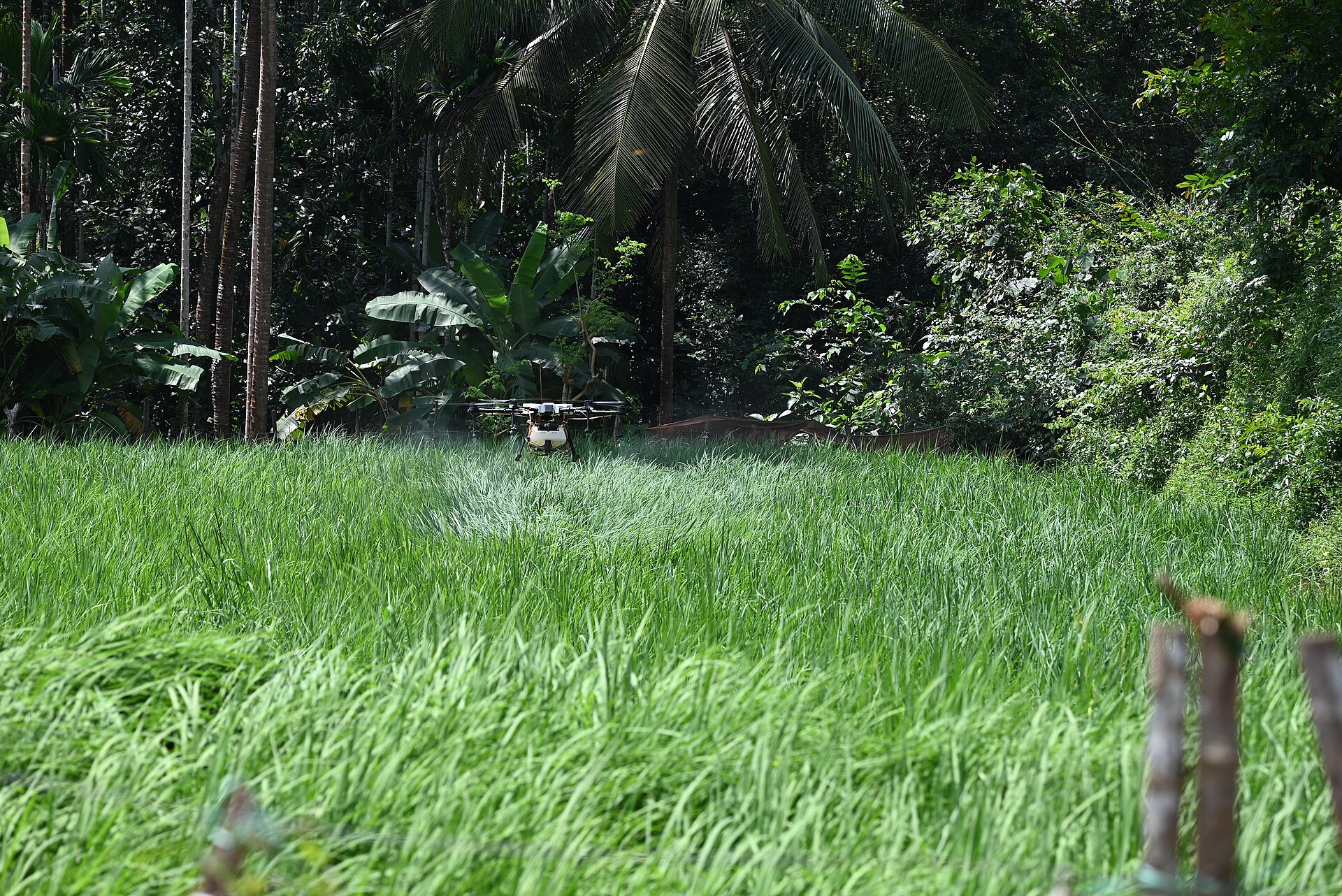
Photo: Shreesha Sharma / Wikimedia Commons (CC BY-SA 4.0). The top picture shows an agricultural drone spraying among coconut palms in India on 19 September 2025, as background; the drone's maker is not recorded.
Comments
(0)