
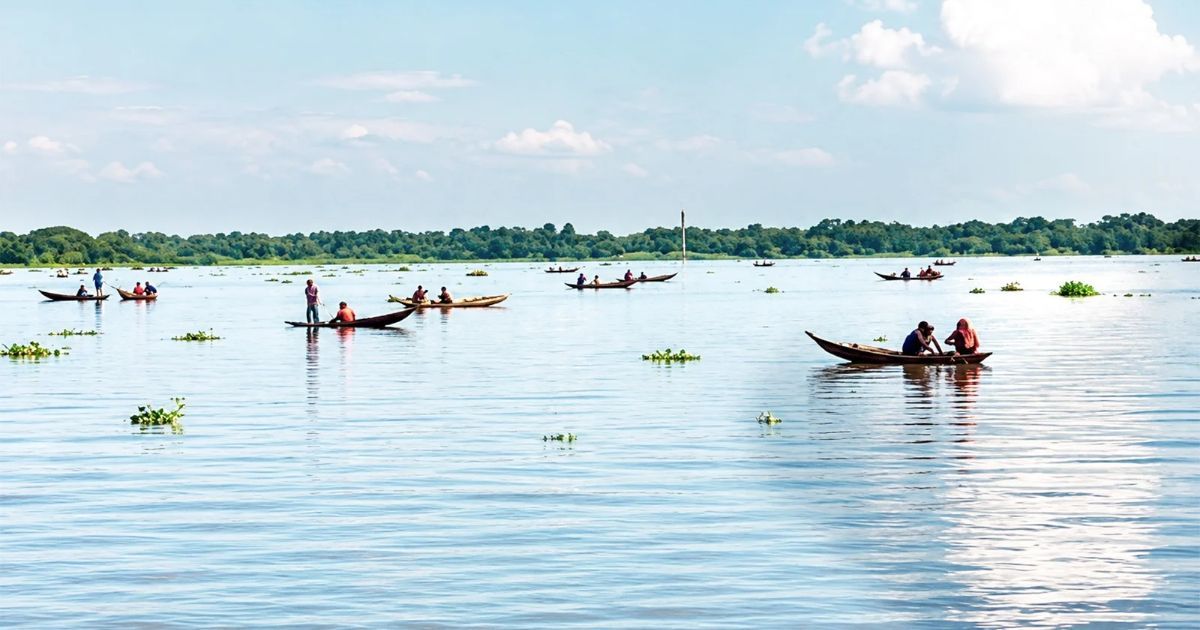
Boats are moored in rows along the Sugandha river in Jhalakathi with their nets ready, and the hilsa season is drawing to a close, but the fish are not coming. What the fishers land after a day on the river barely covers fuel, net repairs and household costs. That was the picture on Friday morning in the villages of Ponabalia and Deuri in Sadar upazila, and fishers at Matibhanga in Nalchity told the same story: the nets go in, and the hilsa of past years do not come up.
On top of that sits debt. NGO instalments fall due every week; the dadon (advances) taken from moneylenders to buy or repair boats and nets before the season must be repaid; and another fishing ban is about to begin. Nuru Mia, 65, of Deuri has fished the Sugandha and Bishkhali almost all his life and knows where and when the hilsa shoals run and where a cast is most likely to pay — and this year even that knowledge is failing him. Akabbar Mridha, who fishes with his son, borrowed for boat and nets before the season on the expectation of four or five months' catch to clear it; with the season nearly over, the sums no longer add up.
Akher Ali, who fishes near the Kathalia-Betagi border where hilsa are normally more plentiful, said fishers there wait all year for these months, yet the fish are scarce even there this year, and his biggest worry is how to pay both the NGO instalments and the moneylender. Several hundred fishers work the Sugandha and Bishkhali in the June-to-October hilsa season, and the income of those few months has to cover food, children's schooling and the year's boat and net costs; from the start of this season the catch has fallen short of expectations and the fishers' despair has grown.
The fisheries department's figures partly bear them out. According to the office of the district fisheries officer, the hilsa landed in Jhalakathi in the four months from June to September fell short of the target set for the season. District fisheries officer Enamul Haque said that while rivers in other districts saw shoals of hilsa this year, the Sugandha and Bishkhali did not, and river pollution and silt may be the reason. Fishers fear that if they cannot land enough hilsa before the ban starts, their debts will only grow heavier — with no fishing allowed, and the instalments and dadon still to be paid.
From a Dainik Bangla report by its Jhalakathi correspondent. Source: Dainik Bangla

Comments
(0)