
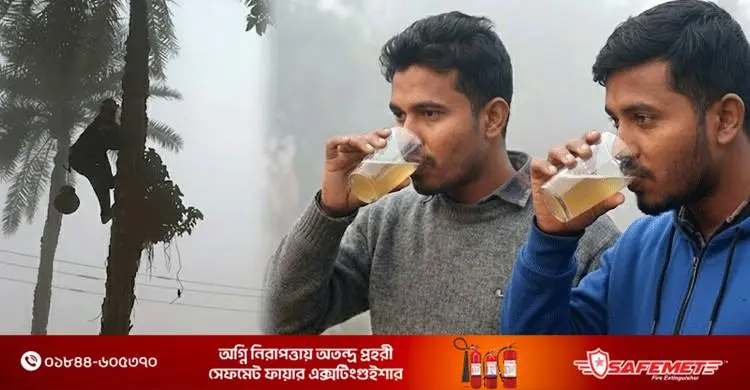
As soon as winter sets in, rural areas see a rush to drink date palm sap and other kinds of juice. In remote areas especially, the sap tastes sweeter and more delightful as the cold deepens.
But it should be remembered that raw date palm sap can carry a risk of Nipah virus infection, so caution is essential when drinking it.
What is Nipah virus
Nipah is a serious viral disease that can be fatal to humans. It is a zoonotic virus, meaning it passes from animals to people. In Bangladesh its main source is bats that drink from the sap. Saliva from a bat's mouth mixes with the sap and contaminates it, allowing the virus to enter the human body.
Infection usually brings fever and respiratory illness. In severe cases it can cause inflammation of the brain, or encephalitis, which is almost always fatal.
How it spreads
Nipah virus spreads to humans mainly from bats and pigs. It can also pass from an infected person to a healthy one through blood, urine and nasal discharge. After infection the virus can stay dormant for 4 to 14 days, and in some cases up to 45 days, which makes it harder to detect.
In Bangladesh, Nipah outbreaks are usually seen every year from November to April.
Symptoms
Early symptoms can include fever, headache, convulsions, muscle pain, sore throat and vomiting. Once the infection reaches the brain, the patient usually becomes unconscious within 24 to 48 hours. In some cases breathing difficulty also appears, which can make the illness even more dangerous.
Precautions
Some precautions are essential. First, raw date palm sap should not be drunk, and frozen sap is also best avoided. Partly eaten fruit of any kind is not safe either; fruit should always be washed well in clean water before eating.
Anyone showing signs of Nipah should be taken quickly to the nearest government hospital. After contact with a patient, both hands must be washed thoroughly with soap and water.
Diagnosis and treatment
If symptoms appear, a virus detection test is needed quickly. This usually means RT-PCR testing of throat swabs, blood, CSF and urine. Blood IgM tests, and immunohistochemistry on specific tissue taken at autopsy from a person who has died, can also confirm the virus.
There is still no vaccine or effective medicine for Nipah. Awareness is therefore the best defence. Public awareness needs to grow so that everyone drinks date palm sap safely, avoids the risk of infection and takes the right steps to prevent deaths.
People infected with Nipah can also infect healthy people. There is no easy way to know how much care the sap collectors, or gachhis, took while collecting it. So infection is possible not only from contaminated sap but also through a collector who is already infected. To stay safe, people should bathe well after collecting sap, or buy it while avoiding physical contact as far as possible.
Date palm sap is without doubt a nutritious and tasty drink, but care is needed, because contaminated sap can kill.
Sources cited by the writer: Directorate General of Health Services, Bangladesh; Cleveland Clinic.
Source: Jagonews24. First published in Bengali on The Agro News.

Comments
(0)