
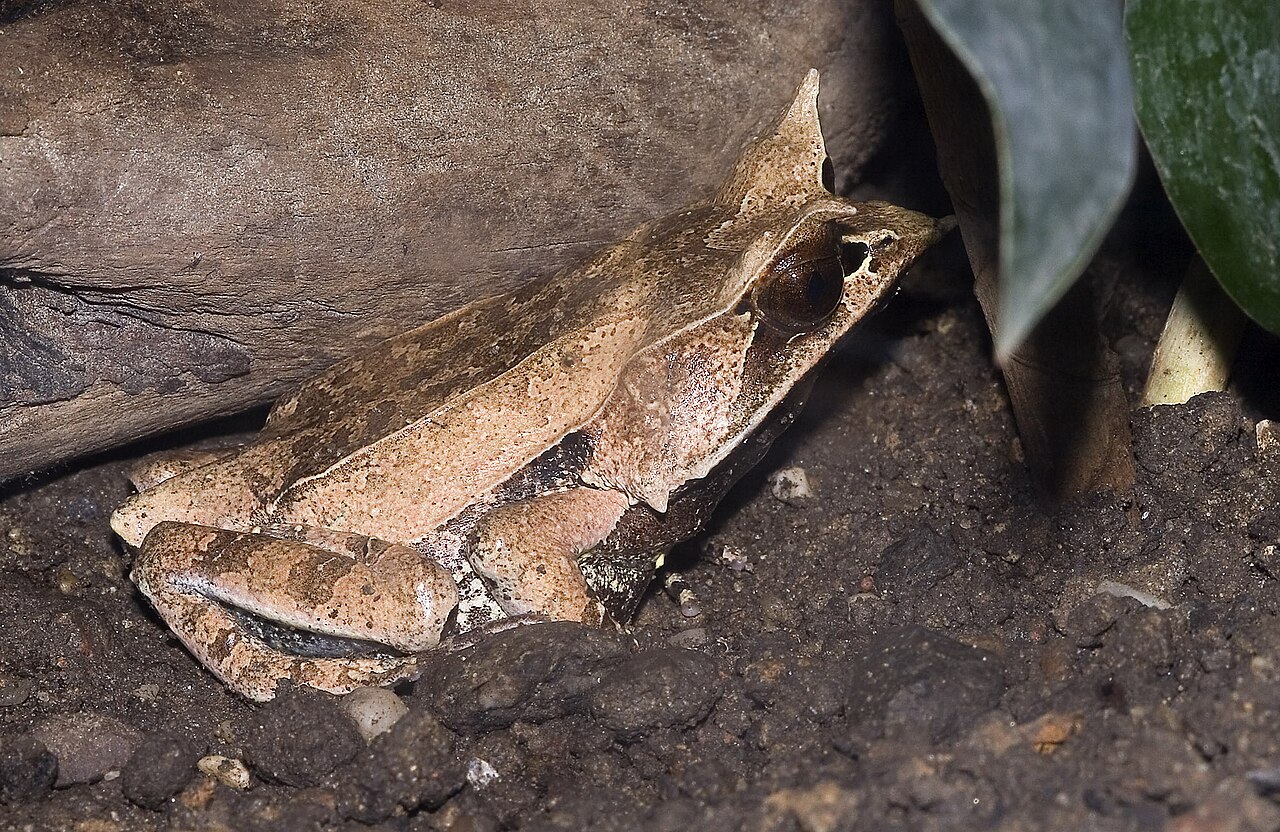
A team of scientists from India and the United States has identified five new species of small horned frogs in the eastern Himalaya of Arunachal Pradesh, India. One of them lives on land snails, the first evidence of a snail-eating frog in India. The findings were published in Royal Society Open Science on 11 November.
The new species belong to the genus Jingophrys. They are small and have skin folds that look like horns. The study was led by Sonali Garg of Harvard's Museum of Comparative Zoology, with James Hanken and Delhi University's S D Biju, Tage Tajo and Radhakrishna Upadhyay. After five years of fieldwork in remote forests, they told the species apart by their form, genetics and behaviour.
The most unusual is the one named tanogogo, known as the snail-eating horned frog. Three-dimensional micro-CT scans showed whole land-snail shells in its stomach. It is the first recorded case of this diet in any frog of the family Megophryidae. Its name comes from the word for snail in Apatani, a language of Arunachal.
Several names honour local communities and places: Jingophrys taniitatii is named after Arunachal's Tani people, and another is named after the Siang region. The other two honour two people who have long supported Harvard's research and conservation work.
The researchers credit local communities with helping them find the frogs in remote forest and understand the local environment. The report is by Bangladesh Pratidin's online desk. The photograph shows a related species, the Malayan horned frog, not one of the new species.
Photo: Olei / Wikimedia Commons (CC BY-SA 3.0)
Source: Bangladesh Pratidin


Comments
(0)