
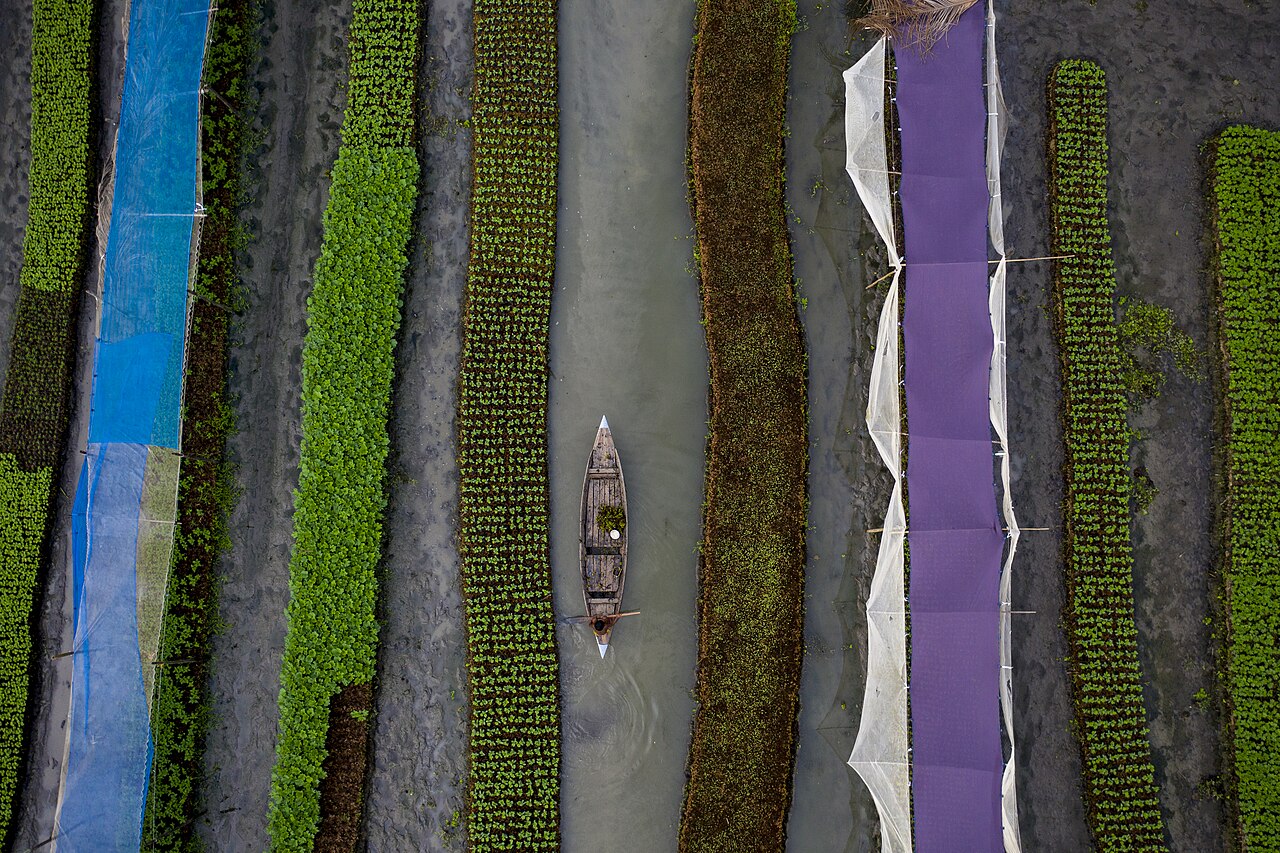
In the wetlands of Nazirpur and Nesarabad in Pirojpur, under water for about six months a year, farmers raise seedlings of bottle gourd, sweet pumpkin, beans, papaya, bitter gourd, brinjal, chilli and more on floating beds and stepped platforms. Soumitra Sarkar, deputy director of the Department of Agricultural Extension in Pirojpur, said about ten million seedlings are produced each season and sold for about Tk 10 crore, with some 6,000 farmers involved, Krishi Shomoy reported.
The work is done in five blocks of Deulbari-Dobra union in Nazirpur and Baldia union in Nesarabad. The method is about 200 years old and has modernised somewhat, but its potential is still not fully used. Seedlings go to Khulna, Jashore, Gopalganj, Barishal, Dhaka and other regions.
Much of the early work is done by women. They make 'meda', the little balls of dulali vine in which seeds are sown, earning Tk 150 per thousand and handling a few hundred to 2,000 seedlings a day. Nurjahan Begum of Gagan village in Nesarabad has done this since 2005 and now works with about 10 other women; she wants to expand, but lacks capital, training and government support.
Farmer Lutfur Rahman said he starts at six in the morning, planting seedlings on the beds, spraying and clearing the vines. Depending on the variety, a seedling sells for Tk 3 to 7.
Rahima Begum, a woman worker in Baldia, said that even after working from morning to afternoon it is hard to earn Tk 200; Tk 150 for a thousand meda does not keep a household, and proper training would help. Local women say training and easy-term loans would let many of them become entrepreneurs themselves.
By farming land that would otherwise lie under water, the method supports thousands of families. The agriculture office gives the growers advice, the deputy director said.
Photo: Azimronnie / Wikimedia Commons (CC BY-SA 4.0)
Source: Krishi Shomoy


Comments
(0)