
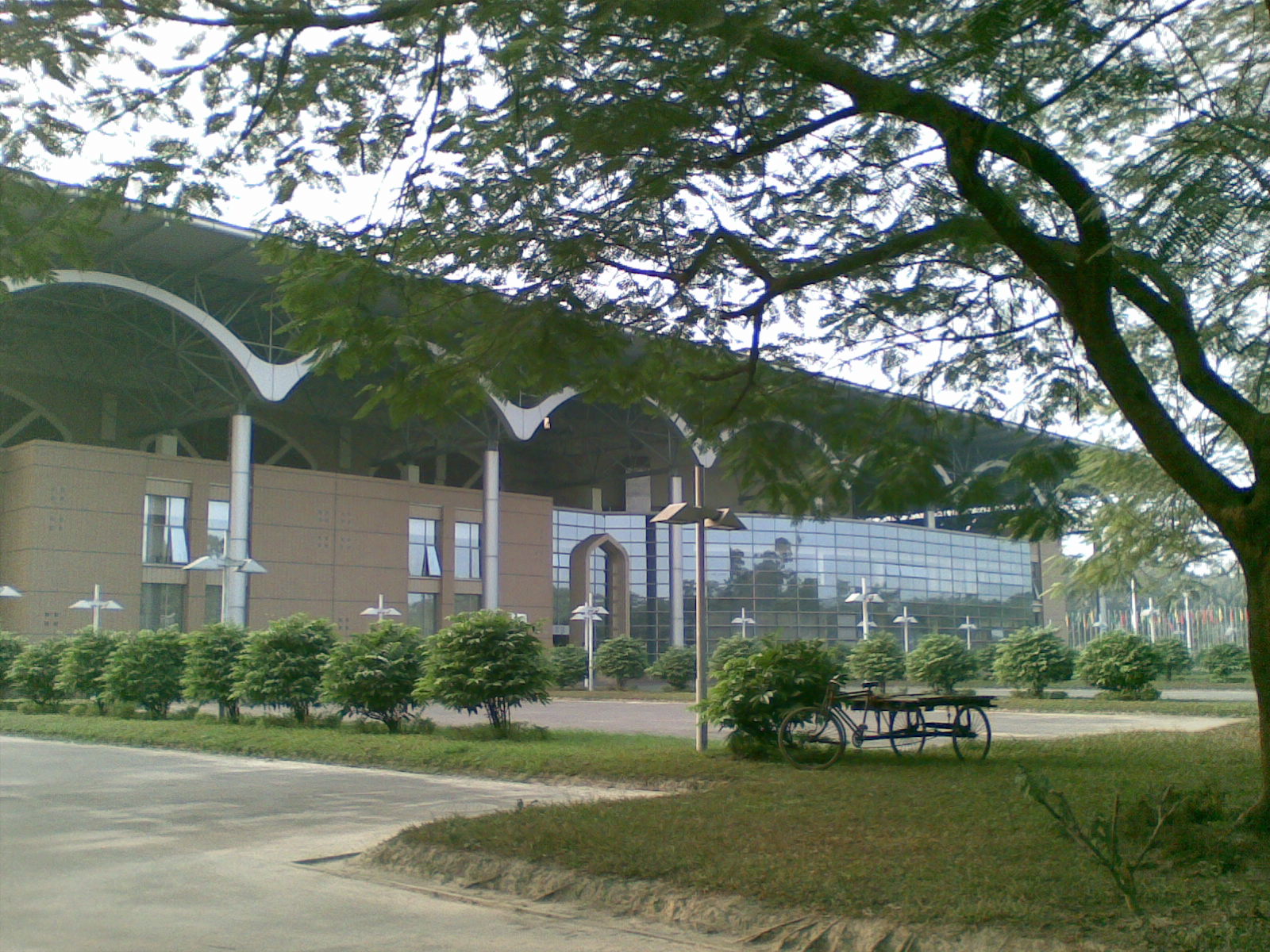
The National Tree Fair opened in Dhaka on Wednesday, 25 June 2025, with what Jago News described as a thousand species of plants on display. Organised by the Bangladesh Forest Department, the fair was held on the ground next to the conference centre in Sher-e-Bangla Nagar, which Jago News called the Bangabandhu International Conference Centre and the environment ministry's notice called the Bangladesh-China Friendship Conference Centre. It ran under the slogan "Let us plan afforestation, build a green Bangladesh". Alongside it, a three-day Environment Fair opened on the same day.
According to the range officer of the Forest Department who spoke to Jago News, the tree fair had 135 stalls for plants and 15 stalls on the environment, and was to stay open every day from 9am to 9pm. The Environment Fair was to run from 25 to 27 June, and the tree fair from 25 June to 24 July.
Opening ceremony and World Environment Day
The opening took place on the day Bangladesh had chosen to observe World Environment Day in 2025. The day is marked worldwide on 5 June, but in 2025 Eid-ul-Azha holidays had already begun in Bangladesh by then, so the government moved the national observance to 25 June, the state news agency BSS reported on 5 June. The theme announced for the day was "Say no to plastic pollution, it is time to act", and the theme and slogan were to be broadcast as scroll messages on Bangladesh Television and private television channels.
Two days before the fair, on Monday 23 June, the Ministry of Environment, Forest and Climate Change announced the arrangements in a press notice, and the adviser in charge of the ministry described them at a press conference at the Secretariat, bdnews24.com reported. The opening ceremony was to be held inside the Bangladesh-China Friendship Conference Centre, with the Chief Adviser as chief guest. On the same occasion three sets of national honours were to be given for work on the environment, wildlife and tree planting: the National Environment Award 2024, the National Wildlife Conservation Award 2025 and the National Award for Tree Plantation 2024.
Bonik Barta's English edition reported at 12:49pm on 25 June that the Chief Adviser had inaugurated the Environment Fair 2025 and the National Tree Plantation Campaign and Tree Fair 2025 at the conference centre that day. He presented the three national awards to their recipients, and cheques for their share of the profits were handed to beneficiaries of the Forest Department's social forestry programme. The adviser for environment, forest and climate change and the environment secretary also spoke at the event, the paper reported.
The tree plantation campaign was not confined to the capital. According to the same report, awareness activities such as art, debate and slogan competitions, seminars and industry-related awareness programmes were planned at 100 educational institutions in Dhaka and at district and upazila level. Tree fairs and sapling distribution were to take place across the country, and the public was to be reached through SMS messages, banners and participatory events.
Fruit, flower, medicinal and timber saplings
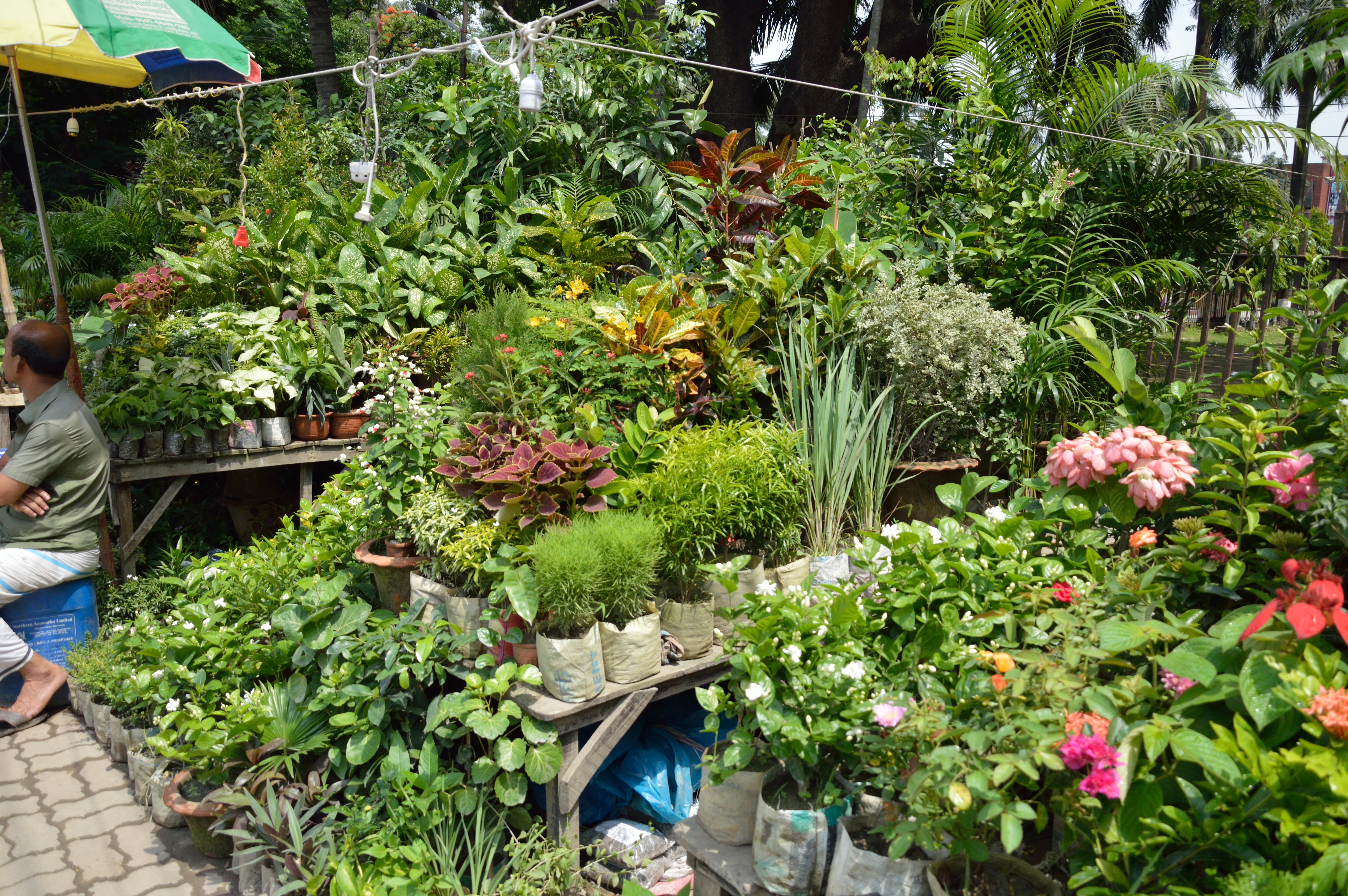
Alongside flowering and fruit plants, the stalls offered many kinds of medicinal and timber trees. Sellers told Jago News that the fruit saplings included local species such as mango, jam (black plum), lychee, jackfruit, pineapple, jamrul (wax apple), amloki (Indian gooseberry), guava, ata and sharifa (custard apple and sugar apple), as well as foreign fruit such as apple, grape and orange. Flower saplings ranged from rajanigandha (tuberose) to local and foreign roses, shiuli (night jasmine), marigold, jui (jasmine), hasnahena and cactus. Among the timber trees on sale were teak, mahogany, sal, koroi, shimul (silk cotton) and garjan.
Several of these trees have a long history in Bangladesh. The mango, Mangifera indica, is regarded by some authorities as indigenous to the eastern part of the Indian subcontinent, including Bangladesh, Assam and Myanmar, according to Banglapedia, the national encyclopaedia. Mango trees grow throughout the country, mostly around homesteads. The elite varieties, propagated by grafting, are grown mainly in Rajshahi, Nawabganj and Dinajpur, and include Fazlee, Langda, Gopalbhog, Himsagar and Khirsapat; the country has nearly 100 mango cultivars. Banglapedia notes that the Department of Agricultural Extension produces and distributes grafts of elite cultivars from its orchards, horticulture centres and nurseries, and that the Bangladesh Agricultural Research Institute runs research stations at Rajshahi, Nawabganj and Joydebpur. Bangladesh produced about 639,820 tonnes of mango in 2005-06 from about 641,525 acres, the encyclopaedia records.
The jackfruit, which Banglapedia describes as the national fruit of Bangladesh, is native to the Indian subcontinent and bears one of the largest edible fruits known. The encyclopaedia, citing Bangladesh Bureau of Statistics figures for 2000-2007, gives 25,110 hectares under jackfruit with an annual production of 469,500 tonnes, about 22 percent of the country's fruit production. The ripe pulp is eaten fresh or preserved in syrup or dried, the large seeds are boiled or roasted for cooking, and the unripe fruit is cooked as a vegetable. Besides the fruit, the tree's yellow heartwood is a valuable timber, its rind and leaves are fed to livestock, and it is often planted to beautify homesteads.
Teak, sold at the fair as a timber sapling, is not native. Banglapedia describes it as an exotic deciduous tree, Tectona grandis, first planted at Kaptai in the south-east in 1871 with stock from Myanmar, and considered the most valuable timber plant in the country. Its hard, durable, yellowish-brown wood is used for shipbuilding and furniture.
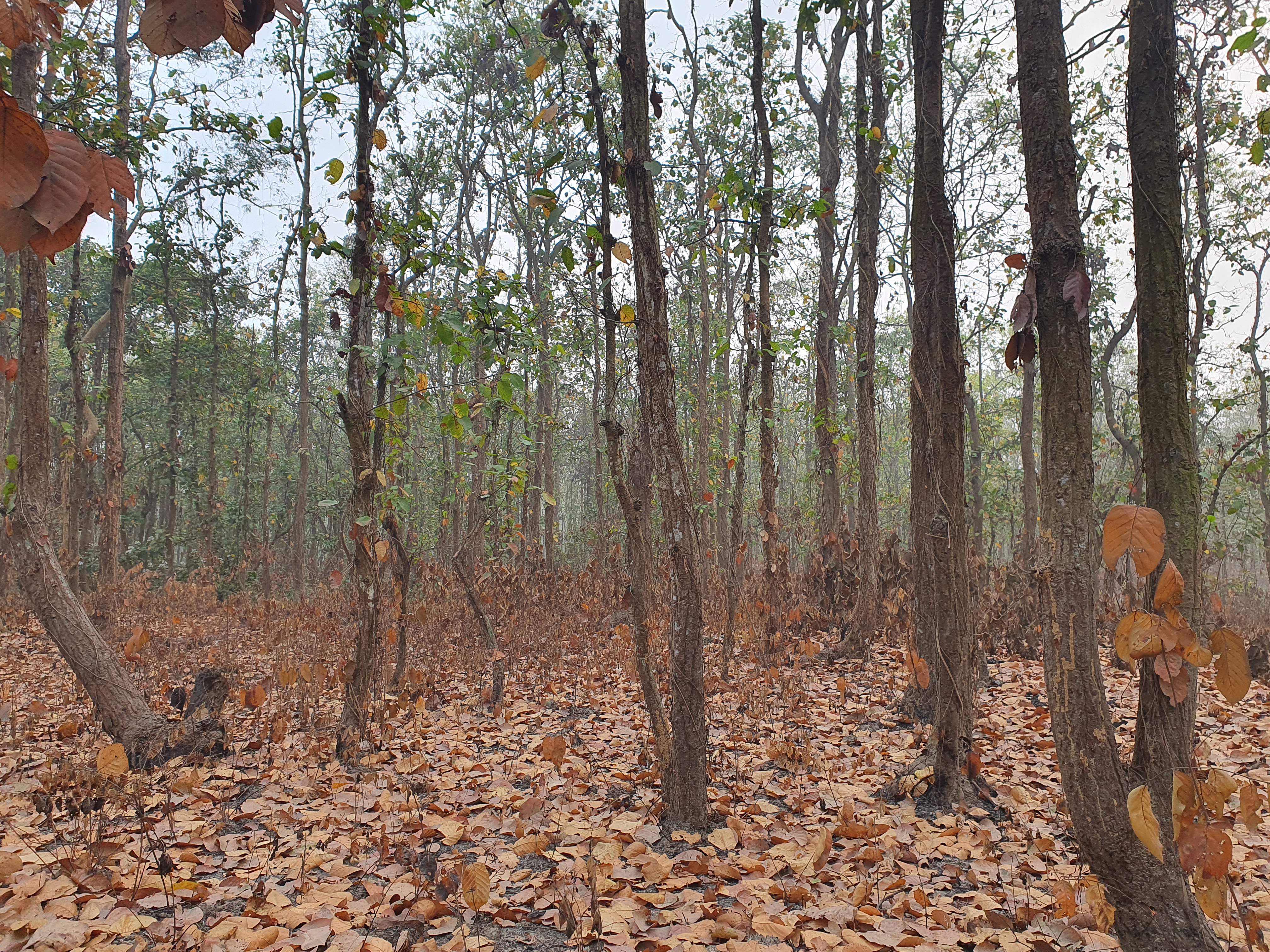
Sal, by contrast, is a native tree that forms whole forests. Banglapedia describes the sal forest as a tropical moist deciduous forest dominated by Shorea robusta. In Bangladesh sal forests cover about 121,000 hectares, about 32 percent of the country's forest land, mostly in Gazipur, Tangail, Mymensingh, Jamalpur, Comilla, Dinajpur, Thakurgaon, Rangpur and Rajshahi. The largest belt, the Modhupur Garh, runs about 96 kilometres from north to south between the Brahmaputra and the Jamuna. Sal timber is strong and durable and is used for house building, poles, boats and furniture. The stems yield an aromatic resin known as sal damar or rhal, used for caulking boats and in varnishes and paints; tribal people use the leaves to make rice cakes, and the leaves are also made into small baskets and plates for dry food; and about five hundred undergrowth species have been recorded growing with sal trees, according to the encyclopaedia.
Prices from Tk 20 to Tk 7 lakh
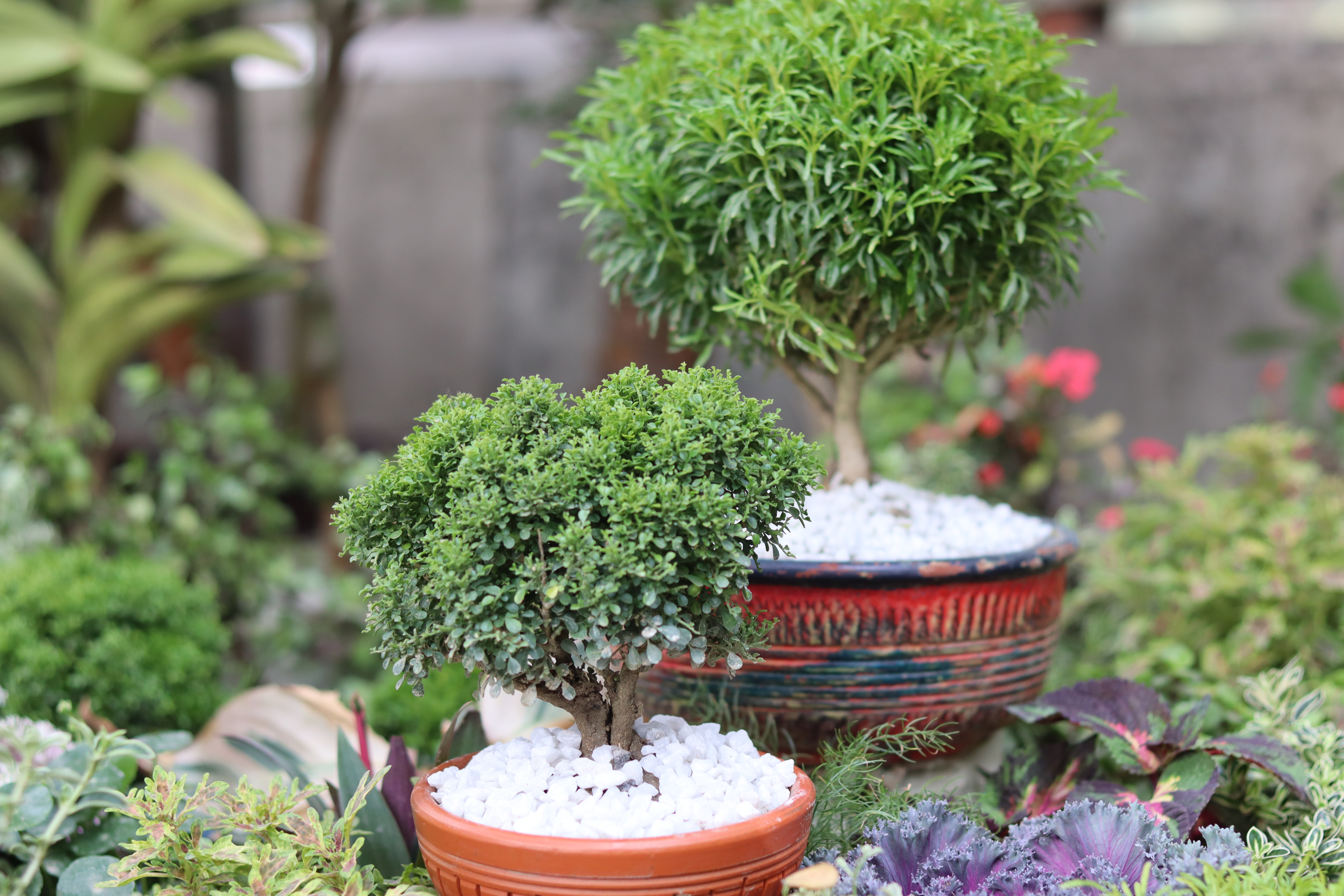
Sellers told Jago News that plants at the fair were priced from Tk 20 to Tk 7 lakh. The most expensive were bonsai, priced from Tk 2,000 up to Tk 7 lakh. Plant lovers were going from stall to stall to find the plants they wanted.
Asadul, a salesman at Khan Nursery, told Jago News that because the fair had only opened that day, the number of buyers had not yet picked up. Indoor plants were in higher demand at the time, he said, and young men and women bought them to decorate their homes. Many environmental organisations also bought plants, he said, and some people in Dhaka who keep rooftop gardens bought plants worth from 50 to a lakh taka, as he put it.
Saleha Begum, who had come from Mirpur, told Jago News: "I have bought five plants to put on the balcony. I have taken some indoor plants. The fair has only just started; I will come again and buy more."
Hamidul Islam of Upokor Nursery said his stall carried everything from vegetable seedlings to all kinds of indoor plants, with indoor plants priced from Tk 500 to Tk 2,500. Many women came to buy only vegetable and medicinal plants, he said.
Bonsai, the most costly plants at the fair, are an old art. Banglapedia describes bonsai as the art and technique of growing big trees in miniature or dwarfed forms in pots through planned pruning, wiring and manuring. The word is Japanese: "bon" means a tray, pot or container and "sai" a plant or planting. The art began in China many centuries ago and Japan later borrowed it and made it popular around the world. In Bangladesh, the encyclopaedia says, bonsai is becoming increasingly popular, growers follow both Japanese and Chinese styles, and trees with small leaves are especially suitable. Nurseries in the country commonly use banyan, tamarind, acacia, cassia, gold mohur, mango, ashoka, pomegranate and bougainvillea, and several nurseries in Dhaka and Chattogram grow bonsai in containers.
Stalls, hours and how long the fairs ran
The Forest Department range officer, Anwar Hossain, told Jago News that the 2025 fair had 135 stalls for trees and 15 for the environment. The fair was to be open daily from 9am to 9pm. The Environment Fair would close after 27 June, while the tree fair would continue until 24 July.
The dates matched what the ministry had announced. On 23 June the adviser for environment, forest and climate change told reporters that the Environment Fair would run until Friday and the tree fair until 24 July, and that both would be open to buyers and visitors every day from 9am to 9pm, bdnews24.com reported.
A year earlier the national programme had followed a different calendar. In 2024 the National Tree Planting Campaign was inaugurated on World Environment Day, 5 June, at the same conference centre, then called the Bangabandhu International Conference Centre, and an Environment Fair ran from 5 to 11 June, United News of Bangladesh (UNB) reported on 5 June 2024. For the 2024 monsoon the government planned to plant 83.33 million seedlings across the country, the then environment ministry told UNB.
From a tree planting day to social forestry
Tree fairs and planting campaigns in Bangladesh grew out of the Forest Department's extension work. According to Banglapedia, two forest extension divisions were created in 1962-63, one at Rajshahi and one at Dhaka, and a tree planting day on 1 June was introduced. Their work began with raising and distributing seedlings. At first the activities were confined to nurseries and ceremonial planting at district headquarters and a few other centres. The tree planting campaign was first held for a day, later extended to a week, then a month and then three months.
The encyclopaedia describes social forestry as forestry that aims to bring economic, ecological and social benefits to people, especially the rural poor, by involving the beneficiaries from planning to harvest. It quotes the Food and Agriculture Organization's definition: "any situation which intimately involves local people in a forestry activity". An early experiment was carried out on two bare hills, Betagi and Pomora, in Rangunia in Chattogram district, where 101 families were given land; by the evaluation in the second and third years the number had fallen to 83.
Social forestry in the full sense, Banglapedia says, began with a community forestry project financed by the Asian Development Bank. ADB lent 11 million US dollars and the United Nations Development Programme provided 2 million dollars as technical assistance through FAO. The project ran from 1982 to 1987 in seven districts: Dinajpur, Rangpur, Pabna, Rajshahi, Bogra, Kushtia and Jessore. Its components included about 4,800 kilometres of strip plantations along roads, railways and canal embankments, fuelwood plantations on 4,800 hectares, demonstration agroforestry farms and a social forestry training institute at Rajshahi, and for the first time it brought women into community forestry. A follow-up, the Upazila Afforestation and Nursery Development project, covered the whole country except the Sundarbans and the Chittagong Hill Tracts; among its targets were 345 nurseries in upazila complexes and help for 100 private nurseries. The Coastal Green Belt project, started in 1994-95 in ten coastal districts, aimed to reduce loss of life and property in cyclones by increasing tree cover.
The profit-sharing cheques handed out at the 2025 opening belong to this programme. An Assistant Chief Conservator of Forests told The Business Standard in June 2020 that the growth in green cover was the result of the government's extensive social forestry since 1974. In a reply in Parliament reported by UNB on 4 April 2022, the environment ministry said 102,229 hectares of woodlots and block plantations had been raised on Forest Department land under social forestry from 1980-81 to 2020-21, along with about 76,752 kilometres of strip plantations on roadsides, railways, embankments and other land. In June 2024 the ministry told UNB that 160,699 social forestry beneficiaries had received dividends totalling Tk 32.695 billion from 2009 to 2023, and that from 2009-10 to 2022-23 about 217,402 hectares of block plantations and 30,252 kilometres of strip plantations had been raised and more than 112 million seedlings distributed and planted.
How much of Bangladesh is under trees
The Forest Department's study 'Report on Bangladesh's Forest and Tree Resources - 2019' found that tree cover extended to 22.37 percent of the country's total area, The Business Standard reported in June 2020. An earlier FAO report had put the coverage at 10.9 percent. The higher figure counted trees outside the natural forests, including the canopy created by social afforestation. At the time the Forest Department held around 1,604,000 hectares of natural forest and 237,000 hectares of plantations under social afforestation, and 618,253.49 hectares of its land, terrestrial and marine, were classified as reserved forest, the paper reported.
Forest cover and tree cover are different measures. In the reply in Parliament reported by UNB in April 2022, the environment ministry put forest coverage at 14.10 percent and tree-covered area at 22.37 percent, and said projects were under way to raise tree coverage to 24 percent by 2025 under the Eighth Five Year Plan; in March 2021 the ministry had said steps were being taken to raise it to more than 24 percent by 2025, The Financial Express reported. By June 2024 the stated goals were to raise tree cover from 22.37 percent to 25 percent of the land area and forest coverage from 14.1 percent to 16 percent by 2030, UNB reported; a national forest survey to measure tree cover and forest carbon was then under way. The ministry also said that 22 protected forest areas were being managed with local people through 28 co-management committees, and that the Red List of threatened plant species in Bangladesh had been updated.
Photo: Biswarup Ganguly / Wikimedia Commons (CC BY 3.0)
Sources: Jagonews24, bdnews24.com, Bonik Barta, Prothom Alo (BSS), The Business Standard, The Financial Express, United News of Bangladesh (UNB), Banglapedia



Comments
(0)