
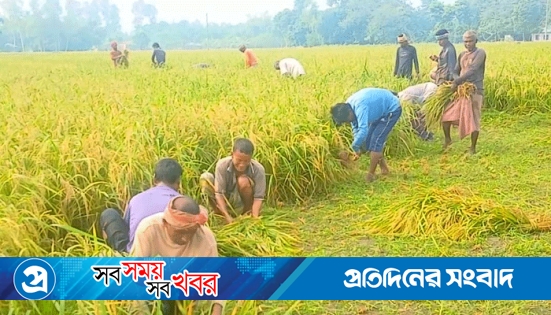
The Narsunda river flows through Nandail upazila in Mymensingh. It has dried up, and only a thin stream trickles along. On both sides of it farmers have planted boro rice. The seedlings are green and from a distance look like a green carpet.
In the rainy season the river fills with water and has a current, and silt is deposited on the Narsunda's bed. That is where boro rice grows. The soil is very fertile, so production costs are next to nothing. Yields are good too, so farmers make a profit and are very pleased.
The Narsunda flows through several unions of Nandail upazila and, passing through Kishoreganj town, joins the low-lying region downstream. It is essentially a branch of the Old Brahmaputra, although it later came to be called the Narsunda.
How the river silted up
Several elderly local people said dams used to be built across different parts of the Narsunda to catch fish. The number of dams grew year after year, and the unplanned dams caused the river to silt up. Encroachment and pollution also reduced its navigability. The river began to die and boat traffic became limited. In the dry season the river dries up completely, and only a thin stream flows to show it is a river.
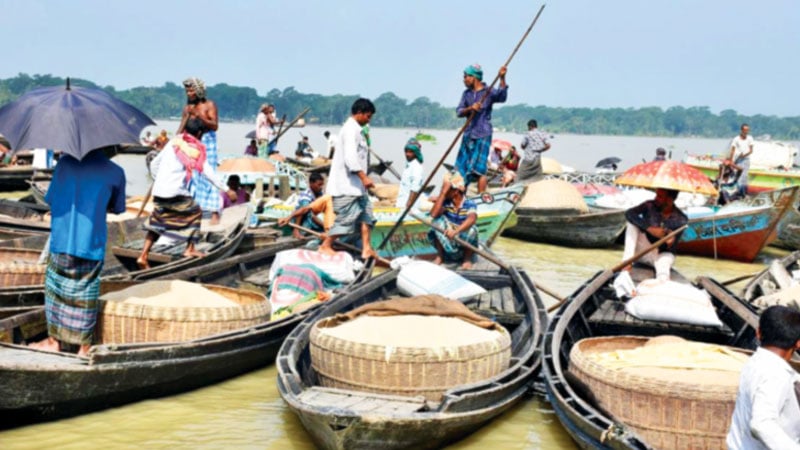
In the rainy season, however, the river fills up, and boats laden with stones come from Tahirpur upazila in Sunamganj as far as Targhat bazar in Nandail. That is all the boat traffic there is. When the rains end, the fishing season begins; when that ends, preparations for rice farming begin on the dry riverbed.
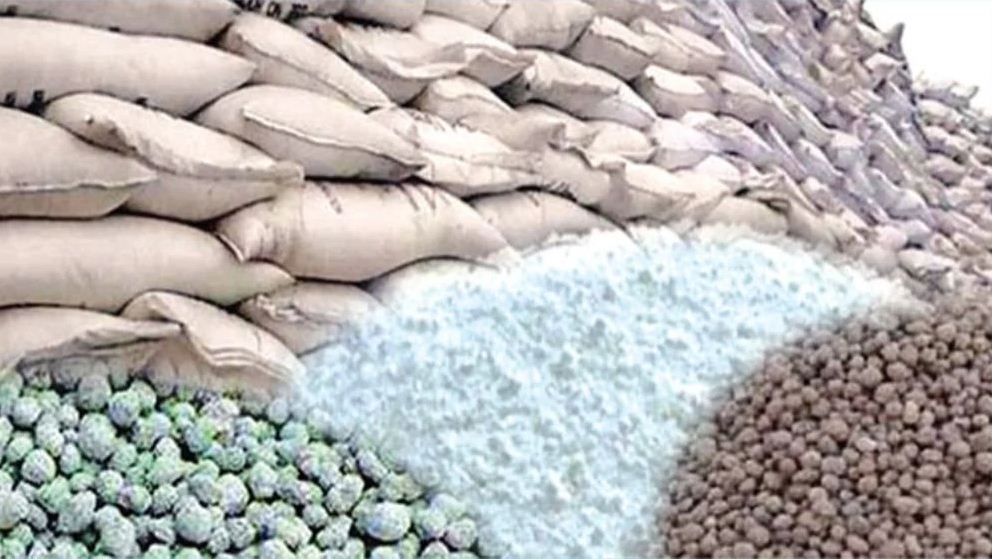
Several farmers from Jahangirpur, Sherpur and Kharua unions said early varieties of rice are grown on the Narsunda's bed, much as boro rice is grown in the haor region. The crop is harvested before rainwater fills the river. Rice grown on the riverbed needs no fertiliser or pesticide, and the little water left in the narrow channel can be used for irrigation when needed. So production costs are low, and the farmers' granaries fill with rice.
The farmers have no precise figures on how much rice is grown in the Narsunda, and no such information was available even from the local agriculture office.
Source: Prothom Alo. First published in Bengali on The Agro News.
Comments
(0)