
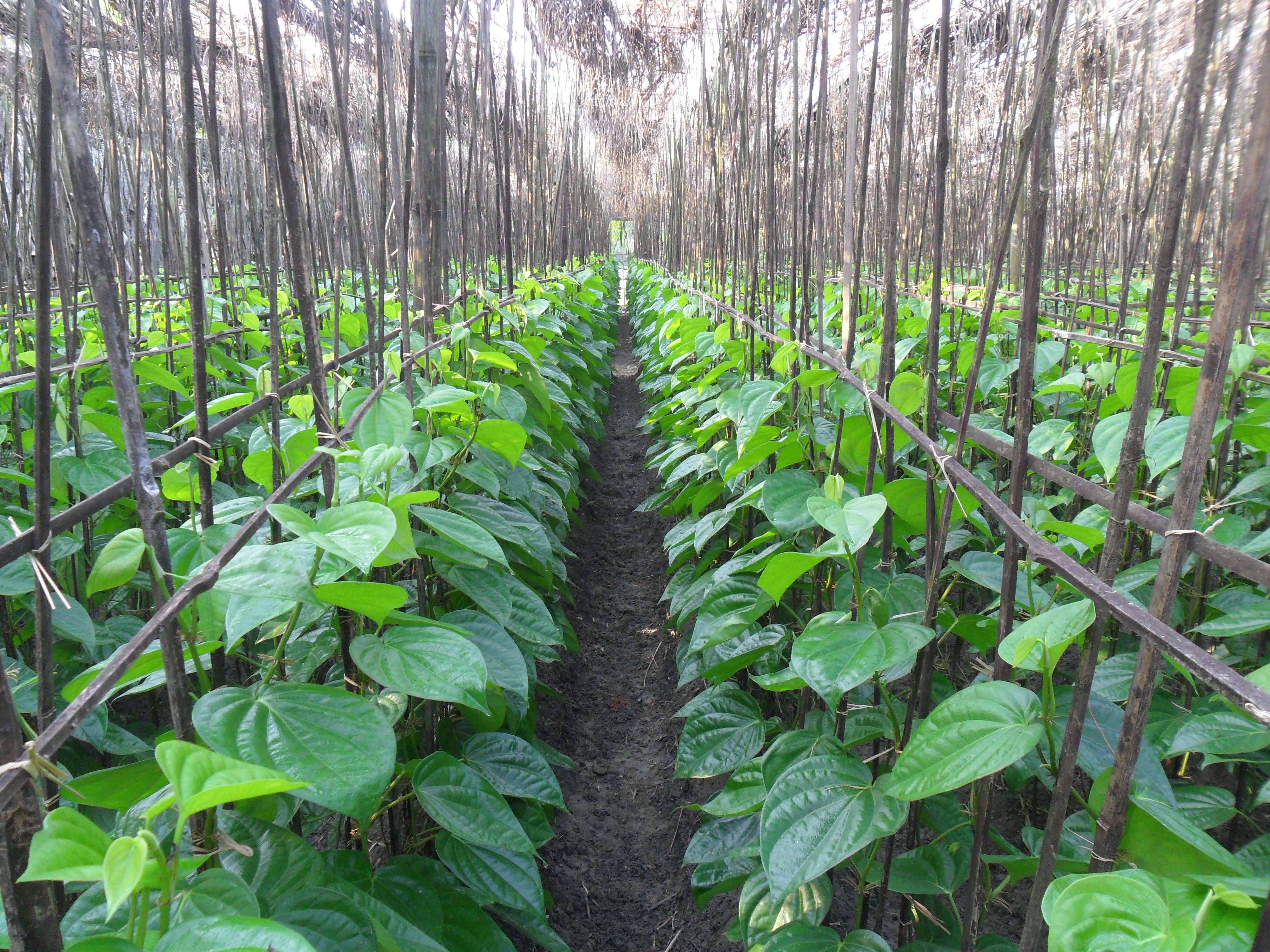
Jahurul Islam, a 38-year-old grower from Bhatshala village in Mamud Nagar union of Nagarpur upazila, Tangail, has made his name in the district by growing the sweet betel leaf of Rajshahi, Jagonews24's Tangail correspondent reported on 7 November 2024. The son of the late Sorob Ali, Jahurul had earlier made a living working in another man's tailoring shop, and his household struggled to get by. Betel leaf, he told the paper, changed that: the report described him as having left poverty behind and become an example for betel growers in the district.
His garden is a small one. On the advice of a friend in Rajshahi, he brought his first 5,000 seedlings of a sweet betel variety from there and planted them on a trial basis on 25 decimals of land beside his house. According to the report, he saw good returns in the very first year. He says he was the first grower in Nagarpur upazila to cultivate Rajshahi's sweet betel, and that he still turns to growers in Rajshahi whenever a problem arises in the garden.
From a tailoring shop to a betel garden
Jahurul's account of how he started is short and practical. "I have been growing betel since 2021," he told Jagonews24. "I was the first in Nagarpur upazila to grow Rajshahi sweet betel. If there is a problem, I take advice from Rajshahi growers." The seedlings, the friend's advice and the know-how all came from Rajshahi, in the north-west of the country.
A betel garden is called a baroj in Bengali, and Jahurul's is close to the size that Banglapedia, the national encyclopedia published by the Asiatic Society of Bangladesh, gives as typical. The encyclopedia says a baroj is usually between twelve and twenty decimals; his 25 decimals sit just above that range. A garden of this kind is a long-term investment rather than a seasonal crop: Banglapedia notes that the leaves become ready for plucking about one year after planting and that a baroj keeps producing for several years from the date it is planted.
Neighbours have noticed. Local resident Md Hamid Khan told the paper: "Jahurul worked very hard to set up a garden of Rajshahi sweet betel. We buy betel leaf from him to eat. It tastes just like Rajshahi betel. If more entrepreneurs like Jahurul emerge in the area, much of the district's demand for betel leaf will be met."
Costs, earnings and this year's storm losses, in his words
The figures in the report are the grower's own, and they are given here as he told them. "Building the betel garden cost about Tk 1.7 lakh," Jahurul said. "So far I have made Tk 2 lakh profit from betel. I hope profits will rise if the weather is favourable."
He sells most of his leaf close to home. "I sell the leaves wholesale at local markets and sometimes send them to Rajshahi for sale," he said. The weather in 2024 was not kind to him. "This year storms and continuous rain caused about Tk 1.5 lakh of damage to the garden, and quite a few plants died," he said. He still described the crop as a profitable one: "Apart from spraying against pests there is no extra cost, so betel farming is profitable."
Jahurul said the government's agriculture office had been behind him from the start. "The agriculture department constantly inspects my betel farming and helps with advice," he said. "If anyone wants help with growing betel, I will help them. If the government supports me, the business can grow."
His experience of weather damage matches what growers elsewhere have described. In a February 2024 report from Rajshahi, The Financial Express quoted a Bagmara grower as saying production problems arise during the monsoon, and in May 2024 Protidiner Bangladesh reported Rajshahi farmers as saying that, although betel carries little risk and few diseases, there is a risk of blight in the rainy season.
What the upazila agriculture office says
Nagarpur's upazila agriculture officer, Md Imran Hossain, told Jagonews24 that the upazila suits the crop. "Nagarpur is suitable for betel farming, as Jahurul Islam of Mamud Nagar shows," he said. "We are inspecting regularly and giving technical advice, and we are working to create more betel entrepreneurs in the upazila."
The same office had been promoting other new ventures in the upazila during 2024. In February 2024 the state news agency BSS reported from Gayhata union of Nagarpur on a group of farmers who had taken up brinjal, tomato and cucumber on about 200 decimals of land without harmful pesticides, and on the upazila agriculture department's plan to export the area's safe vegetables. The officer was quoted in that report as saying that, under the government's directive, not an inch of land should be left fallow for the country's food security.
The upazila agriculture office is the local arm of the Department of Agricultural Extension (DAE), the government body that advises farmers in every upazila. For betel, the DAE's agro-meteorological information service publishes a crop page listing recommended varieties, planting time and the main pests and diseases, and growers are advised to consult their upazila agriculture officer before using any chemical in a baroj.
Nagarpur and Tangail
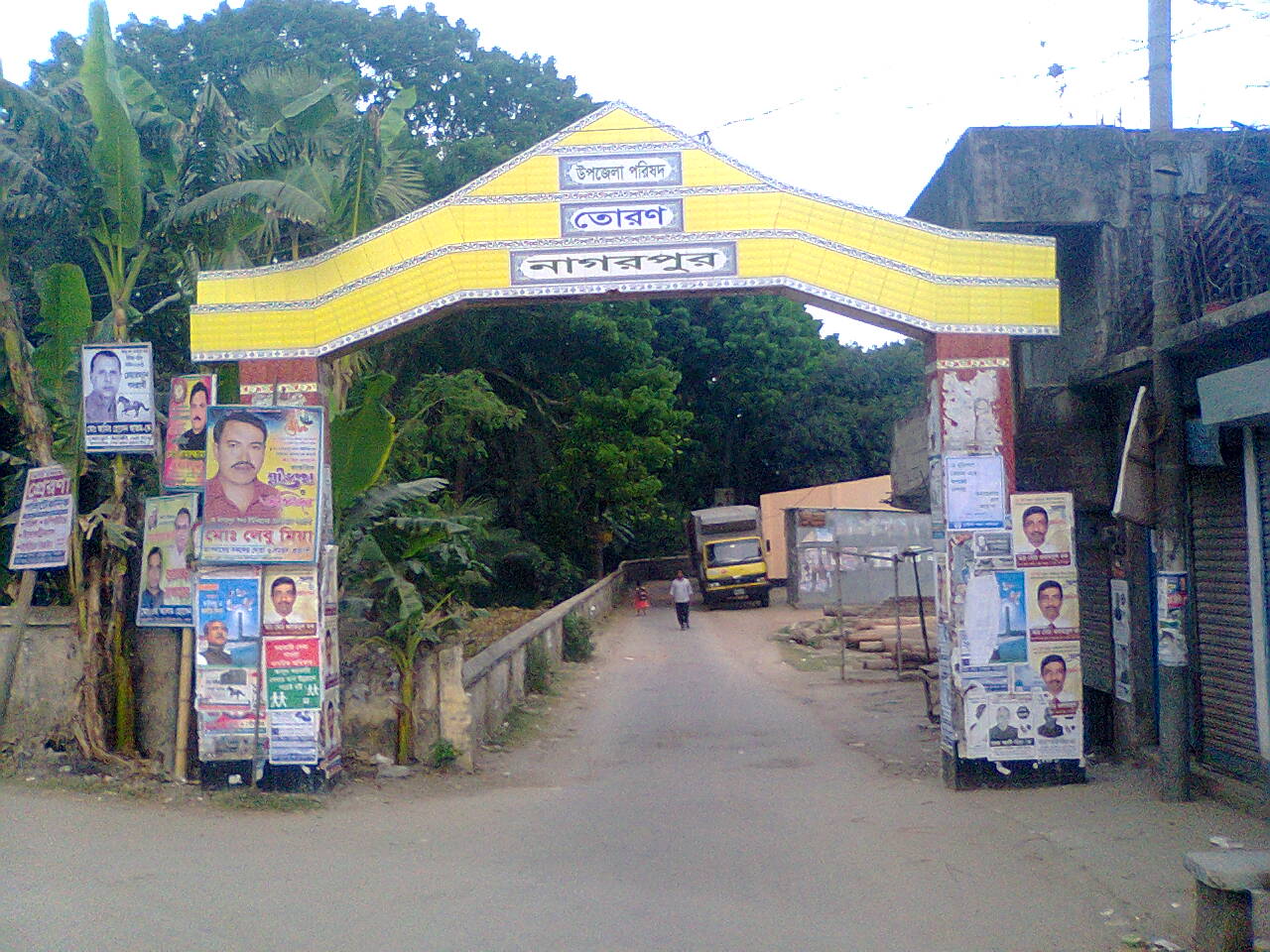
Nagarpur lies in the south-west of Tangail district. Banglapedia gives the upazila an area of 262.70 square kilometres, bounded by Tangail Sadar and Delduar upazilas to the north, Daulatpur (Manikganj) and Saturia to the south, Mirzapur and Dhamrai to the east, and Chauhali and Shahjadpur to the west. Its main rivers are the Jamuna, the Dhaleshwari, the Old Dhaleshwari and the Bangshi, and the Gaighata canal and Bharua beel are its notable water bodies. Nagarpur thana was formed in 1906 and became an upazila on 9 September 1983.
The upazila has 12 unions, and Mamud Nagar, Jahurul's union, is listed by the encyclopedia with an area of 7,959 acres. The 2011 census, as quoted by Banglapedia, counted 288,092 people in Nagarpur. Agriculture is the main source of income for 61.63 per cent of households, and the encyclopedia lists paddy, jute, wheat, mustard and sugarcane as the main crops and mango, jackfruit, banana, papaya, blackberry and plum as the main fruits. Betel does not appear on that list. The upazila has 23 hats and bazars, the best known being Nagarpur Hat, Salimabad Hat, Sahabatpur Hat and Dhuni Para Hat: these local markets are where growers such as Jahurul sell wholesale.
Tangail district itself covers 3,414.35 square kilometres in Dhaka division, with 12 upazilas, and is bounded by Jamalpur to the north, Dhaka and Manikganj to the south, Mymensingh and Gazipur to the east and Sirajganj to the west. Banglapedia names the Jamuna, Dhaleshwari, Lohajang, Bangshi, Turag and Jhinai as its main rivers. Agriculture is the main source of income for 57.28 per cent of the district's households.
Betel leaf and how a baroj works
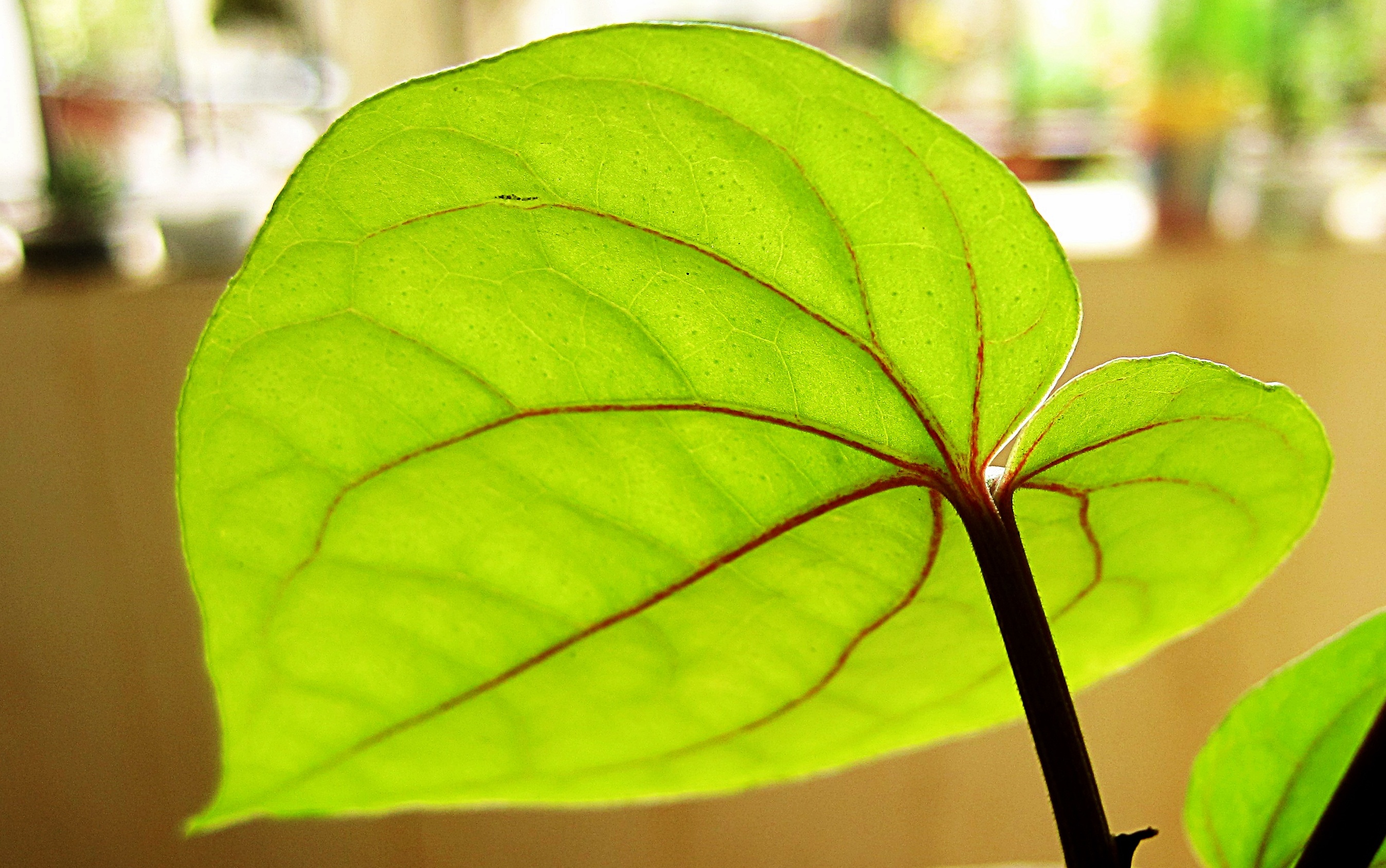
Betel leaf, pan in Bengali, is the leaf of Piper betle, a creeper of the pepper family grown in tropical regions. Banglapedia describes the stems as semi-woody and climbing by many short roots, with large, broadly ovate leaves 15 to 20 centimetres long. People across South Asia, the Gulf states, South-East Asia and the Pacific chew it, and in Bengal it has long been part of social custom: offering pan at a formal occasion traditionally signalled that it was time for guests to leave.
The crop needs particular ground and close attention. According to Banglapedia, land chosen for a baroj is usually high, with a stiff soil, near a stream or pond; earth is dug from a neighbouring field to raise the site. Oil cake and cow dung were the traditional manures, and chemical fertiliser is now used alongside them. Cuttings are planted in May and June in parallel rows about two feet apart and twined around upright sticks of split bamboo and reed. The whole garden is enclosed by a wall of bamboo and reed five or six feet high and roofed with the same material to protect the plants from sun and stray cattle, and the vines are watered regularly in the hot months.
Leaves are picked through the year, but the encyclopedia records three main harvests, named after the Bengali months in which they fall: Kartik, Phalgun and Ashar. Consumers rate Kartik leaf the best. When plucking, the rule is to leave at least sixteen leaves on each vine.
The DAE's crop page for betel gives the official outline for growers. It lists BARI Pan-1, BARI Pan-2 and BARI Pan-3, the varieties of the Bangladesh Agricultural Research Institute, together with local types such as mitha pan, sanchi and Khasia pan. It gives May to September as the planting period, and June to August for Khasia pan. Each bed carries two rows, with a hole every six to eight inches and one cutting in each hole; the vines are tied to thin bamboo stakes about two metres tall as they grow, and gaps are filled with new cuttings. The page puts the planting material at 320 to 400 vines per decimal and the yield at 40 to 72 kilograms per decimal, depending on variety.
The same page names the problems a grower should watch for: thrips, aphids, black flies and whiteflies; termites and black beetles; red mites; and leaf spot and stem and leaf rot. It advises irrigating early in the day, draining excess rainwater quickly after heavy rain and repairing the fence and enclosure after bad weather. Because product choice and dose depend on the pest and the garden, growers are advised to take the upazila agriculture officer's recommendation before spraying, to follow the label, to wear protective clothing and to keep spray out of open water.
Rajshahi's sweet betel, the variety Jahurul brought
Betel leaves differ in shape, softness, pungency and aroma, and almost every betel-growing district has its own type. Banglapedia lists supari pan, mitha (sweet) pan and sanchi pan among the common kinds, and notes that Bangla pan is also known as mitha pan or the pan of Rajshahi.
Research supports that description. In a study published in The Agriculturists in September 2020, scientists at Sher-e-Bangla Agricultural University in Dhaka, working with a BARI researcher, compared 13 betel vine cultivars collected from different parts of Bangladesh in an experimental baroj from March 2016 to March 2017. They found no pungency in the leaf of the cultivar recorded as misti pan, which also gave one of the highest yields, 23.46 tonnes per hectare a year, close to BARI Pan-1's 23.82 tonnes. The authors concluded that misti pan seemed a better cultivar in terms of both yield and leaf quality.
In Rajshahi itself, sweet betel dominates. A grower from Durgapur upazila told BSS in March 2023 that two types are grown locally, sweet betel and sanchi, and that sweet betel makes up 70 per cent of cultivation and is the more popular. Protidiner Bangladesh reported in May 2024 that the district grows mainly three varieties, mishti pan, sanchi pan and dudhswar, and that betel has been grown in Rajshahi for more than 500 years.
In 2024 the leaf won national recognition. Rajshahi's deputy commissioner applied in August 2023 for registration of Rajshahi betel as a geographical indication (GI), according to The Daily Ittefaq. On 15 February 2024 the Ministry of Industries published a journal recognising three new GI products, Jessore's date-palm molasses, Rajshahi's sweet betel leaf and Jamalpur's nakshi kantha, bringing the number of approved GI products in Bangladesh to 31, Desh Rupantor reported that day. On 25 April 2024 the Department of Patents, Designs and Trademarks (DPDT) under the Ministry of Industries handed over the registration certificate, Ittefaq reported. A GI ties a product's name to the place whose soil, climate and know-how give it its character; Bangladesh's first was Jamdani sari, recognised in 2016.
Rajshahi's betel economy in figures
The scale of the trade Jahurul tapped into is large. In March 2023 BSS quoted Department of Agricultural Extension figures for Rajshahi district: about 38,900 farmers were growing betel on 4,496 hectares that season, against a target of 76,678 tonnes worth about Tk 623.82 crore, after 37,932 farmers had harvested 73,771 tonnes from 4,361 hectares the season before. A DAE deputy director told the agency that the climate and land of Mohanpur, Bagmara, Durgapur, Puthia and Paba suit the crop, that betel is grown in every upazila of the district and that Mohanpur was the pioneer.
By February 2024 the DAE's count had risen again. The Financial Express reported from Rajshahi that the district had 39,101 betel farmers and 39,876 betel gardens, that 77,219 tonnes had been produced from 4,580 hectares in the first seven months of the 2023-24 financial year, and that farmers sell in 20 markets across the district, with Bagmara, Mohanpur and Durgapur the leading upazilas. The paper said the trade was reported to exceed Tk 25 billion a year. It also reported that the DAE had taken an initiative to set up the country's first betel research centre in Rajshahi, with a proposal sent to the ministry and a site chosen in the Mougachi area of Mohanpur after a feasibility visit.
The same reports give a sense of what growers in Rajshahi said about costs and returns, and they vary. The Financial Express quoted the DAE as saying a farmer can earn at least Tk 35,000 a month from a bigha, against Tk 2 to 2.5 lakh to set a bigha up, and growers as saying a garden can last 30 to 40 years. Protidiner Bangladesh put the set-up cost of a bigha at Tk 1 to 1.5 lakh for fencing, shelter, labour and vines, with low costs after the first year. A Rajshahi University agronomy professor told BSS in 2023 that one bigha could earn Tk 2 to 3 lakh with modern methods. These are the papers' and their sources' figures for Rajshahi, not Nagarpur's; Jahurul's own costs and earnings are the ones he gave above.
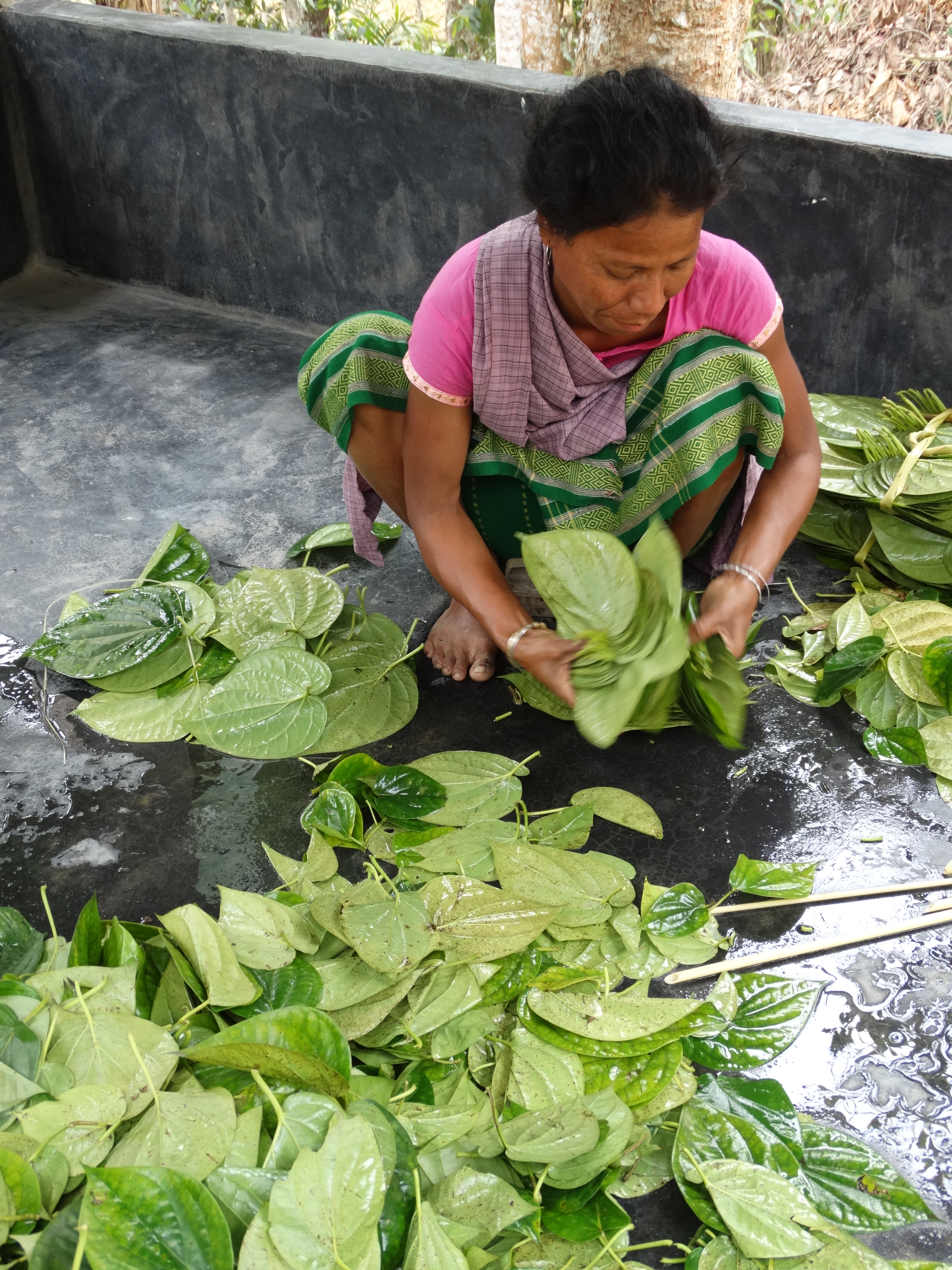
Betel is sold by count, not by weight. Protidiner Bangladesh explained in May 2024 that one bira is 64 leaves, and that 2,048 leaves, or 32 bira, make up the larger unit traders call a poa. The paper reported the main weekly hats as Ekdilatala in Mohanpur, Machmoil in Bagmara, Daokandi in Durgapur and Baneshwar in Puthia, and said most of the leaf goes to Dhaka and on to the Middle East, with some sent to Thakurgaon, Panchagarh, Dinajpur and Nilphamari.
Betel growing elsewhere in Bangladesh and the export trade
Rajshahi is not the only betel district, and sweet betel is grown elsewhere too. In January 2024 bdnews24.com reported from Baliakandi upazila of Rajbari that betel was grown there on 85 hectares in 814 barojs, 516 of them sanchi and 298 sweet, and that only the sweet leaf was being exported. The upazila agriculture officer said farmers sold about Tk 70 to 76 crore of betel a year, and the report said the department did not train farmers in betel cultivation but gave advice.
The picture is not one of growth everywhere. In February 2023 the Bangladesh Post reported from Chuadanga that betel covered 1,607 hectares in the district's four upazilas but had stopped expanding since 2015 as the cost of bamboo, fertiliser, pesticide and skilled labour rose while leaf prices did not keep pace, and farmers there cited diseases and adverse weather among their losses. Banglapedia, too, notes that betel farming needs heavy capital and that its acreage had been falling where other crops paid better, and gives a national figure of about 14,175 hectares and 72,500 tonnes a year, without stating the year.
Exports have a long history and a recent setback. Banglapedia records that Bangladesh began sending betel leaf to Europe in 1974-75 and to Saudi Arabia in 1991, with buyers mainly among South Asians abroad, and lists Natore, Kushtia, Rajshahi, Barishal, Khulna and Chuadanga among the districts that supply export-quality leaf. In February 2014 the European Union barred Bangladeshi betel leaf because of Salmonella found in consignments, a ban later extended until 2020, The Daily Star reported in May 2021. Export earnings fell from $29.48 million in 2013-14 to $1.90 million in 2019-20, and the ban was lifted on 15 May 2021 after Bangladesh showed it met the EU's conditions. The first shipment of about one tonne then left from the DAE's central packing house at Shyampur in Dhaka, with every consignment requiring a health certificate from a laboratory of international standard.
Photo: Reaid Hossain / Wikimedia Commons (CC BY-SA 4.0)
Sources: Jagonews24, Banglapedia, Department of Agricultural Extension (BAMIS crop page), The Agriculturists (Sher-e-Bangla Agricultural University study, 2020), Bangladesh Sangbad Sangstha (BSS), The Financial Express, Desh Rupantor, The Daily Ittefaq, Protidiner Bangladesh, bdnews24.com, Bangladesh Post, The Daily Star
Comments
(0)