
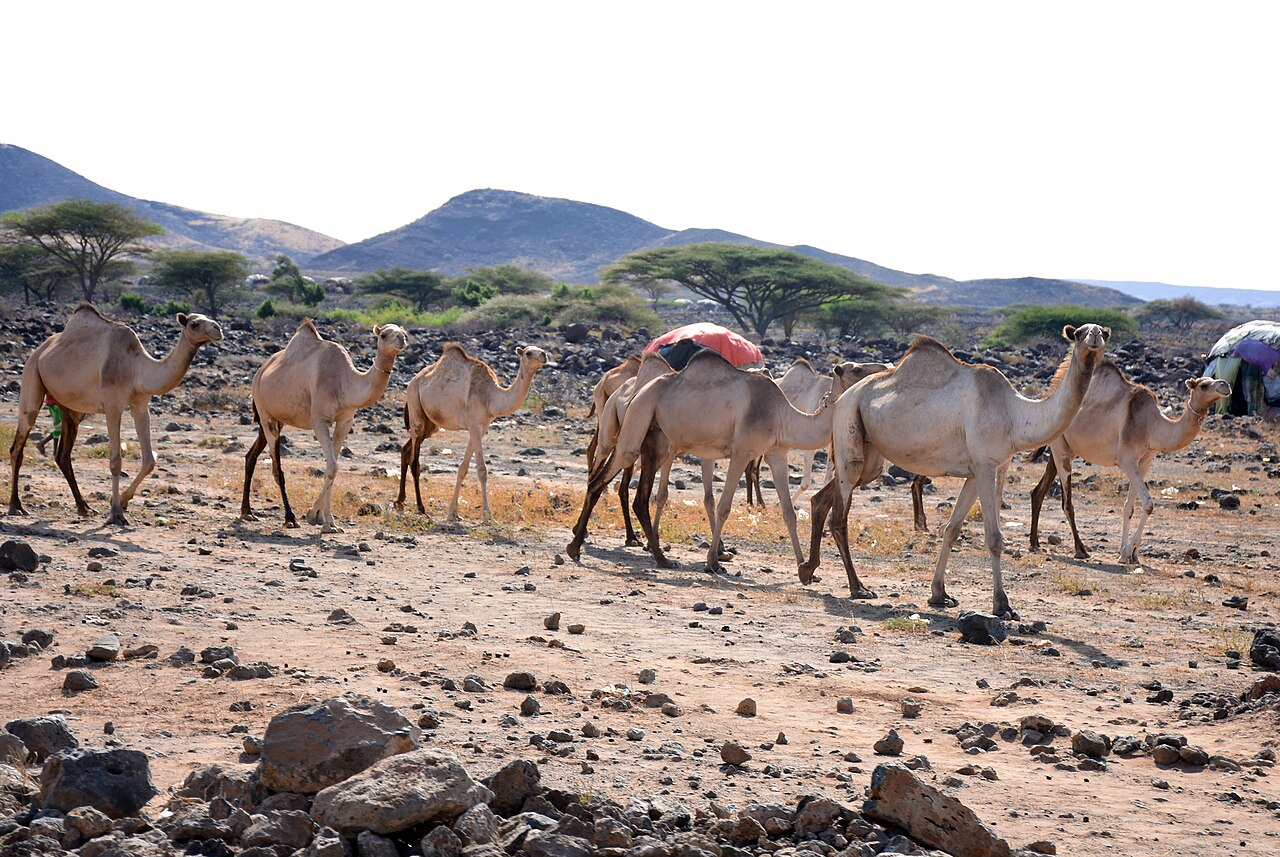
Pastoral communities on both sides of the Kenya-Ethiopia border held their first cross-border camel caravan in Moyale over three days in August 2026, walking 12 kilometres together and reviving a peace ceremony that had not been held for forty years, the International Livestock Research Institute (ILRI) reports.
The Borana, Gabra, Gare, Burji, Sakuya and Somali communities share grazing land, languages and trade, and depend on livestock for food and income, but the region has lived with recurring conflict and competition over resources. Before the caravan, the Borana and Gabra held Qumbi, an intercommunal peace ceremony that includes the exchange of customary incense. The caravan was flagged off by Benedict Munywoki, Deputy County Commissioner of Moyale Sub-County in Kenya, and Galma Koropicha, Mayor of Moyale Town in Ethiopia, and participants planted fruit trees at schools and hospitals along the way.
Camel owners described what the animals mean to a pastoral household. Asli Ali Dido, from Butie in Moyale Sub-County, said camels give milk even when other food is scarce, milk that is sold to meet medical emergencies or school fees, and carry children, the sick, the elderly and household goods when families move in search of pasture and water. Because camels have a long lactation and can give up to ten litres of milk a day, that milk is a steady income for women. Hawo Kontoma of the Bakalcha women's group said a big camel's hump can yield up to twenty litres of oil for cooking and sale.
Women and young people showed camel products made for today's market: yoghurt, fermented and processed fresh milk, dried meat and biscuits. At the Moyale Sessi Camel Milk Cooperative, member Asha Diba Nura said young people on motorbikes collect milk from herders in the rangelands and bring it to the cooperative's facility, where it is tested, packaged and sold fresh or fermented.
After the caravan, ILRI and ICRISAT trained 55 young people from Kenya and Ethiopia in business opportunities along the camel value chain. Tahira Mohamed, ILRI's regional partnership and engagement lead, said the aim was to show that pastoralism "is not simply a way of life inherited from the past, but an economy that can create new opportunities".
ILRI organised the caravan with support from the CGIAR Food Frontiers and Security Science Program, IGAD's CEWARN early-warning programme and local partners CIFA and SND, as part of the International Year of Rangelands and Pastoralists 2026. The story was written by Polycarp Otieno Onyango of ILRI.
Photo: Tish Madesh / Wikimedia Commons (CC0)
Source: CGIAR
Comments
(0)