
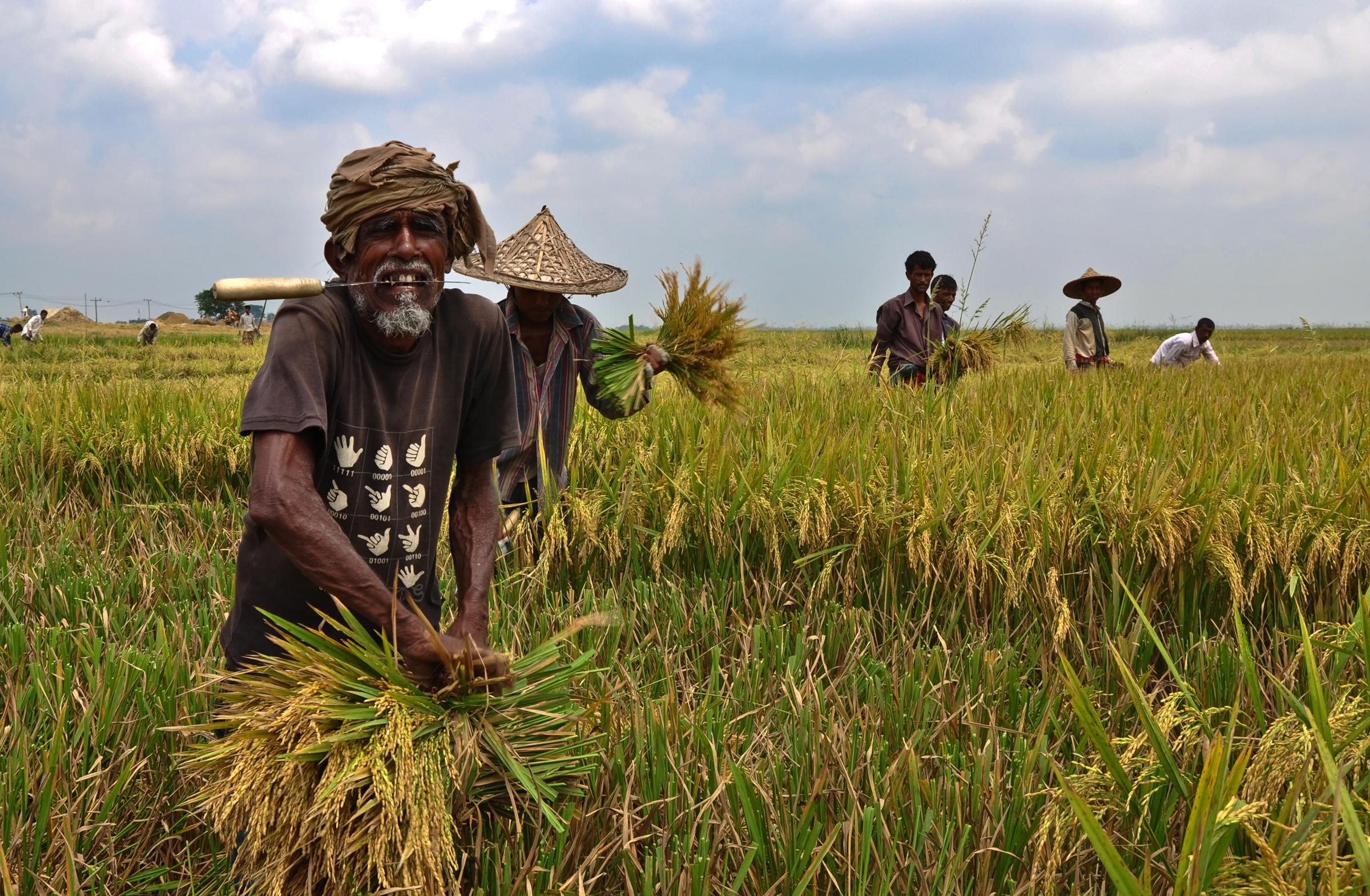
Two days of continuous rain and water rushing down from the hills submerged ripe boro paddy across Moulvibazar district in north-eastern Bangladesh at the end of April 2026, in the middle of the harvest. On Wednesday, 29 April 2026, Jagonews24 reported that most of the district's ripe paddy was under water and that farmers who could not bring their crop home were in despair. Farmers said that paddy which had escaped the flood on the night of Tuesday, 28 April, went under water on the morning of 29 April.
Fields under water in Kamalganj, Rajnagar and Sadar
The Jagonews24 correspondent visited several areas of Kamalganj, Rajnagar and Moulvibazar Sadar upazilas and found vast stretches of cropland under rain and runoff water. Farmers there said the two days of non-stop rain had flooded different parts of the district. The crop they had tended since winter was ripe and ready to cut when the water arrived, and many of them could do nothing but watch.
The rain was part of a wider spell over the north-east. In the 24 hours to 6 pm on Tuesday, 28 April, the Bangladesh Meteorological Department recorded 146 millimetres of rain at Srimangal, one of the upazilas of Moulvibazar district, bdnews24.com reported that night. Bhola had the country's highest reading in that period, 152 millimetres, followed by Feni with 151, Cumilla with 103 and Sylhet with 92. A meteorologist at the department told bdnews24.com that this was the Kalbaishakhi (nor'wester) season, that a strong westerly low lying over West Bengal was increasing the storms, and that the amount would stay somewhat higher until 3 or 4 May.
The department's regular bulletin at 6 pm that Tuesday forecast light to moderate rain or thundershowers with gusty winds at many places in the Dhaka, Mymensingh, Khulna, Barishal, Chattogram and Sylhet divisions over the next 24 hours, and moderately heavy to very heavy falls at some places in the Dhaka, Mymensingh, Barishal, Chattogram and Sylhet divisions. On Wednesday morning The Business Standard (TBS) quoted the department as saying that rain could continue across the country, Sylhet region included, until 3 or 4 May, with heavy rain likely in the Sylhet region until 1 or 2 May.
How much of the harvest had been cut
According to the district office of the Department of Agricultural Extension (DAE), boro paddy was grown on 62,400 hectares in Moulvibazar in the 2026 season. Of this, 27,355 hectares lay in the haor (wetland basin) areas, where about 83 percent of the paddy had been cut by the time of the report. In the non-haor areas boro was grown on about 35,000 hectares, and only 17 percent of that had been harvested.
Md Jalal Uddin, deputy director of the DAE in Moulvibazar, told Jagonews24: "So far 83 percent of the paddy has been cut in the haor areas and 17 percent in the non-haor areas. If the water drains quickly from the submerged areas, some of the paddy may be saved."
Eleven days earlier the season had looked promising. On 18 April 2026 Prothom Alo reported from the Kawadighi haor that the DAE put the district's boro area at the same 62,400 hectares, with BRRI dhan92, BRRI dhan108, BRRI dhan29 and BRRI dhan28 the most widely grown varieties. At that point about 30 percent of the crop was at the booting stage, about 15 percent was flowering and most of the rest had filled its grain; about 4,500 hectares had been harvested. The deputy director told the paper that the yield was good overall and that the occasional rain had not caused a big problem, but that heavy rain or hail could create a risk. He hoped the haor harvest could be finished within two weeks.
The same report said that rain since mid-Chaitra (early April) had threatened to drown paddy on some low land in the Kawadighi haor. The situation improved after embankments blocking the flow of water were cut, and major damage was avoided because the Kashimpur pump house of the Manu River Irrigation Project was running.
On the evening of 28 April the district's additional deputy commissioner (general) told bdnews24.com that the district disaster management committee had met on Monday, 27 April, and that all upazila executive officers and the departments concerned had been alerted. Asked how much paddy had been cut, he said the main concern was for two upazilas, Barlekha and Juri, where close to 90 percent of the paddy had been harvested.
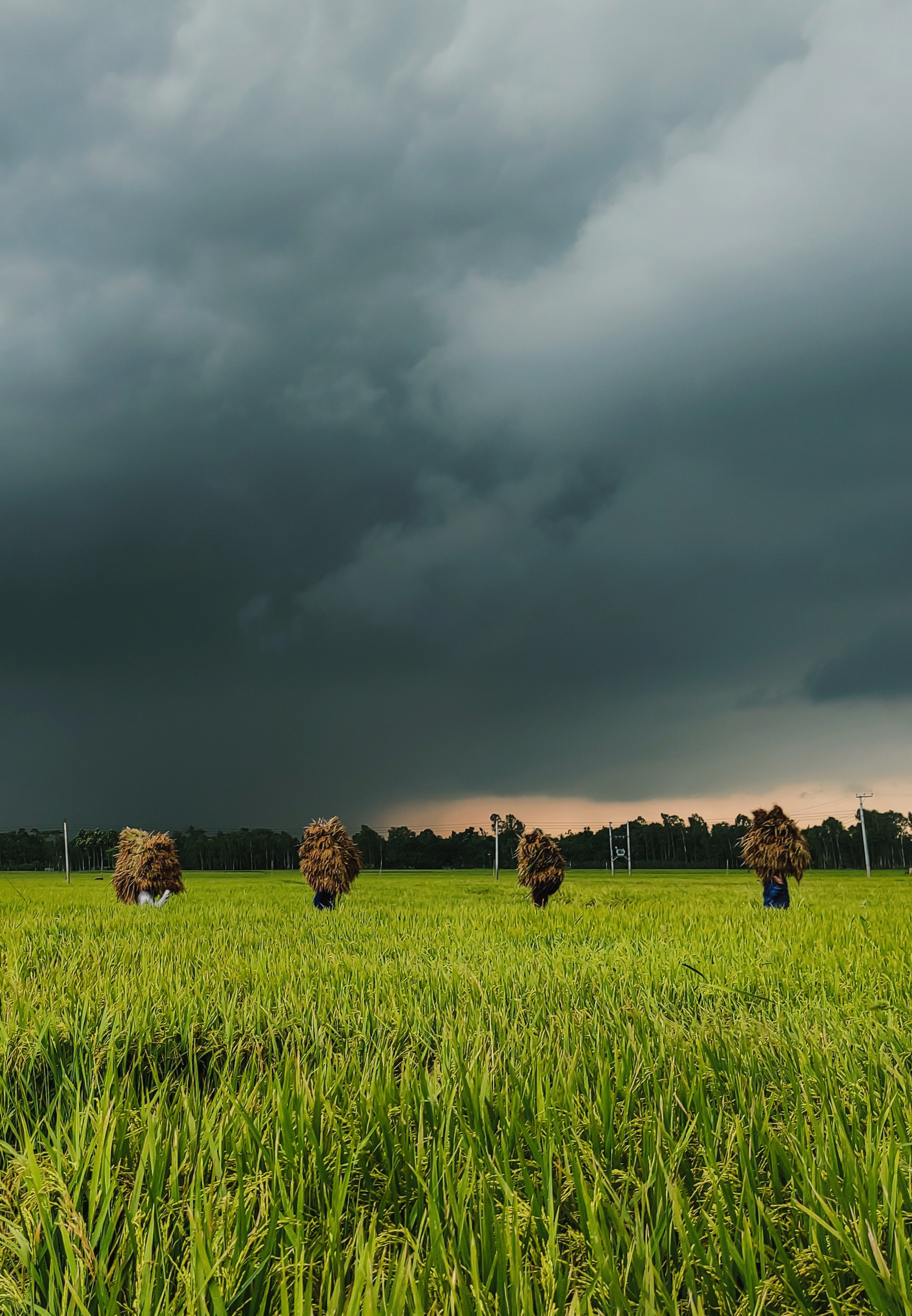
"Everyone is going home empty-handed"
Kamal Ahmed, a farmer in Kamalganj, told Jagonews24: "One acre of my land went under water just at harvest time. I am worried about how I will eat rice for the rest of the year. It is not just me; every farmer like me has had the same bad luck. Everyone is going home empty-handed. The paddy field went under before my eyes and I could do nothing."
Another farmer, Sajib Ahmed, said: "I grew the paddy with a lot of hard work. I had even taken money in advance by selling paddy at Tk 800 a maund. How will I repay it now? On one side there is the burden of debt, on the other there is no food at home. All in all, I am in a very hard situation."
The price Sajib Ahmed mentioned matched what farmers elsewhere in the haor region were reporting that week. On 29 April TBS quoted a farmer in Dirai upazila of Sunamganj as saying that millers were buying paddy at Tk 800 a maund while a harvest labourer had to be paid Tk 1,000 to 1,200 a day. A week earlier, on 22 April, Prothom Alo reported from the Kishoreganj haors that farmers said it cost more than Tk 1,200 to grow a maund of paddy, which they were selling for Tk 700 to 800, while a day's wage for a reaper was Tk 900 to 1,000.
The government's purchase price was higher. The DAE's deputy director in Sylhet told TBS that the official price of paddy was Tk 1,440 a maund and that government procurement would begin in the first week of May.
Rivers above the danger level and a flood warning
The rain upstream was filling the rivers that drain into Moulvibazar. The Flood Forecasting and Warning Centre (FFWC) of the Bangladesh Water Development Board (BWDB) said that at 6 pm on Tuesday, 28 April, the Manu River at the Moulvibazar point was flowing 110 centimetres above its pre-monsoon danger level. In Netrokona the Bhugai-Kangsha River at Jariajanjail was 28 centimetres above its pre-monsoon danger level. Bonik Barta and bdnews24.com carried the figures that evening.
The centre's forecast, as reported by TBS on the morning of 29 April, said that water levels in the main rivers of the north-eastern haor basin had risen over the previous 24 hours, with heavy to very heavy rain recorded in the Sylhet-Sunamganj, Moulvibazar-Habiganj and Netrokona-Kishoreganj areas and likely to continue for three days. The Manu, Khowai and Juri rivers could flow above the danger level within 24 hours, which could create floods in the low-lying areas of Moulvibazar and Habiganj. Overall, the centre said, short-term floods could occur in the riverside low-lying areas of Sylhet, Sunamganj, Moulvibazar, Habiganj and Netrokona.
The BWDB opened a control room on 28 April to collect flood data from its field offices and publish it. The executive engineer in charge told bdnews24.com that the centre had forecast the flood on 23 April and had begun running a ticker on television on 24 and 25 April, and that the control room was opened because a flood situation had nearly arrived. An additional secretary at the Ministry of Disaster Management and Relief said that allocations were being made to Sylhet and Mymensingh according to the deputy commissioners' requests and that response units were ready.
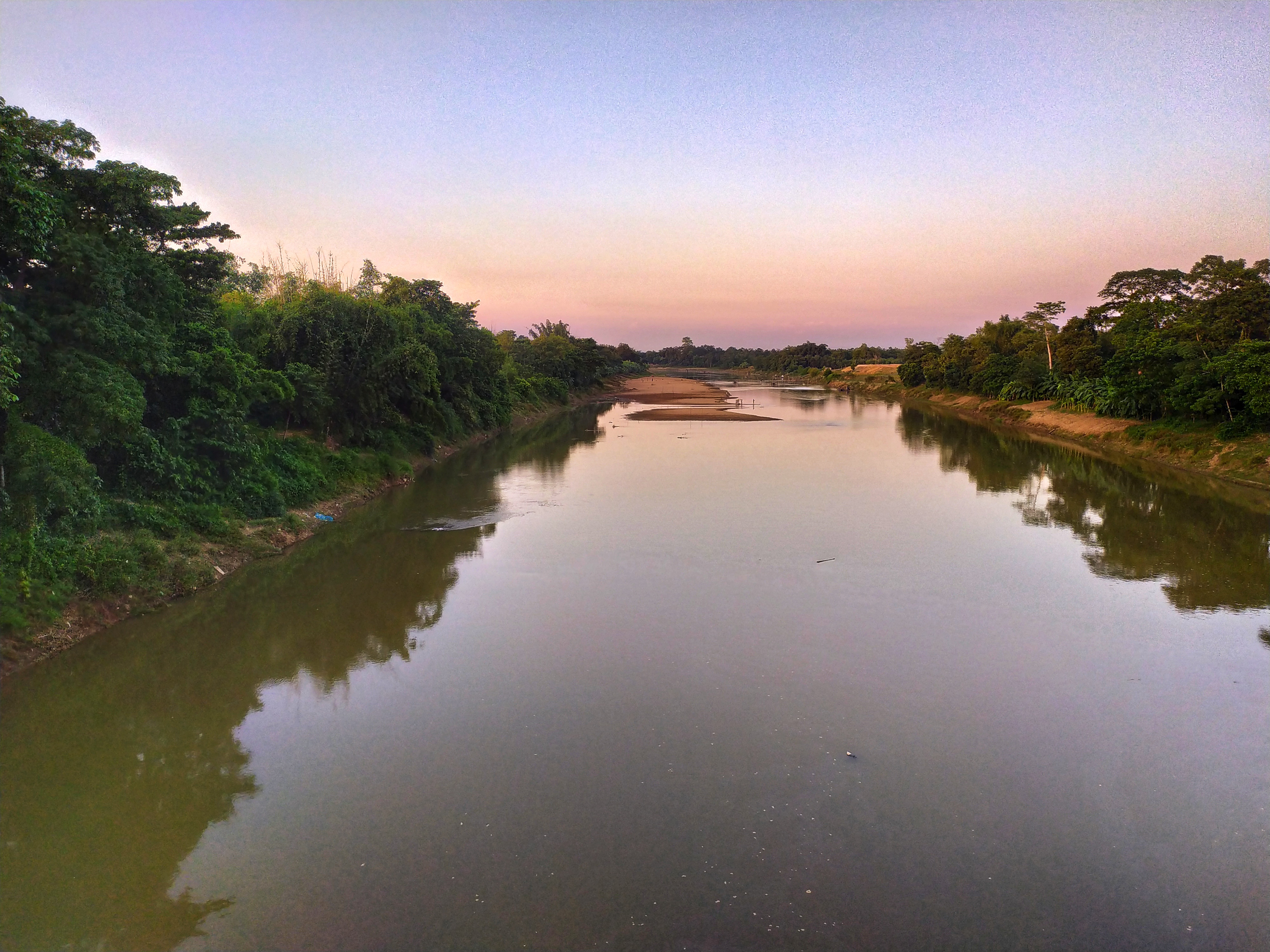
Moulvibazar and its rivers
Moulvibazar is a district of Sylhet division covering 2,799.38 square kilometres. Banglapedia describes it as bordered by Sylhet district to the north, the Indian states of Tripura and Assam to the east and south, and Habiganj district to the west. It has seven upazilas: Kamalganj, Kulaura, Juri, Moulvibazar Sadar, Barlekha, Rajnagar and Sreemangal. Moulvibazar became a subdivision in 1960 and a district in 1984. The 2022 population census counted 2,123,447 people in the district. Its main rivers are the Manu, Dhalai, Juri and Longla, and its major wetlands are the Hakaluki, Hail and Kawadighi haors. Agriculture is its main economic activity, and the district has a large number of tea gardens as well as the Bangladesh Tea Research Institute.
The Manu, the river that rose above its danger level on 28 April, rises below the Kahoisib peak of the Sakkanklang range in Tripura, India. Banglapedia says that in its upper reaches it runs through narrow gorges with rock walls often 30 metres high before becoming a broad, slow, meandering stream on the plain. It enters Bangladesh through Kulaura upazila and meets the Kushiyara River at Manumukh. It is about 167 kilometres long and is the longest river of Tripura.
The Dhalai, the main river of Kamalganj, also rises in the hills of Tripura. It is about 117 kilometres long, enters Bangladesh in Kamalganj upazila and joins the Manu in Rajnagar upazila. Because both rivers come down from hills across the border, heavy rain in their catchments sends water quickly into the plains of Moulvibazar.
Kamalganj, one of the three upazilas named in the Jagonews24 report, covers 485.26 square kilometres on the district's border with Tripura and Assam. Banglapedia lists aman and aus paddy, wheat, sugarcane, tea, mustard, potato, betel leaf and vegetables among its main crops. Rajnagar, to its north, covers 338.15 square kilometres; the Manu, Dhalai and Kushiyara rivers flow through it, the Kawadighi haor lies in it, and paddy, tea, potato, mustard, ginger, turmeric and vegetables are its main crops. In Rajnagar, Banglapedia records, agriculture accounts for 51.61 percent of the sources of income.
The Kawadighi haor and the Manu irrigation project
Much of the boro land of Sadar and Rajnagar lies around the Kawadighi haor, which spreads across both upazilas. Prothom Alo reported in February 2025 that the DAE's Moulvibazar office counted 10,000 hectares of boro land in the Kawadighi haor area under the Manu River Irrigation Project. In April 2024 the same paper reported the DAE as saying that, with irrigation from the project, farmers had in recent years grown boro on land around the haor where it had not been grown before.
Under the project, the Kashimpur pump house on the Koradair canal pumps excess water out of the Kawadighi haor into the Kushiyara so that the boro crop is not flooded at harvest. The Daily Star reported in April 2011 that eight pumps, each able to discharge 150 cubic feet of water a second, had been installed at the pump house in 1980, and that by then only three of them were working.
Farmers around the haor have long feared the weeks of Baishakh. In February 2025 the president of the Sadar upazila committee of the Haor Rokkha Songram Committee told Prothom Alo that rain and hill water coming down from upstream often drowned many farmers' paddy as it ripened in Baishakh, and that farmers could bring their crop home if the Kashimpur pump house worked properly at that time. In April 2024 farmers at Kadipur on the edge of the haor told the paper that their bigger worry was hail, which they call "pathor" (stone).
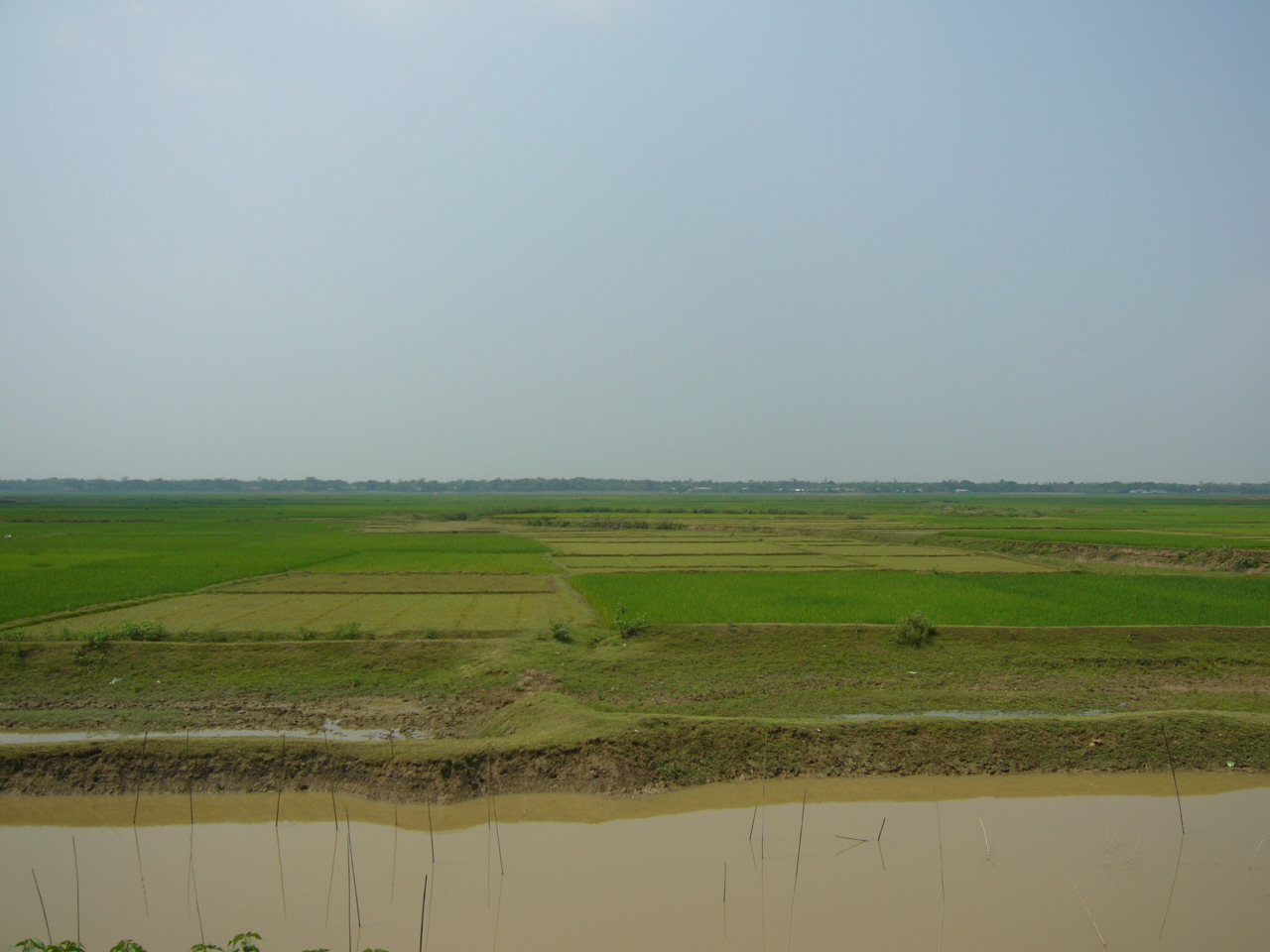
Boro, the haor's single crop
A haor is a large, bowl-shaped tectonic depression that fills with water in the monsoon and largely dries out afterwards. Banglapedia counts about 47 major haors and some 6,300 beels in the haor basin of greater Sylhet and greater Mymensingh; the basin covers all of Sunamganj district, most of Habiganj and parts of Sylhet and Moulvibazar. The Hakaluki haor alone covers about 181 square kilometres across Kulaura, Juri and Barlekha upazilas of Moulvibazar and two upazilas of Sylhet, and about 200,000 people depend on its resources. As population pressure grew, boro cultivation spread onto the drained margins of these wetlands.
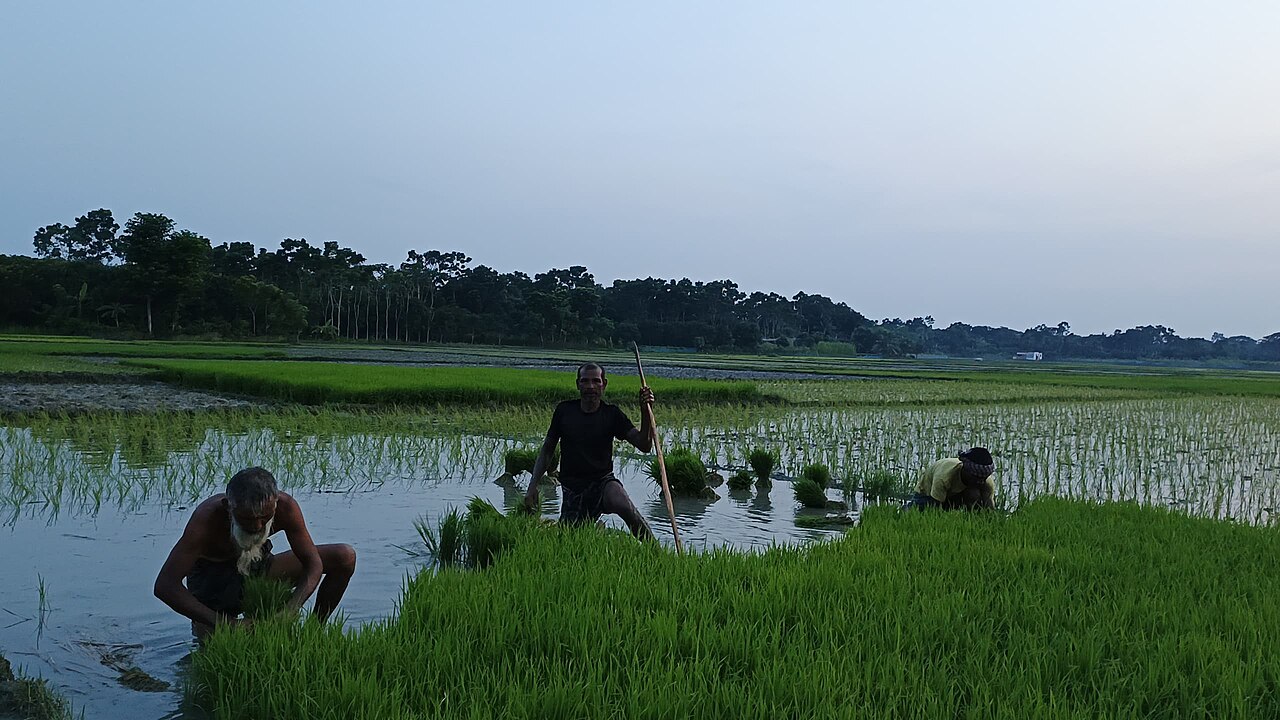
Boro is the dry-season rice crop. Its seedlings are planted in winter and the crop depends on irrigation; Banglapedia gives April to May as the harvest season for local varieties and May to June for high-yielding ones. In the Kawadighi area, Prothom Alo reported in 2025, planting was over by the end of Poush and the start of Magh (mid-January). In much of the haor the land is under water for the rest of the year, so boro is the only crop a farmer can take from it, and an early flood at harvest can wipe out a household's food for the year, as Kamal Ahmed feared.
The crop matters well beyond the district. According to TBS, most of the country's rice is grown in the boro season and about 20 percent of it comes from seven haor districts: Sunamganj, Sylhet, Habiganj, Moulvibazar, Netrokona, Kishoreganj and Brahmanbaria. The DAE said boro was grown on 963,000 hectares in these seven districts in 2026, 455,000 hectares in the haors and 508,000 outside them. As of 29 April, the DAE said, 58 percent of the haor paddy had been cut, nearly half of the crop was still in the field, and about 17 percent of what remained was at risk of flooding.
The varieties grown have been changing. In April 2022 researchers at the Bangladesh Rice Research Institute (BRRI) and the International Rice Research Institute (IRRI) reported that two varieties released in the early 1990s, BRRI dhan28 and BRRI dhan29, had covered about 70 percent of the country's boro fields in recent years, but that BRRI dhan28 was giving the lowest yields with the highest pest incidence and BRRI dhan29 was suffering neck blast in some places. They named BRRI dhan88, BRRI dhan96 and BRRI dhan92 as the best boro performers in their trials, and BRRI dhan92 and BRRI dhan89 as the varieties with the highest yield advantage over BRRI dhan29. In Moulvibazar the DAE said in 2024 that BRRI dhan88, 89 and 92 were the varieties most grown that year.
Early floods in earlier years
Flash floods are, in Banglapedia's words, floods in which "water increases and decreases suddenly"; in Bangladesh they come from the hill catchments draining into the north-east and south-east, are mostly short but unpredictable in frequency and intensity, and several can occur in a single year on the flashy rivers.
The worst recent case came in 2017. On 8 April 2017 the Dhaka Tribune reported that at least 12,800 acres of boro paddy had gone under water in Moulvibazar, almost 13,500 hectares of nearly ripe paddy in Habiganj and at least 27,000 hectares in Sunamganj, after the Meghna, Kalni, Kushiyara and other rivers overflowed. Recalling that year on 27 April 2026, Prothom Alo wrote that in 2017 flash floods and hill water broke embankments in the Sunamganj haors and drowned the whole crop, that food shortages followed and rice prices rose, and that the government gave food aid to about 200,000 farm families in the district for a full year.
In 2026 the risk was felt across the region before the rain peaked. Prothom Alo reported on 27 April that in Sunamganj, where boro was grown on 223,511 hectares in 137 haors, 78,228 hectares had been cut by Saturday, 25 April, waterlogging from heavy rain had damaged paddy on 5,050 hectares, and half of the paddy still in the fields had not yet ripened because a lack of rain early in the season had slowed it. The BWDB had built or repaired 602 kilometres of crop-protection embankments under 710 projects in that district at an estimated cost of Tk 145 crore, and its executive engineer there warned that rain had already weakened the earth of the embankments.
Advice to farmers and the official response
The standing advice from agriculture officials in the haor districts that month was to cut the paddy as soon as it was 80 percent ripe rather than wait for it to ripen fully. The DAE's deputy director in Kishoreganj gave that advice in Prothom Alo on 22 April, warning that hail and early water could cause losses, and the additional deputy commissioner (general) of Sunamganj told bdnews24.com on 28 April that farmers were being urged to cut quickly any paddy that was more than 80 percent ripe.
Harvesting was slowed by a shortage of labourers and because combine harvesters could not be taken into waterlogged haors, officials in Sunamganj said. An additional director of the DAE's field services wing told TBS on 29 April that labourers were being sent from other districts to the areas at risk of flooding and that help was also being given with harvesters.
For the farmers of Kamalganj, Rajnagar and Sadar whose fields were already under water on 29 April, the hope was the one the deputy director had described: that the water would drain quickly enough for some of the paddy to be saved.
Photo: Balaram Mahalder / Wikimedia Commons (CC BY-SA 3.0)
Sources: Jagonews24, The Business Standard, bdnews24.com, Prothom Alo, Bonik Barta, The Daily Star, Dhaka Tribune, International Rice Research Institute (IRRI), Banglapedia, Wikipedia
Comments
(0)