
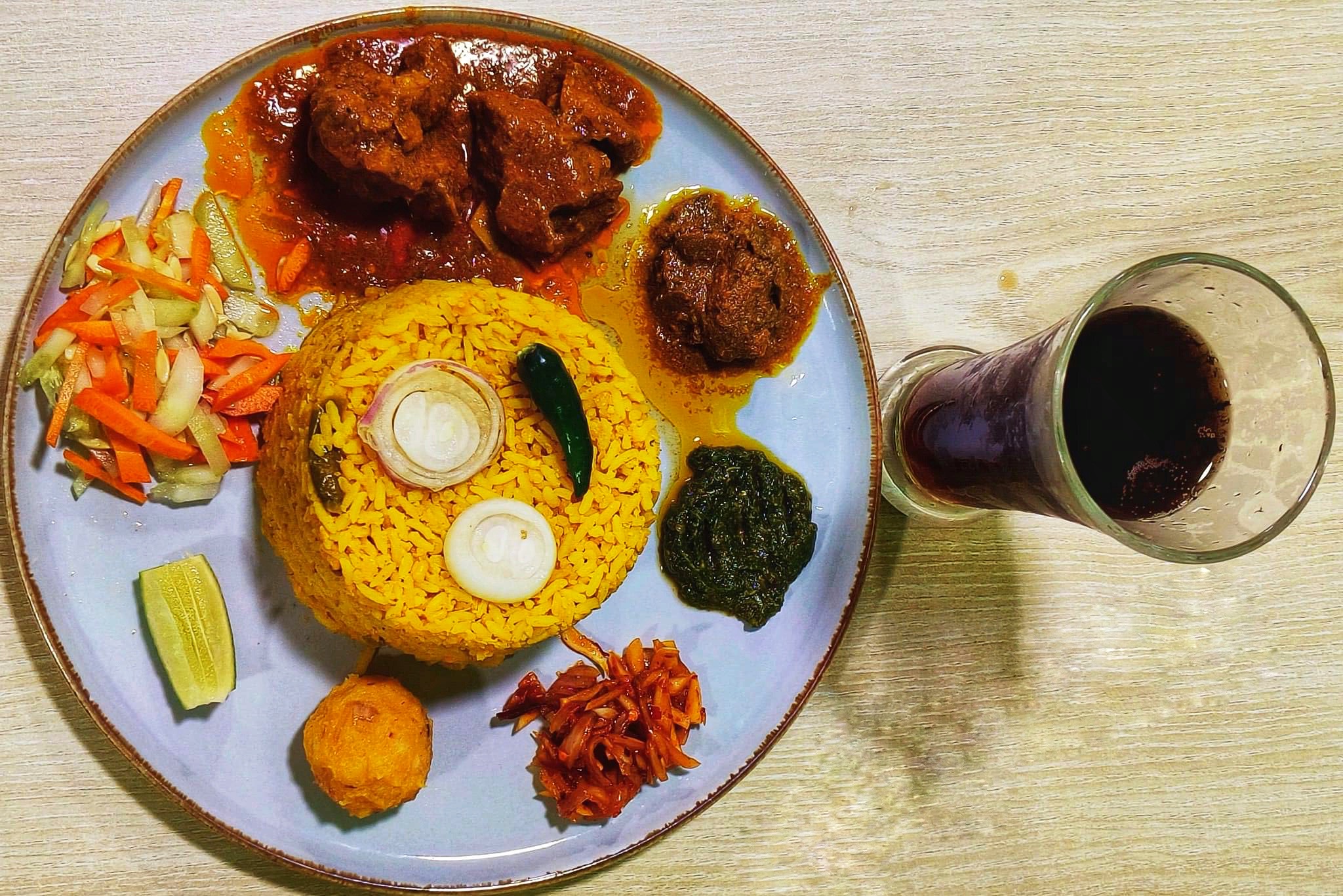
During Ramadan in March 2026, a coarse-rice khichuri that had gone viral on social media was one of the iftar dishes Dhaka was talking about. Jagonews24, which published a recipe for making it at home on 8 March 2026, reported that the dish was known mainly as Charsadda mota chawal khichuri, after a town in Pakistan, and that its taste and unusual texture had caught people's attention within a short time. By then, the paper said, it had become well known in Bangladesh too and was sold almost everywhere in Dhaka, in restaurants, in small shops in the lanes and from food carts, with many people choosing it as a special dish for iftar.
Ramadan of the Hijri year 1447 had begun in Bangladesh on Thursday, 19 February 2026. The Dhaka Tribune reported on the evening of 18 February that the National Moon Sighting Committee, meeting at the Islamic Foundation's conference room at Baitul Mukarram National Mosque, had announced the start of the month after the new moon was sighted from Netrokona, Sirajganj and Cox's Bazar districts.
Khichuri was already on many families' list of iftar favourites, the paper noted, and the version it described is a rich, meat-based one: beef cooked down with onion, ginger-garlic paste and ground spices, into which soaked coarse rice and a mix of mung and masoor dal are stirred and simmered until thick. The recipe is set out below as Jagonews24 gave it, together with background on the dish, its Pakistani namesake and its ingredients from encyclopedic, research and health sources.
A dish named after Charsadda
Charsadda is a town and the headquarters of Charsadda District in Pakistan's Khyber Pakhtunkhwa province. It lies in the Valley of Peshawar, about 29 kilometres from the provincial capital Peshawar, at an altitude of 276 metres. Its name is usually explained as "four roads", from chār ("four") and sadda ("road"). Pakistan's 2023 census counted 120,170 people in the town, and 99.2 percent of them speak Pashto. The place is ancient: Charsadda holds the ruins of Pushkalavati, the capital of Gandhara from the 6th century BCE to the 2nd century CE, and the oldest deposits found at its Bala Hisar mound are dated to about 1400 BCE.
The Associated Press of Pakistan (APP) wrote about the town's rice dish from Peshawar on 2 March 2024, when a cold, rainy spell had sent people looking for it. The agency described Charsadda's mota chawal ("thick rice") as a special rice variety from Charsadda district that turns golden brown when cooked and is served with yogurt, raita or pickle. A seller at the Pabbi bazaar, who said he had inherited the craft from his father, explained the method: the meat is cut into large pieces and mixed with ginger-garlic paste, salt, tomatoes, red chillies, black cardamom, turmeric, coriander, cumin, curry leaves and garam masala, cooked over a flame for about 30 minutes before onions and oil are added, and the rice is then cooked until it is golden brown.
APP found the dish sold in Peshawar's Firdous, Board, Namak Mandi and Qissa Khwani areas, by vendors on both sides of the GT Road between Peshawar, Charsadda and Mardan, and on the menus of restaurants across Khyber Pakhtunkhwa. Because it cost less than Peshawari rice pulao, the agency wrote, low-income families preferred it for weddings, birthday parties and other functions; a retired teacher from Nowshera district told APP that he bought it as a takeaway for his family for about Rs 300. In September 2024, Arab News ran a report from the district under the headline "'Mota Chawal' rice dish takes center table at wedding feasts in Pakistan's Charsadda".
The Dhaka version that Jagonews24 described kept the idea of thick rice cooked with plenty of meat and spice, but it is a khichuri: the rice is cooked together with lentils, which is what makes a khichuri in the first place.
Khichuri, an old dish of rice and pulses
Banglapedia, the national encyclopedia of Bangladesh, defines khichuri plainly as well-cooked rice mixed with pulse. It adds that pulses and vegetables added to khichuri increase its protein efficiency ratio, and so make it more nutritious than rice alone.
The dish is old and shared across South Asia; in Urdu and Hindi it is khichri or khichdi, and the word is traced to the Sanskrit khiccā, a dish of rice and legumes. The Moroccan traveller Ibn Battuta described khichri as a dish of rice and mung beans during his stay in India around 1350. The Ain-i-Akbari, the 16th-century record of Emperor Akbar's court written by his vizier Abu'l Fazl, lists it among the dishes of the royal kitchen with a recipe of rice, split dal and ghee, and the Anglo-Indian breakfast dish kedgeree is thought to derive from it.
Prothom Alo, in a feature on the history of khichuri published on 23 July 2025, also noted its mention in the medieval Bengali Manasamangal poems, and concluded that khichuri was not the Bengalis' alone but had been eaten in many parts of the subcontinent for a very long time. The same feature recalled that in rural Bangladesh khichuri was long regarded as a low-cost dish: it was cooked on days when there was little else in the house and was almost never served to guests, yet it never disappeared from the Bengali kitchen.
Rainy days and khichuri go together for most Bengalis, the paper wrote. Families who can afford it cook bhuna khichuri with mung dal and the small, aromatic kalijira rice; others make a loose, separate-grained khichuri of parboiled rice and several kinds of dal; and poorer households traditionally cooked latka, a thin khichuri made with rice, dal, a few vegetables and a whole pot of water, known in different regions as dhila, lyata or gola khichuri.
Bhuna, latka and Dhaka's khichuri fashions
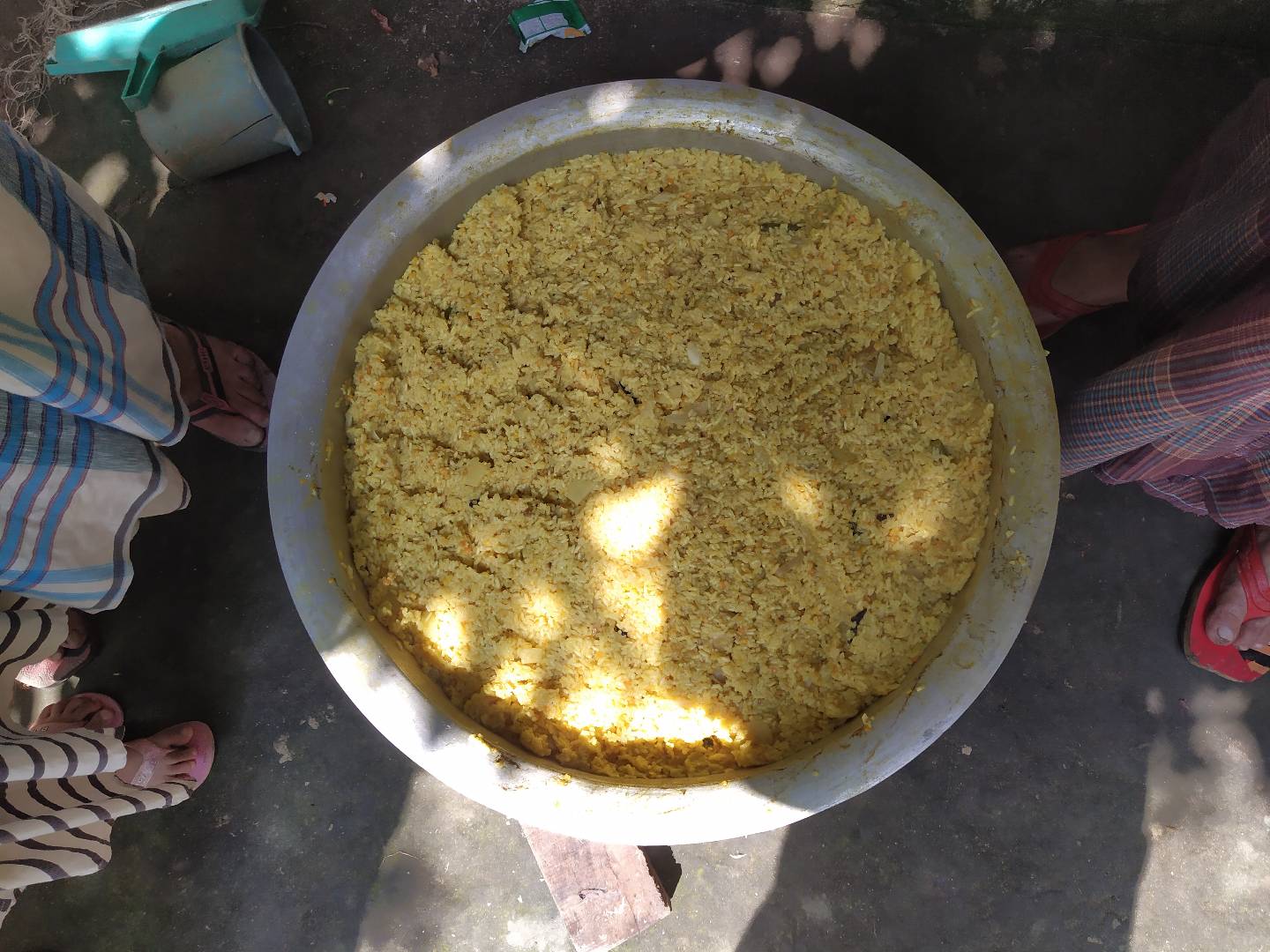
The coarse-rice khichuri was the latest of several khichuri fashions in the capital. The Daily Star's Bangla edition described in October 2024 how the two main Bengali styles differ. In bhuna khichuri, the ingredients are first lightly fried in ghee with the aroma of whole spices, which gives the dish a spiced, smoky flavour and keeps the grains of rice and dal separate. Latka khichuri, by contrast, is simple and fuss-free, needing no special day and no special serving. The food lovers the paper spoke to were divided: a local restaurant owner called bhuna the real khichuri, while another argued that both came from the same root and had simply taken different forms, latka for plain everyday eating and bhuna for celebrations.
By July 2025, Prothom Alo was reporting that latka, once the most neglected kind of khichuri, had become a fashionable dish among city people and even among Gen Z diners, served in air-conditioned restaurants and at family parties. Restaurants in Banani, Mirpur, Dhanmondi and Karwan Bazar sold it at prices from Tk 50 to almost Tk 1,000 a plate, with kala bhuna, kosha meat, chicken or duck, or simply as a vegetable khichuri with an egg, and almost always with pickle; a premium sweet shop in Gulshan charged Tk 900 for its latka. Older Dhaka shops famous for separate-grained or bhuna khichuri, the paper noted, did not serve latka at all.
The recipe that Jagonews24 published belongs to the bhuna family. The soaked rice and dal are fried with the meat and spices for two to three minutes before any water goes in, which the paper said makes the khichuri softer and tastier, and the pot is then cooked down until the khichuri is thick rather than soupy.
Why coarse rice
Jagonews24 did not name a rice variety for the dish, only mota chal, coarse rice. Bengali cooks have long valued thick grains for khichuri. In its July 2025 feature, Prothom Alo cited the West Bengal writer Anupam Pal's book Banglar Krishi o Krishak, which describes a rice called Ashail from the Barisal region that was grown only for cooking khichuri; its special quality was that the grain splits about halfway through cooking. Experienced cooks agree, the feature's writer added, that khichuri tastes best when the rice cracks open and takes in the juices of the dal and spices. He recalled a coarse Aman rice called Lakshmikajal from his childhood village in Narail, whose thick grains burst during cooking and bound the dal and spices together.
Rice is the staple of Bangladesh. Banglapedia states that almost 90 percent of the people of Bangladesh are rice eaters and that rice is grown throughout the year in three seasons, Aus, Aman and Boro, with transplanted Aman the most important by area. Households eat both atap rice, milled from sun-dried paddy, and siddha rice, milled from parboiled paddy. The Bangladesh Rice Research Institute (BRRI), founded in 1970 at Gazipur, 36 kilometres from Dhaka, breeds the country's high-yielding varieties and holds about 5,000 rice germplasms in its gene bank, according to the encyclopedia.
Coarse rice is also the cheapest grade on the market. Reporting on rice prices on 4 February 2025, The Business Standard listed Guti Swarna, BRRI-28, BRRI-29 and Paijam among the coarse varieties traded at Dhaka's Karwan Bazar, where retail Swarna sold at Tk 54-58 a kilogram. The Trading Corporation of Bangladesh (TCB) price list it quoted for Chattogram put coarse rice at Tk 54-56 a kilogram, medium rice at Tk 58-65 and fine rice at Tk 70-75.
Mung and masoor: the pulses in the pot
The recipe uses one cup of mung and masoor dal together. Masoor, the lentil Lens culinaris, is according to Banglapedia the most popular pulse crop in Bangladesh and one of the main items in the daily diet of most of its people. It is grown as a winter crop, cannot tolerate extreme cold or heat, has some drought tolerance and is highly susceptible to waterlogging. The whole seed contains about 25 percent protein, 55.8 percent carbohydrate, 1 percent fat and 3.7 percent fibre, and the split seeds are the dal cooked in soups.
Mung, Vigna radiata, is thought to have originated in South and Southeast Asia and is grown widely in Bangladesh, India, Pakistan, Myanmar, Thailand and beyond. Banglapedia describes two main types: the golden or yellow gram, sonamung, and the green gram, grown mostly for grain. In Bangladesh it is traditionally a winter crop, widely cultivated in Barisal and Patuakhali. The seeds are used whole or split into dal, and the plant also serves as fodder and as a green manure. Both are legumes, and adding them to rice is what gives khichuri the higher protein value that Banglapedia describes.
Ingredients
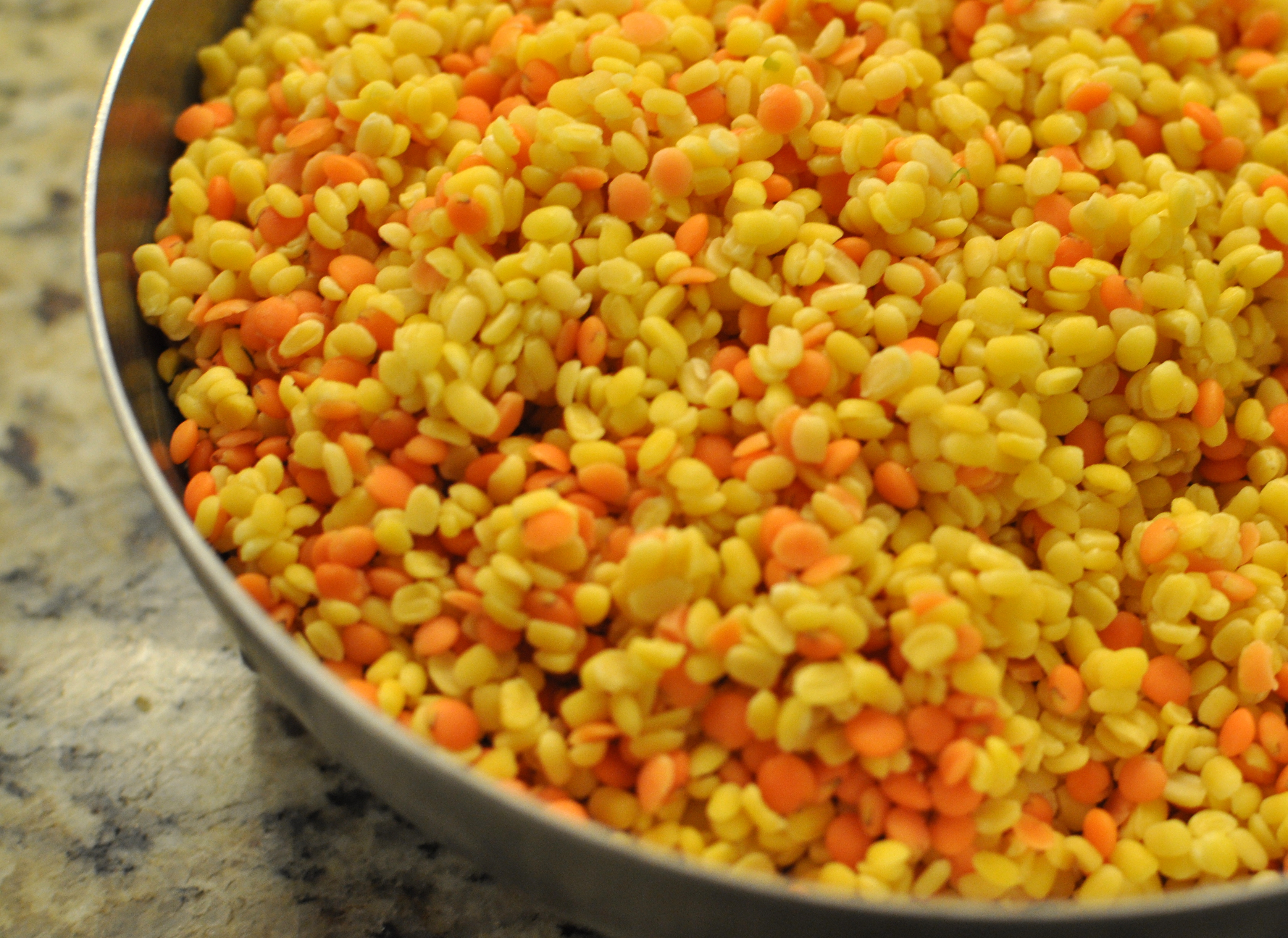
Jagonews24 listed the following ingredients for the dish:
- Beef, cut into small pieces: half a kilogram
- Coarse rice: 1 cup
- Mung and masoor dal together: 1 cup
- Chopped onion: half a cup
- Ginger-garlic paste: 2 tablespoons
- Green chillies: 4
- Turmeric powder: 1 teaspoon
- Chilli powder: 1 teaspoon
- Coriander powder: half a teaspoon
- Cumin powder: half a teaspoon
- Whole garam masala (cardamom, cinnamon, bay leaf): 4-5 pieces
- Ghee or oil: half a cup
- Salt to taste
- Water as needed
The method also uses chopped coriander leaves or beresta, the crisp fried onion of Bengali cooking, to finish the dish; they are not in the paper's list of ingredients.
Method, step by step
- Heat the oil or ghee in a karai or a heavy pot and temper the whole garam masala in it.
- Add the chopped onion and fry until golden.
- Add the ginger-garlic paste and all the ground spices and sauté them well.
- When the oil separates and rises above the spices, add the beef. Sauté it over a medium flame until the meat is tender and well blended with the spices.
- Meanwhile, wash the rice and dal well and soak them for about 30 minutes.
- Add the soaked rice and dal to the meat and stir-fry for 2-3 minutes; according to the paper, this makes the khichuri softer and tastier.
- Pour in hot water as needed, keeping the water a little above the level of the rice.
- Add salt and the green chillies, cover, and cook over a medium flame, stirring from time to time so that the khichuri does not stick to the bottom.
- When the rice and dal are soft and the water has reduced so that the khichuri is thick, scatter coriander leaves or beresta on top and take the pot off the heat.
- Serve hot at iftar.
The beef is cooked tender in its spices before the rice and dal go in, and the brief frying of the soaked grains in the spiced fat is the frying step that, in the Daily Star's description, gives bhuna khichuri its spiced, smoky flavour and keeps its grains separate.
Cooking and keeping it safely
A meat and rice dish cooked in the afternoon for the evening's iftar needs the ordinary care of any home kitchen. The World Health Organization introduced its Five Keys to Safer Food in 2001 as a short set of rules for every food handler: keep clean; separate raw and cooked; cook thoroughly; keep food at safe temperatures; and use safe water and raw materials. WHO's training manual for the Five Keys names meat, seafood, cooked rice, cooked pasta, milk, cheese and eggs as foods that give microorganisms ideal conditions to grow, since they need only food, water, time and warmth; one bacterium can become two in just 15 minutes, and within six hours one bacterium can multiply to more than 16 million.
For a beef khichuri, the manual's points come down to a few habits:
- Wash hands before handling food, and clean surfaces and equipment before using them again for other food.
- Use separate knives and cutting boards for raw beef and for cooked food, and store raw and cooked food apart.
- Check that the meat is cooked through, by making sure its juices run clear or by using a thermometer; soups and stews should be brought to the boil.
- Do not leave cooked meat at room temperature overnight to cool; store any leftovers in a cool place within two hours of cooking.
- Reheat cooked food until it is piping hot throughout.
- Use safe water, and wash fresh produce such as green chillies and coriander leaves.
WHO's manual lists stomach pains, vomiting and diarrhoea as the most common symptoms of foodborne disease, appearing for most such diseases 24-72 hours after the food was eaten, and notes that drinking plenty of fluids maintains hydration during diarrhoea. Infants, the sick, pregnant women and the elderly usually suffer more severe consequences.
Khichuri at the iftar table
The WHO country office for Bangladesh, in its Ramadan guidance of May 2018, called breaking the fast with dates a traditional and healthy way to begin iftar, since dates are an excellent source of fibre, and advised eating slowly, because large amounts of food taken quickly may cause heartburn and discomfort.
The same guidance advised drinking adequate amounts of water and eating water-rich foods such as soup, vegetables and fruit like cucumber, lettuce, tomato and watermelon at sehri and iftar; limiting sugary foods and drinks at iftar; limiting fried and fatty foods and fatty meats; choosing white meat over red, picking lean cuts and trimming visible fat; avoiding high-salt foods such as processed meats, pickles, salty cheeses and sauces; keeping sehri light and not skipping it; and staying active in the evening, for example with brisk walking.
For this recipe, which uses half a kilogram of beef and half a cup of ghee or oil, that advice points to lean beef with the visible fat trimmed, a modest portion and a light hand with the pickle that is often served with khichuri. People with diabetes, heart disease, high blood pressure, kidney disease or any other long-term condition, and pregnant women, should ask their doctor whether fasting and rich iftar dishes suit them before changing their diet.
Photo: রিজওয়ান আহমেদ / Wikimedia Commons (CC BY-SA 4.0)
Sources: Jagonews24, Dhaka Tribune, Associated Press of Pakistan (APP), Arab News, Prothom Alo, The Daily Star (Bangla), The Business Standard, Banglapedia, Wikipedia, World Health Organization (WHO), WHO Bangladesh

Comments
(0)