
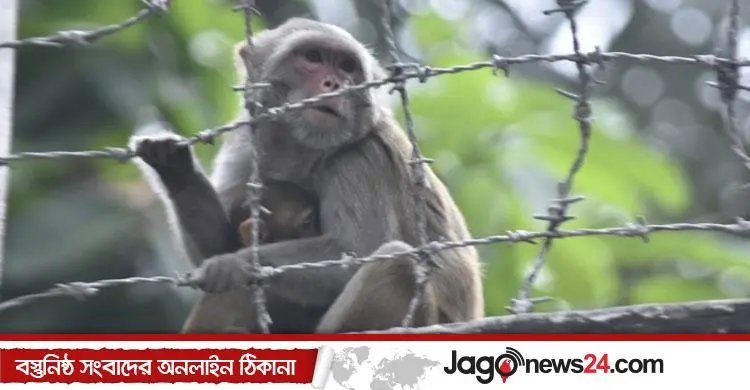
Amid Dhaka's concrete walls, smoke-filled sky and mechanical life, an unusual scene suddenly appeared: a troop of monkeys on the boundary wall of Bangabhaban. Some were eating bananas, some were snatching bread from passers-by, and others were gazing around with curious eyes.
Monkeys once scampered about Old Dhaka; now they are rare visitors to the city. Their unexpected appearance seemed to retell the lost story of the forest on the city's walls, carrying a silent message: nature is still beside us, we have simply forgotten to look.
The city where crows called, mynas flew and monkeys played their pranks is today filled only with traffic jams and the din of horns. Yet one morning word of a strange sight spread from the Bangabhaban area of Motijheel: "A troop of monkeys on the Bangabhaban wall!"
Crowds gather with bread and bananas
As the news spread by word of mouth, people nearby rushed to see. Some brought bread, some bananas, and others captured the moment on their mobile phones. The monkeys' antics, their hands stretched out for food and their leaps along the wall brought back a scene from the old days to the heart of the city.
At one time they were occasionally seen in Old Dhaka, especially around Sadarghat, Lalbagh and Islampur. Troops of monkeys were a familiar sight on big trees, the roofs of old houses and around temples. Locals used to say, "They are our neighbours."
But the city grew, the trees dwindled and the old houses were torn down, and those familiar faces gradually disappeared. Seeing a monkey in the city today is a rare event, so the sudden arrival of monkeys on the Bangabhaban wall revived memories of Dhaka's lost natural scenery.
Losing their homes
Experts say that the trees, open spaces and old structures that survived around the city are now also being taken over by people. As a result, animals such as monkeys, squirrels and birds are losing their homes.
Dr Mizanur Rahman, a retired professor of zoology in Dhaka, once said in an interview that nature is not moving away from people; people are moving away from nature. The monkeys coming into the city is really an expression of their helplessness.
The trees, gardens and relatively quiet surroundings of Bangabhaban may have given them temporary shelter, but how long they can survive there remains an open question.
The scene was like something from a film. A troop of monkeys sat on the Bangabhaban wall, some scratching, some fondling their young, others eyeing the bananas in the hands of people nearby. People laughed, and some were a little afraid, but most looked on them with sympathy, feeding them whatever they had: bread, biscuits, bananas.
The monkeys' arrival on the Bangabhaban wall is not just one day's news but a reflection of the city's life turned away from nature. However much we talk of technology and development, when we lose our balance with nature, this is how it shows. Even beyond the windows of the city's tall buildings, a myna or a pair of pigeons may sometimes be seen, as if nature is still calling and saying, "Do not forget me."
That troop of monkeys may return to some unknown forest or vanish into a corner of the city. But their sudden appearance reminded us that nature is still around us, if only we open our eyes and look.
Source: Jagonews24. First published in Bengali on The Agro News.


Comments
(0)