
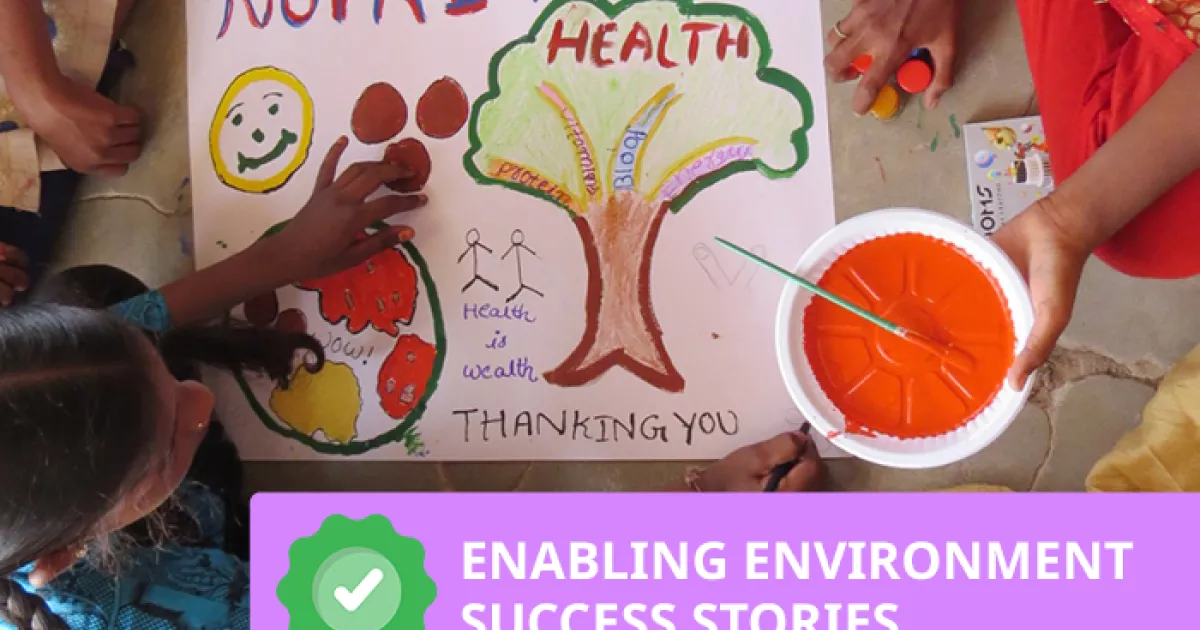
A millet-based nutrition programme in Telangana, India, has cut severe wasting among participating children by 72 percent over a 12-month feeding cycle while creating a guaranteed market for local millet farmers, according to a success story compiled by the CGIAR Scaling for Impact program.
The International Crops Research Institute for the Semi-Arid Tropics (ICRISAT) launched the Nutri-Food Basket project in Telangana in 2017. Millets were grown in the state's tribal regions but were eaten less and less because they are laborious to prepare, processing facilities were lacking and there was no structured government procurement. Malnutrition and anaemia remained persistent problems.
The project turned traditional millet recipes into standardised ready-to-cook meals and ready-to-eat energy bars, removing the burden of preparation at home. The products were distributed through state-supported anganwadi centres and were well received by children, adolescent girls and mothers. The intervention later expanded into the Giri Poshana initiative, reaching more than 29,000 beneficiaries across several districts.
The supply side was built locally. ICRISAT worked with tribal welfare agencies, health departments and farmer organisations to set up eight licensed processing units run by 80 trained tribal women and youth. Organised as enterprises, these units supplied institutional feeding programmes directly, giving millet growers reliable demand and creating rural jobs.
Alongside the fall in severe wasting, the scale-up phase recorded substantial improvements in stunting and underweight measures, and mean haemoglobin levels rose significantly, moving many participants from moderate anaemia to healthy status. During the COVID-19 pandemic the programme kept delivering food directly to homes, a sign of how a locally anchored supply chain holds up under disruption.
The model is now being adopted by other state governments, including Odisha, and ICRISAT sees it as a template for South-South knowledge transfer to other semi-arid regions where millets are grown but under-used. For farmers, the lesson is that a processing link and an institutional buyer can revive demand for a crop that had been slipping out of local diets.
Source: CGIAR
Comments
(0)