
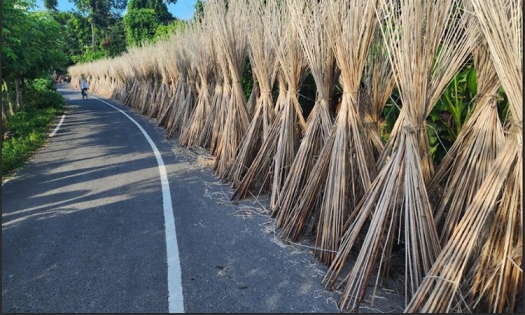
Jute sticks, once a neglected by-product left over after the fibre was stripped and burned in village clay stoves, have become an important farm product in Meherpur alongside the fibre itself. When jute prices disappoint, farmers recover a large share of their costs by selling the sticks — in some cases earning more from sticks than from fibre — and the extra demand is drawing growers back to jute after loss-making years.
Growing a bigha of jute in Meherpur costs about Tk 20,000–25,000 and yields around 10 maunds; at roughly Tk 3,000 a maund the fibre brings about Tk 30,000. The sticks from the same bigha sell for Tk 10,000–15,000 depending on quality, lifting a farmer's total income substantially. Mahatab Hossain, a grower in Sadar upazila, told BSS a bigha costs him about Tk 26,000, leaving little from the fibre, but the sticks bring in enough to cover much of the outlay.
The oldest use of dried jute sticks is as cooking fuel in clay stoves, and many village households still burn them. Today they are also used for house fencing, cattle sheds and temporary enclosures, and farmers put them up around vegetable and other plots to keep animals out. Abul Hasan, a farmer of Pirojpur village, said sticks are no longer something to throw away. Drying and storing them is easy — spread by the roadside, in fields or in yards, then tied into small bundles — as seen along the paved road at Kalachandpur village on Friday.
Demand has reached the towns: hawkers now sell jute sticks in Meherpur town. Zahidul Islam, who has traded in sticks for five years, said the business was small before but demand has grown with their many uses; he buys a bigha's sticks from farmers for Tk 10,000–15,000 by quality and hawks them through villages and the town.
Based on BSS's special report from Meherpur. Source: BSS
Comments
(0)