
Nearly 42 percent of people in Bangladesh face financial hardship when paying for medical treatment, and in 2022 alone those costs pushed 72 lakh (7.2 million) people below the poverty line. The figures come from a study by the Health Economics Unit of the Ministry of Health, supported by the World Health Organization and the Swedish embassy, presented at a Dhaka hotel on Wednesday.
The study draws on the Bangladesh Bureau of Statistics (BBS) household income and expenditure surveys of 2005, 2010, 2016 and 2022. Subrata Paul, focal point of the Bangladesh National Health Accounts at the unit, described a contradiction: the poverty rate fell from 40 percent in 2005 to 18.7 percent in 2022, yet the share of people under financial strain rose from 12.5 percent to 32.1 percent.
Hardship caused by health spending rose from 28.2 percent of people in 2005 to 41.7 percent in 2022. The share paying for care out of their own pockets climbed from 52.5 percent to 92.7 percent, and a household's average own spending on treatment went from Tk 709 to Tk 3,493.
Most of the money goes on medicines. In 2022, outpatients spent 74 percent of their treatment costs on drugs and inpatients 35 percent; diagnosis took 11 and 22 percent respectively. An inpatient stay cost on average Tk 21,547 at a government hospital, Tk 32,517 at a private one and Tk 22,028 at an NGO hospital.
The researchers point to several causes. Between 2016 and 2022 household income rose 38 percent while health spending rose 43 percent. The share of patients choosing government hospitals fell from 15.1 to 10.9 percent, while those turning to pharmacies for treatment rose from 32.5 to 55.4 percent. Patients with chronic illness rose from 44.7 percent in 2005 to 72.4 percent in 2022.
The burden is uneven. In 2022 hardship from treatment costs was highest in Barishal division and lowest in Dhaka division, and rural people were hit harder than urban ones. It fell on 90.8 percent of the poorest group against 13.6 percent of the richest.
The study put government health spending at Tk 1,070 per person. The researchers cautioned that raising the state allocation alone would not guarantee that the poor benefit from it. The report was filed by Prothom Alo's special correspondent.
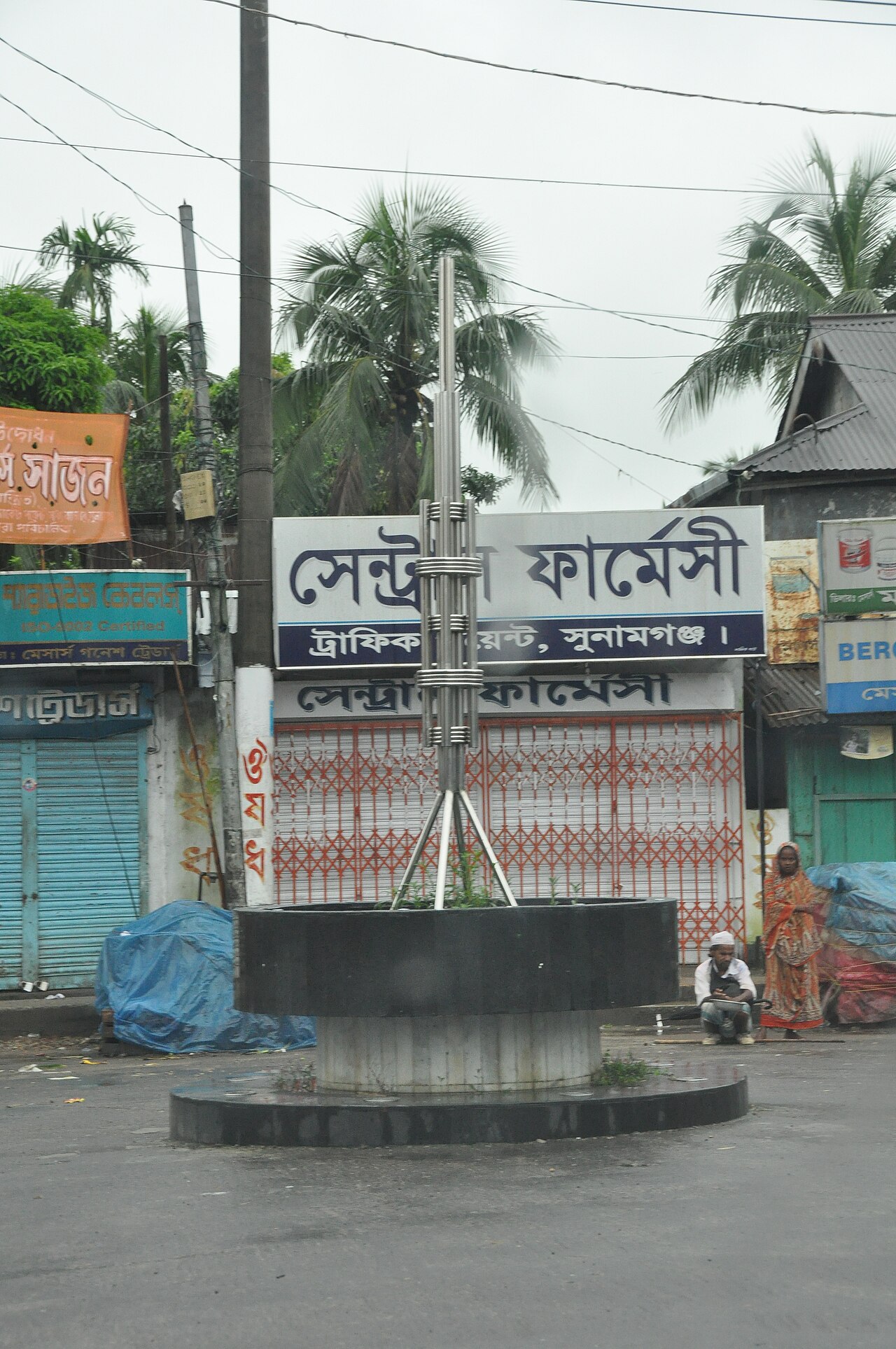
Photo: A pharmacy at Traffic Point, Sunamganj, Marufish / Wikimedia Commons (CC BY-SA 2.0)
Source: Prothom Alo

Comments
(0)