
Forty percent of the approved vaccinator posts in Bangladesh's Expanded Programme on Immunization (EPI) are vacant, according to a joint independent review by national and international experts. A programme once held up as a model in South Asia is now strained by shortages of staff, vaccine storage and money.
The review found 53 percent of cold-chain technician posts empty, along with 34 percent of field posts such as health assistants and inspectors and 45 percent of posts at EPI headquarters. In towns, 90 percent of vaccinators are NGO staff, with weak oversight. A seven-month strike by vaccinators in 2025 and the end of payments to volunteers also disrupted the work.
The 70-member team, drawn from the WHO, UNICEF, Gavi, the health ministry, EPI officials and public health experts, was set up to examine the causes of measles and other outbreaks and the state of immunisation. Working in nine sub-groups from 3 October, it reported to the government on 14 October; eight divisional teams each visited two upazilas in two districts, going to vaccination centres, schools and madrasas and talking to mothers.
It also set targets against reality. The Urban Immunization Strategy 2019 and EPI Microplan 2024 call for six vaccinators per 50,000 people, and one per 8,300 in cities; neither is met. Eight sessions a month in every ward and 24 outreach sessions a month in every union are planned but cannot be run regularly for lack of staff and funds. More than 120,000 vaccination points have been mapped by GIS, but they are unevenly spread, with too few in remote and high-risk areas.
Review member Dr Tajul Islam A Bari, a public health expert and vaccinologist, said the team found lapses in keeping vaccines at the right temperature in the field, which risks damaging them, and too little money to carry vaccines from districts to upazilas. Recruitment must come with better storage and travel money for field staff, he said.
Health and family welfare state minister Dr M A Muhit acknowledged the shortage and said the government will recruit and act on the recommendations. Such reviews are usually held every four to five years, but none had been held for eight, he said; the recommendations have been discussed with the civil surgeons of all 64 districts and the eight divisional health directors.
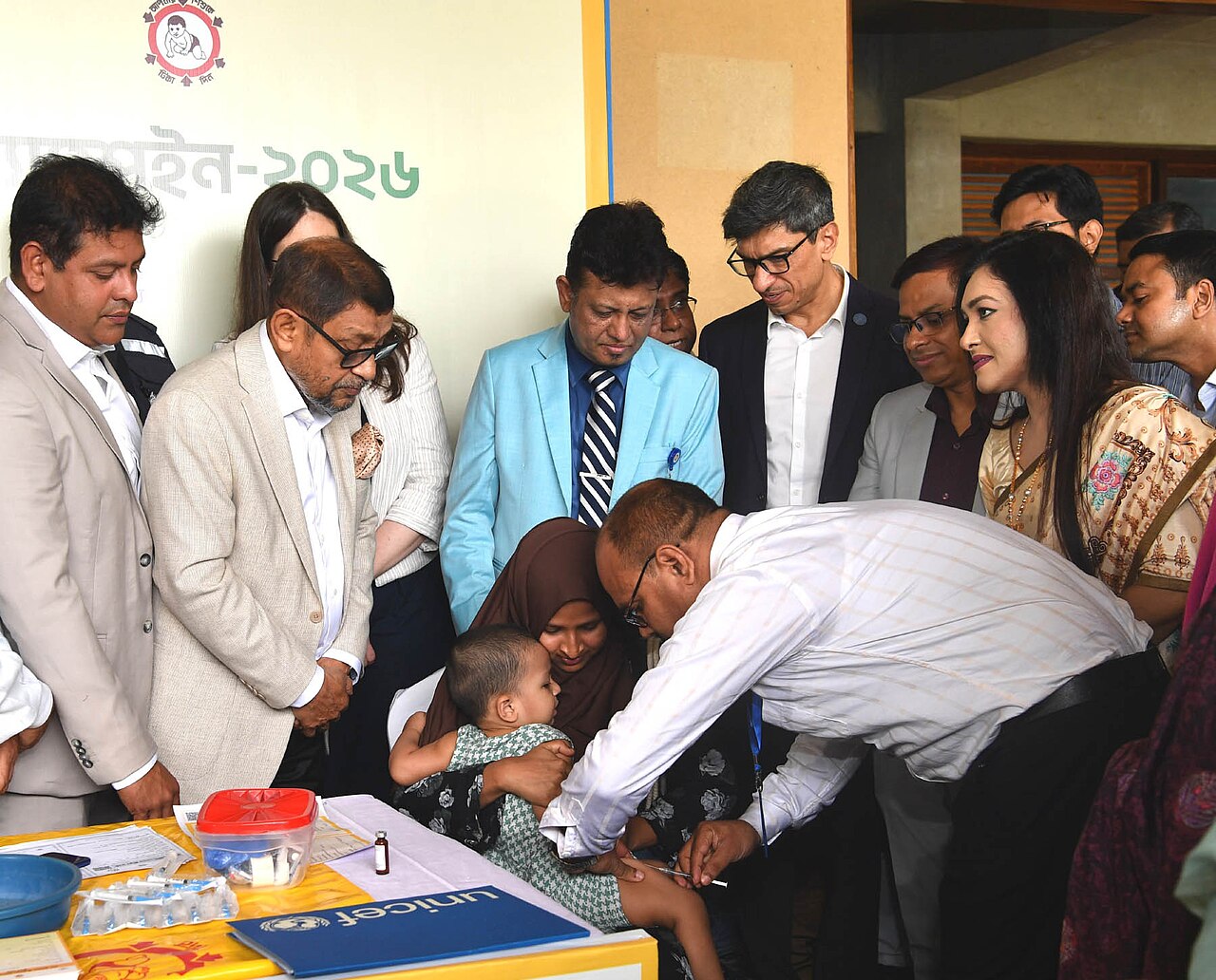
Photo: Children vaccinated in the measles-rubella campaign at Rupganj, Narayanganj, Press Information Department / Wikimedia Commons (public domain)
Source: Dainik Bangla




Comments
(0)