
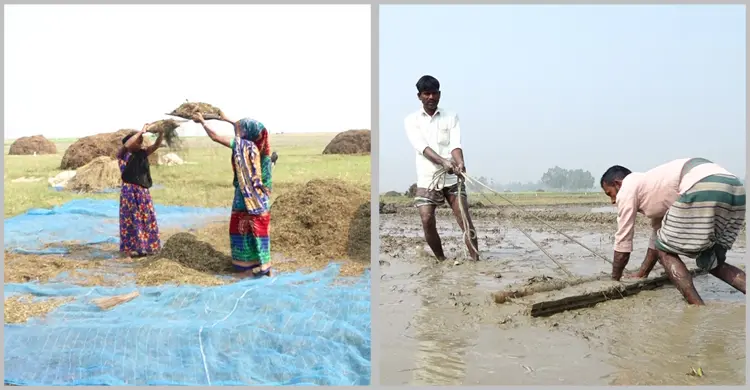
Agriculture has undergone a revolution on the remote chars of Manikganj. Where only a handful of crops were once grown, almost every kind of crop, including vegetables, is now cultivated, and much fallow land has come under cultivation. The char people, who battle river erosion and other natural disasters, are weaving dreams of better days through farming.
According to the district office of the Department of Agricultural Extension, there are 31 chars of the Padma and Jamuna in Harirampur, Shibalaya and Daulatpur upazilas of Manikganj. Of these, 28 are cut off from the mainland and three are connected to it. The chars cover 25,850 hectares in total, about 60 per cent of which has come under cultivation.
Busy fields on Alokdia char
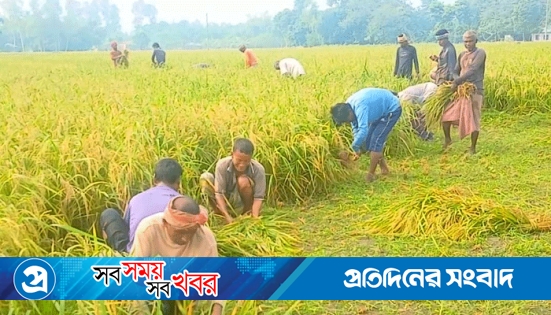
Alokdia in Shibalaya upazila is the largest char of the Jamuna, and boats are the only way to reach it. Stepping off the boat onto this remote char, farmers, men and women, could be seen busy in the fields: some bringing in ripe crops, some preparing land for new ones, and many tending vegetable plots.
Near the river, Afzal Hossain was preparing land for Boro paddy. He said he had grown masakalai (black gram) on the land before the paddy, and the yield had been very good this time. The char land is much more fertile than before and yields more than elsewhere, he said.
Yusuf Fakir and several other farmers on the same char said river erosion eats into their farmland every year, but cultivation has increased. No cultivable land on the char is left empty now, and most people depend on farming. Char people no longer go hungry as before, and there is always some crop in their homes.
Erosion the biggest worry
Local UP member Manju Mia said only a handful of crops, such as groundnut, sesame and kaon, were once grown on the char. Now paddy, mustard, maize, coriander, onion, garlic, gourd, beans, aubergine, tomato and other crops are produced. Farmers on Alokdia char have succeeded with watermelon for the first time this year.
He said that despite the farming revolution, the char people's biggest worry is river erosion, as every year the Padma and Jamuna swallow their homesteads and cropland. If erosion could be stopped, the char people would want for nothing, he said, urging the government to take steps.
Abu Md Enayet Ullah, deputy director of the DAE in Manikganj, said the chars used to be mostly sandy soil, but sand is gradually decreasing and silt increasing, bringing more land under cultivation.
The chars have about 8,000 hectares of double-cropped land, about 4,000 hectares of triple-cropped land and 700 hectares of single-cropped land. Some 15 to 20 kinds of crops are grown, including food grains, oil and pulse crops, and vegetables.
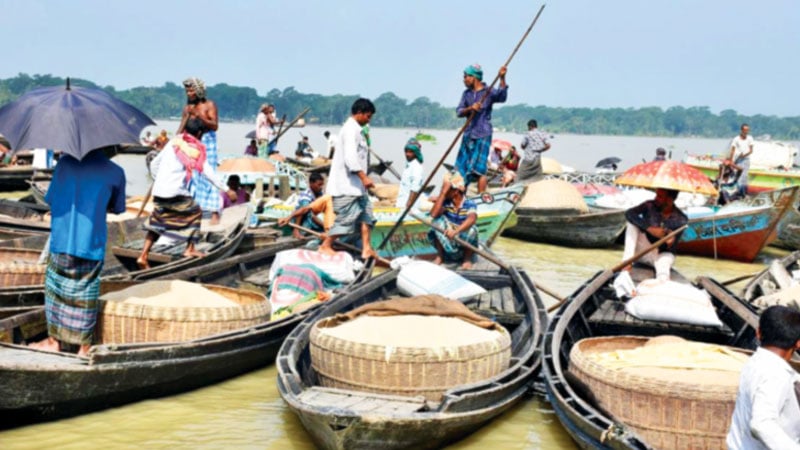
Cultivation is increasing day by day. Being cut off from the mainland, transport is a big problem, but the agriculture department is giving char farmers advice on modern farming and various government incentives so that they can profit more.
Source: Jagonews24. First published in Bengali on The Agro News.
Comments
(0)