
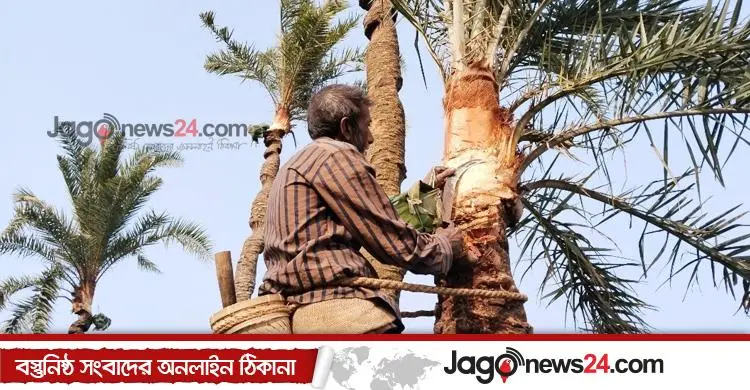
In the first week of November the chilly breeze of winter has begun blowing through the villages of Manikganj. With the first signs of winter, the date palms are coming back to life. Trees neglected all year have become valuable assets for the gachhis, the sap collectors.
Gachhis in various parts of Manikganj are busy preparing to collect sap from date palms. They are already cleaning the trees, trimming the bark and making bamboo pipes. From morning to evening the countryside is alive with the work of getting the trees ready.
Visits to Manikganj Sadar, Ghior and Harirampur upazilas found that the date palms on field ridges, roadsides and pond banks, neglected all year, are now being tended. To get sweet sap all winter, gachhis rush from tree to tree from morning to evening, cutting away fronds and cleaning the trees. With a dao in hand and a rope tied round the waist, they skilfully prepare the trees for sap collection. Many have already started fixing pipes into the trees.
Sap expected from December
The gachhis said that, as every year, they are preparing the date palms at the start of winter. If the weather is favourable, sap will start to flow from the beginning of December. It will be made into sweet date palm patali gur and the famous hajari gur, which make a special contribution to the rural economy. The market for date palm sap and gur is quite profitable in winter, so they are busy preparing early.
Razzak Molla has come from Rajshahi to Ubhajani village in Ghior upazila. "I have been cutting date palms and collecting sap in this area for about 10 years," he said. "This year too I have started tending more than 70 date palms. I make gur from the sap myself. I earn well from this work every winter."
Chhalam Mia, described as a resident of the same area, said: "We come to Manikganj every year before winter. Here we take date palms from local people for an agreed price. We have to work very hard on those trees, and then we can collect sap. We make gur from it and sell it in the local market."
The skill behind hajari gur
Amjad, a gachhi from Jhitka Kalahata village, has been making hajari gur for the past 20 years and sells it at Jhitka Bazar. "I make only hajari gur," he said. "There is a special process to making this gur. Not just anyone can make it. I learned the technique from my father. And not all sap can be used for it. This year I will collect sap from 50 trees to make hajari gur."
Shahjahan Siraj, deputy director of the Manikganj Department of Agricultural Extension (DAE), told Jagonews: "Gachhis in Manikganj district began tending date palms in the first week of November. There are about 8,000 date palms in the district, of which sap can be collected from about 5,000. In this district hajari gur is made only in a few areas of Harirampur upazila, and skilled gachhis choose particular trees to make it."
Source: Jagonews24. First published in Bengali on The Agro News.
Comments
(0)