
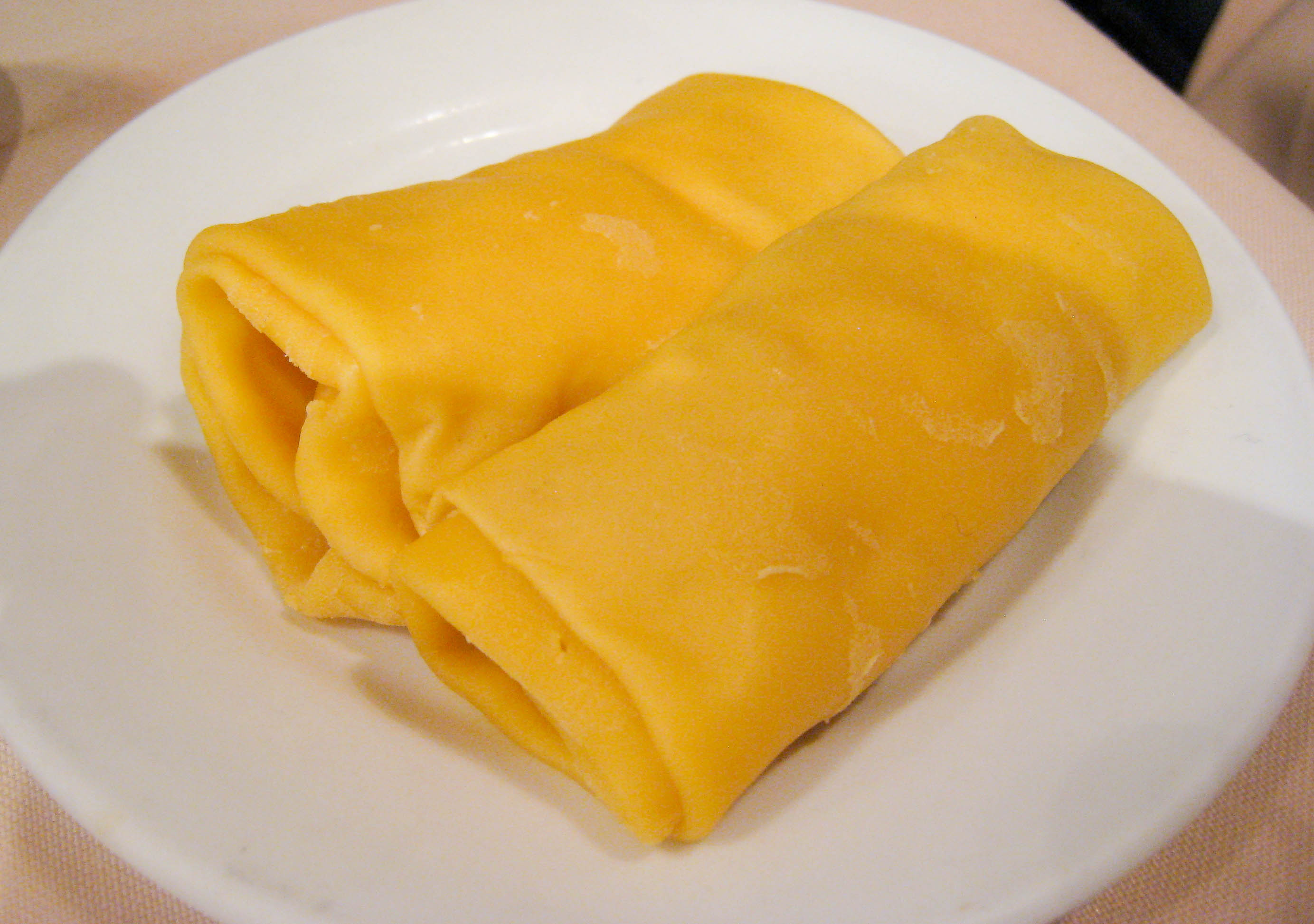
Mango is a fruit almost everyone in Bangladesh loves. Households keep it through the year as pickles of many kinds, and ripe mangoes go into all sorts of desserts. In June 2025, at the height of the mango season, Jagonews24 published a recipe for one that looks as good as it tastes: the Hong Kong-style mango pillow dessert, in which whipped cream and pieces of ripe mango are wrapped in a thin pancake and folded into a small square parcel, the 'pillow'. The newspaper credited the recipe to the cooking website RecipeTin Eats.
The recipe has two parts, the pancake and the filling. It needs no oven: the only cooking is the pancakes in a frying pan, the filling is whipped cream and fresh fruit, and the finished parcels are chilled for half an hour before they are served, which makes the dessert an easy afternoon snack in the hot months. The quantities below are exactly as the original recipe gives them.
Ingredients
For the pancakes
- Flour: 1/2 cup
- Cornflour: 2 tablespoons
- Egg: 1
- Sugar: 1 tablespoon
- Liquid milk: 1 cup
- Melted butter: 1 tablespoon
- Yellow food colouring or mango flavouring: a little (optional)
For the filling
- Whipping cream: 1 cup (whipped while cold)
- Mangoes cut into small pieces: 2
- Icing sugar: 2 tablespoons
- Vanilla essence: a few drops
For decoration the recipe uses a few pieces of mango kept back from the filling and some mint leaves, with a little chocolate sauce or a dusting of icing sugar if you like. It does not say how many pancakes the batter makes; that depends on the size of the pan and how thinly each one is spread.
Method
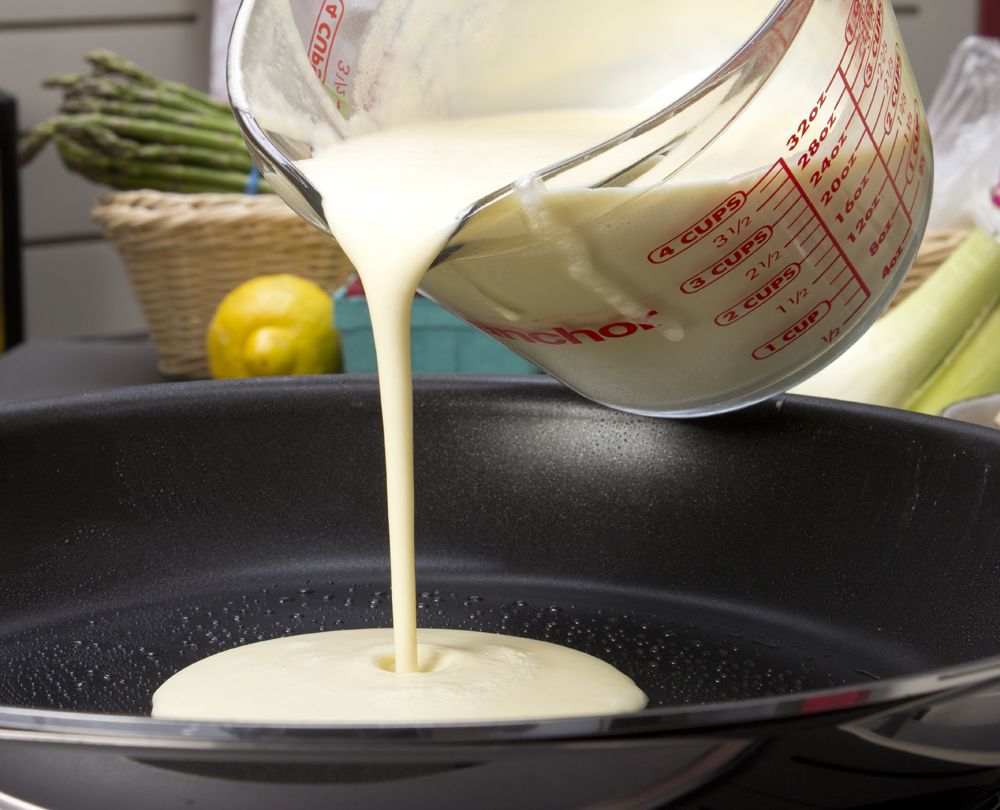
- Make the batter: mix the flour, cornflour and sugar in a bowl. Add the egg, milk and melted butter and mix well into a thin batter. Add a little yellow colouring or mango flavouring if you like; it is optional. Leave the batter to rest for 15 to 20 minutes.
- Cook the pancakes: lightly oil a non-stick pan, pour in a little batter and spread it thin like a flatbread. Lift it off when the underside is lightly browned; there is no need to turn it over. Make all the pancakes this way and let them cool.
- Whip the cream: put the cold whipping cream in a bowl and beat it with an electric or hand beater until it turns light and foamy. Mix in the icing sugar and vanilla essence; leave out this step if you want the dessert less sweet.
- Add the mango: fold the mango pieces into the cream, keeping some aside for decoration.
- Shape the pillows: put whipped cream and mango in the middle of each pancake, fold the pancake in from all sides into a pillow shape, and turn it over gently so the closed side is underneath. Chill in the fridge for 30 minutes.
- Serve: decorate the pillows with the reserved mango pieces and mint leaves. Drizzle a little chocolate sauce or sprinkle icing sugar over them if you like.
Tips from the recipe
- Keep the whipping cream well chilled; warm cream will not whip properly.
- Use mangoes that are fully ripe and sweet, or the flavour will not come through.
- The mango inside the pancakes can be in large pieces or small ones, as you prefer.
What the mango pancake is and where it came from
Desserts of this kind are widely known as mango pancakes. In a 2016 article titled "Did Australia invent the mango pancake?", the Australian broadcaster SBS's food section described the familiar version as a chilled pancake roll filled with whipped, sweetened cream and a chunk of mango, a common sight on the dessert trolley at dim sum restaurants in Sydney.
The name usually links the dessert to Hong Kong, and SBS reported that some sources credit the Hong Kong dessert chain Honeymoon Dessert with inventing it. That chain is responsible for the square, pillow-like version that, in SBS's words, became popular in China and elsewhere, and it is this shape the Jagonews24 recipe follows. But the same article pointed out that Honeymoon Dessert opened its first shop only in 1995.
SBS also spoke to Connie Chung, a former group manager of Sydney's Marigold Restaurant, which has since closed. She said the restaurant began serving mango pancakes around 1991 or 1992, an idea that followed the popularity of mango pudding, and that the chefs who created them had retired, so the exact origin could not be settled. The chef and Chinese-food writer Fuchsia Dunlop had first raised the question after seeing mango pancakes in Sydney: she wrote that she had never come across them in China, not even in Hong Kong. Chung added that Chinese desserts are typically less sweet and are often served hot, so the cold, creamy pancake may have been adapted to Australian tastes.
SBS concluded that the mango pancake may well have travelled from Sydney to Hong Kong rather than the other way round. The question remained open in 2016, and the article invited readers to say when and where they had first eaten one. What is clear is that the pillow-shaped version became a fixture of Hong Kong-style dessert shops, which is why recipes such as this one carry Hong Kong's name.
Hong Kong's dessert shops and their mango sweets
Hong Kong has a long tradition of dessert shops. The Cantonese term tong sui, literally "sugar water", covers the sweet soups served at the end of a meal in southern China, Hong Kong and Macau, such as red bean soup, black sesame soup and sweet almond soup. Tong sui shops in Hong Kong grew mainly after the Second World War, when migrants brought the sweet soups of their home towns with them. In the 1980s and 1990s Western influence brought in fresh-fruit desserts, and some herbal tea shops turned into dessert shops.
One of the best known is Hui Lau Shan. According to its encyclopedic history, Hui Chi-yuk founded it in Yuen Long, in Hong Kong's New Territories, in the 1960s as a herbal shop selling turtle jelly and herbal teas; it added desserts and snacks in the 1980s, and in the 1990s a third-generation owner created a mango sago dessert. The chain expanded to outlets in mainland China, Malaysia, the United States and South Korea, and was reported to use up to a thousand tonnes of carabao mangoes, a Philippine variety, a year.
Mango pomelo sago, known in Cantonese as yeung ji gam lo, is another cold Hong Kong dessert built on mango. It combines fresh mango, pomelo, tapioca pearls (sago), coconut milk and evaporated milk or cream. It is said to have been invented in 1984 by the Hong Kong restaurant chain Lei Garden when it opened its first branch in Singapore, and its former head chef Wong Wing-chee has claimed the recipe as his.
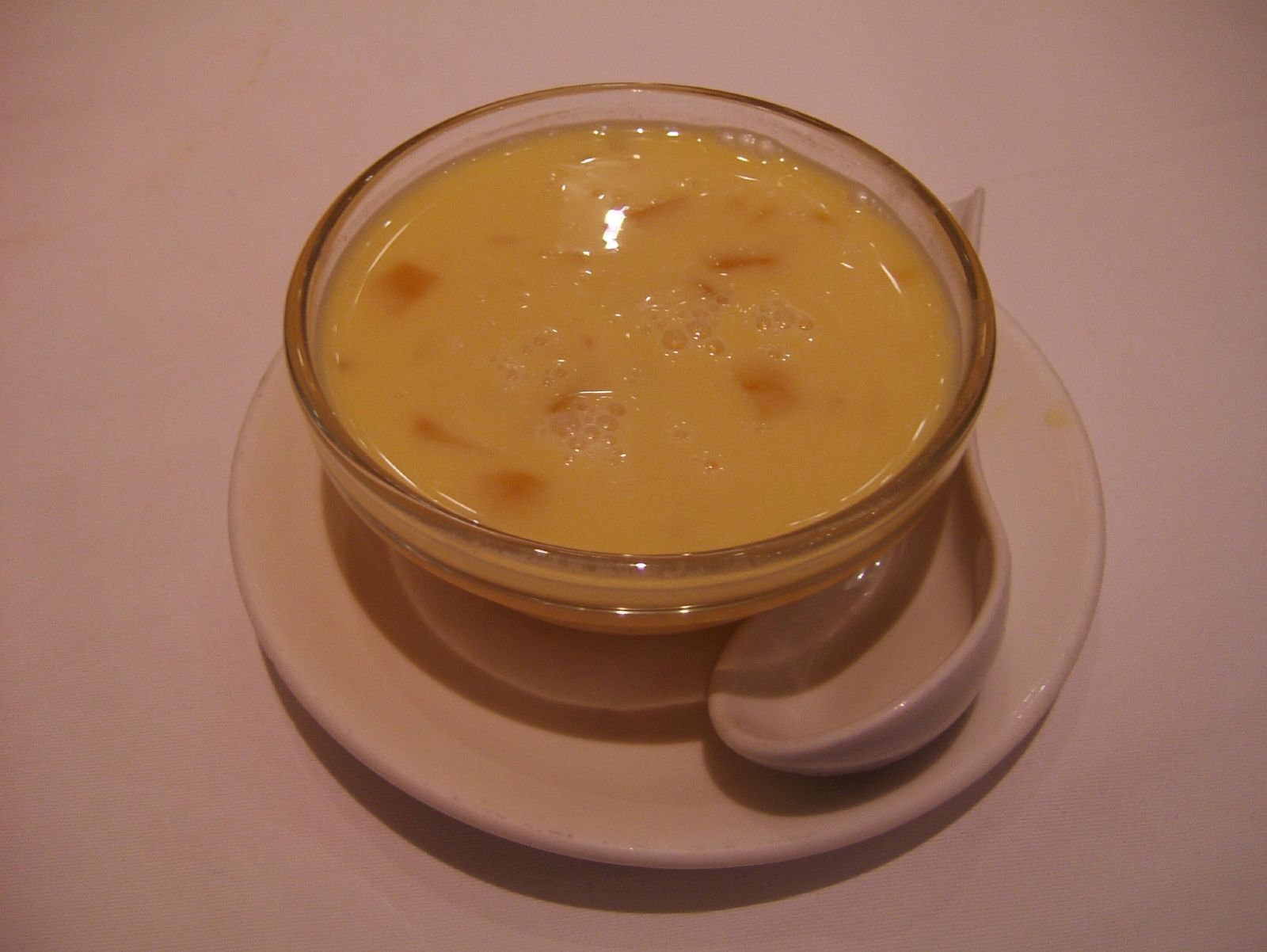
Mango pudding is perhaps the most familiar of all. It is a popular dessert in Hong Kong and is also found in Singapore, Malaysia, Thailand, Macau and southern China. It is served cold and often appears as part of dim sum. Restaurant versions are made with agar or gelatine, mango, evaporated milk and sugar, sometimes garnished with fresh fruit, while factory-made versions use mango essence instead of fresh fruit. The mango pancake belongs to this family of cold, creamy, mango-led sweets, and Connie Chung's account to SBS directly links its creation to mango pudding's success.
The pancake and the cream: how the two parts work
The pancake in this dessert is close to the French crêpe, a thin pancake made from unleavened batter and cooked in a frying pan or on a griddle. The standard French crêpe batter uses flour, eggs, milk, salt and butter, with sugar optional; it is kept very liquid so that it spreads into a thin layer, and each side cooks in about 20 to 30 seconds. Sweet crêpes are commonly filled with jam, sugar, lemon juice, whipped cream, custard or sliced soft fruit. The mango pillow recipe follows the same idea with a thin batter of flour, cornflour, egg, sugar, milk and butter, but cooks each pancake on one side only, lifting it off when the underside is lightly browned.
The filling depends on whipped cream. Cream with a butterfat content of typically 30 to 36 per cent is used for whipping, because its fat globules help hold the air bubbles in place; whipped, it reaches roughly twice its original volume. Chilling the cream and the equipment gives the best results, which is why the recipe insists that the cream be cold. Whipping must also stop in time: if it goes on too long, the fat droplets stick together, the foam collapses and the cream turns into butter.
Whipped cream itself is an old European preparation. The earliest clear evidence of it dates from the 16th century, when it went by names such as "milk snow" or "cream snow", and recipes appear in Italian cookery books by Cristoforo di Messisbugo in 1549 and Bartolomeo Scappi in 1570. Until the 19th century it was whipped with willow or rush branches, and only then did centrifugal separation make high-fat cream easier to produce. The name crème Chantilly became common in the 19th century and is linked to the Château de Chantilly in France.
Choosing mangoes in the June 2025 season
The recipe asks for fully ripe, sweet mangoes, and when it was published, on 22 June 2025, several of Bangladesh's best-known varieties were in the markets. On 7 May 2025 Rajshahi's district administration, at a meeting chaired by the deputy commissioner with agricultural officials, growers, traders and transporters, set that year's "mango calendar", the dates from which each variety could be picked, so that farmers would harvest mangoes that were safe, free of chemicals and mature.
Under that calendar, as reported by the Dhaka Tribune, the dates were:
- All early-season (guti) mangoes: from 15 May
- Gopalbhog: from 20 May
- Rani Pasand or Lakshmanbhog: from 25 May
- Himsagar or Khirsapat: from 30 May
- Langra: from 10 June
- Amrapali and Fazli: from 15 June
- BARI Mango-4: from 5 July
- Ashwina: from 10 July
- Gourmati: from 15 July
- Katimon and BARI Mango-11: available year-round
So by the time this recipe appeared, Himsagar, Langra, Amrapali and Fazli could all be harvested in Rajshahi. The same meeting put the district's mango area at 19,603 hectares, with an estimated average yield of 13.26 tonnes per hectare, a projected harvest of 260,006 tonnes and expected sales of Tk 1,695.85 crore. The calendar's opening date had been 13 May in 2022, 4 May in 2023 and 15 May in 2024. Farmers could seek permission from their upazila nirbahi officer to harvest earlier if a natural disaster struck.
Banglapedia, the national encyclopedia of Bangladesh, records nearly 100 mango cultivars in the country. Among the elite varieties it lists are Fazlee, Langda, Gopalbhog, Himsagar, Khirsapat, Ashwina, Kohitoor, Lakshmanbhog, Mohanbhog and Misribhog, while seedling trees of no recognised variety are known as deshi or guti mangoes. The commercial elite varieties are grown mostly in Rajshahi, Nawabganj and Dinajpur. Ripe mangoes are eaten fresh as slices or pulp, green ones go into curries and dal, and both are made into jam, jelly, squash, chutney and pickle, the use the Jagonews24 recipe began with.
Mango in Bangladesh: the crop behind the dessert
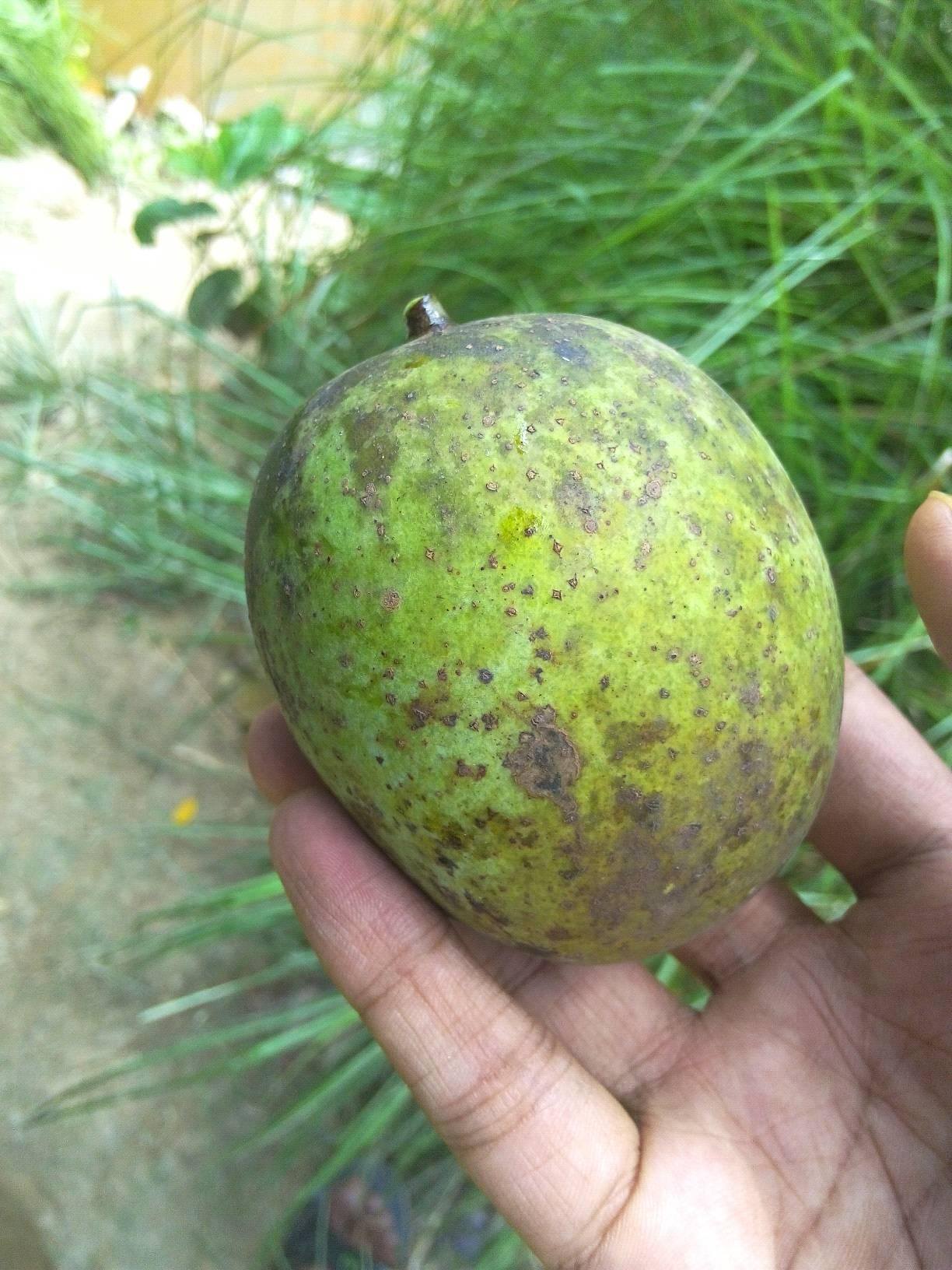
The mango, Mangifera indica, belongs to the cashew family, Anacardiaceae. Banglapedia notes that some authorities consider it native to the eastern part of the subcontinent, including Bangladesh, Assam and Myanmar. The Chinese traveller Hiuen Tsang, who visited India between 632 and 645 AD, is credited with first bringing the fruit to the outside world's attention, and the Mughal emperor Akbar is said to have planted about 100,000 mango trees in an orchard known as Lakh Bagh near Darbhanga, considered the subcontinent's first organised mango orchard. The English word comes from a Tamil name that the Portuguese picked up in western India.
The trees flower from January to March, and fog, rain or cloudy weather during flowering reduces fruit set; mild showers help while the fruit develops, but storms and hailstorms can bring down immature fruit. The Horticulture Division of the Bangladesh Agricultural Research Institute (BARI) runs mango research at Rajshahi, Nawabganj and Joydebpur on propagation, production and post-harvest handling.
On 21 May 2025, a month before this recipe was published, Agriculture Secretary Mohammad Emdad Ullah Mian told a press briefing, as The Business Standard reported, that Bangladesh produced about 27 lakh tonnes of mangoes a year. He gave the output as 27 lakh tonnes in 2022-23 and 24.5 lakh tonnes in 2023-24, and exports in 2023-24 as 1,321 tonnes. He also announced that the first mango export to China would leave on 28 May, with about 50 tonnes planned for the season.
The Daily Star reported on 27 May 2025 that Bangladesh had applied to export mangoes to China in 2019 and that China's General Administration of Customs had granted export registration for Bangladeshi mangoes in July 2024. Arifur Rahman, project director of the Department of Agricultural Extension's exportable mango production project, told the paper that the first consignment should be ready the next day.
Two years earlier, in May 2023, The Financial Express had reported that Bangladesh ranked seventh in the world in mango production and had exported 1,757 tonnes to 28 countries in 2021-22. It noted that the country then lacked the capacity to issue Good Agricultural Practice (GAP) certificates, which kept its mangoes out of mainstream European and American supermarkets, and that the Department of Agricultural Extension was running a Tk 47 crore project from 2022 to 2027 in 46 upazilas of 15 districts to raise export-quality production.
Nutrition and how much sugar
The mango brings real nourishment to this dessert. According to the US Department of Agriculture's FoodData Central database, 100 grams of raw mango contains about 60 kilocalories, 83.5 grams of water, 15 grams of carbohydrate including 13.7 grams of natural sugars, 1.6 grams of dietary fibre, 0.8 grams of protein and 0.4 grams of fat. The same portion provides 36.4 milligrams of vitamin C, 54 micrograms of vitamin A (as retinol activity equivalents, largely from 640 micrograms of beta-carotene, the pigment behind the orange flesh), 43 micrograms of folate and 168 milligrams of potassium.
The rest of the dessert is richer. Whipping cream is high in fat, and the recipe adds a tablespoon of sugar to the batter and two tablespoons of icing sugar to the cream. The World Health Organization's 2015 guideline on sugars strongly recommends that adults and children keep their intake of free sugars below 10 per cent of total energy, and says that going below 5 per cent, roughly 25 grams or six teaspoons a day for an adult, would bring further benefits. Free sugars are those added to food and drink by the cook or manufacturer, plus the sugar naturally present in honey, syrups and fruit juices; the WHO guideline does not apply to sugars in fresh fruit or milk.
By that measure the sugar in this dessert comes from the added sugar, not the mango. The recipe itself offers a way to cut it: the icing sugar can be left out of the cream for a less sweet filling, and very ripe mangoes bring sweetness of their own. A pillow is best treated as an occasional snack rather than an everyday one. Anyone with diabetes, heart disease or a prescribed diet should ask a doctor or a qualified dietitian how such desserts fit into their meals.
Keeping it safe in the kitchen
Because the dessert combines dairy cream, a cooked egg batter and raw fruit, and is served cold, basic food hygiene matters, all the more in Bangladesh's summer heat. The World Health Organization's "Five keys to safer food", repeated by its regional office for the Americas, the Pan American Health Organization (PAHO), in December 2015, apply directly:
- Use safe water and ingredients: choose fresh, wholesome food and foods processed for safety such as pasteurised milk, wash fruit (especially fruit eaten raw, like the mango and mint here), and do not use anything past its expiry date.
- Keep hands, utensils and surfaces clean: wash your hands before handling food and often while preparing it, and clean every surface and piece of equipment you use.
- Cook food thoroughly, especially eggs, meat, poultry and seafood; the egg in this recipe is cooked in the pancake batter.
- Keep food at safe temperatures: do not leave cooked food at room temperature for more than two hours, refrigerate cooked and perishable food promptly (preferably below 5°C), and do not store food too long in the refrigerator.
- Separate raw from cooked food, using separate knives and boards for raw meat, poultry and seafood and storing food in covered containers.
In practice that means whipping the cream straight from the refrigerator, assembling the pillows on a clean surface, returning them to the fridge for the 30 minutes the recipe asks for, and eating them while they are still cold rather than leaving them out through a long afternoon.
Photo: Charles Haynes / Wikimedia Commons (CC BY-SA 2.0)
Sources: Jagonews24 (recipe credited to RecipeTin Eats), SBS Food, Banglapedia, Dhaka Tribune, The Business Standard, The Daily Star, The Financial Express, US Department of Agriculture FoodData Central, World Health Organization, Pan American Health Organization, Wikipedia

Comments
(0)