
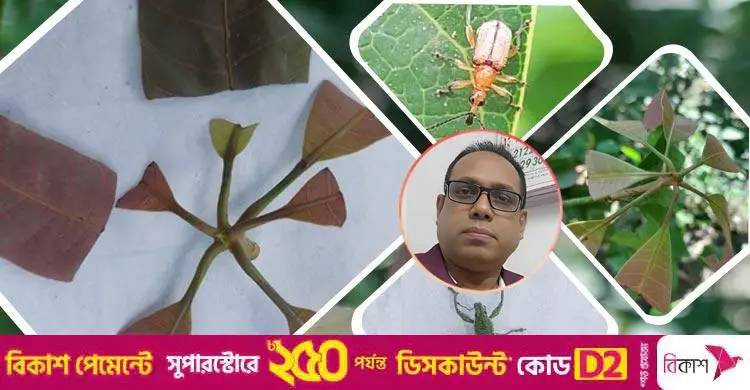
The leaf-cutting weevil is a seriously harmful pest of mango trees. It cuts and eats young leaves, buds and new shoots, mainly holding back the tree's growth and reducing yield. Under attack, leaves are cut to pieces and drop off, leaving the tree weak and unable to grow new branches properly.
The pest is usually most active in spring and the monsoon, when trees put out new leaves. The females lay eggs in the leaves, and the larvae that hatch destroy the tree's cells. Over time this reduces the tree's productivity, so timely prevention and control are very important.
Remedies include removing damaged leaves lying under the tree, spraying insecticide on new leaves as they appear, and making a sticky band around the base of the trunk to stop the insects climbing the tree.
Appearance
The insect is long and snout-like, with a long snout at the front of its head. Its body is usually greyish-brown, and the larva is a dirty green.
Signs of damage
The adult female lays eggs on young leaves and then cuts the leaf, so the leaves fall under the tree as if snipped with scissors.
Impact
The attack destroys the tree's new leaves, and a heavy attack can leave a small tree leafless, holding back its growth.
Organic management
- Collect and destroy affected leaves
- Use light traps
- Shake or jolt the branches
- Apply organic pesticides
- Use control methods based on the insect's attraction to light
- Conserve natural enemies
- Use organic fertiliser and proper care
- Keep the orchard clean
- Collect and remove damaged leaves lying under the tree
- Burn the collected leaves
Chemical management
When a weevil attack appears, spray imidacloprid (17.8% SL) mixed at 0.3 ml per litre of water. Spray in the morning or afternoon when there is little wind, directly on the young leaves so that the insecticide covers both sides of the leaf. Spraying can be repeated every 10-15 days as needed.
Precautions
Rather than using the same insecticide repeatedly, it is better to rotate products so the pest does not become resistant. Wear proper PPE such as a mask, gloves and goggles when using insecticide. After spraying, observe the specified waiting period before harvesting mangoes.
Sticky band
A band of sticky material around the base of the tree (one foot above the ground) stops the insects climbing up the trunk.
The mango leaf-cutting weevil is a major challenge for mango production and can do extensive damage if preventive measures are not taken in time. It is important to follow integrated pest management and control the pest according to its life cycle. If farmers bring it under control through greater awareness and regular monitoring, mango trees will stay healthy and both the quantity and quality of the crop will increase.
Source: Jagonews24. First published in Bengali on The Agro News.


Comments
(0)