
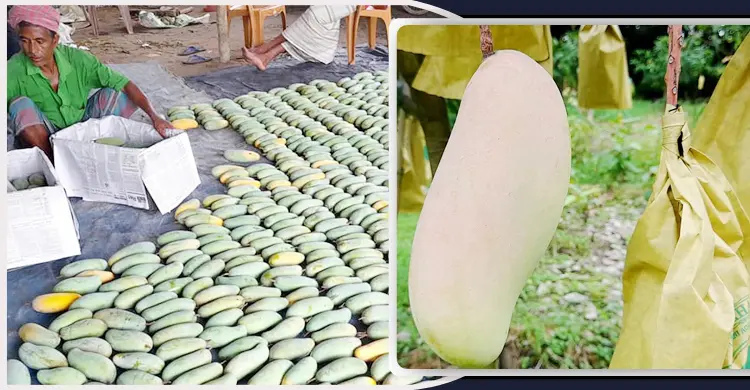
The mango season is under way, and fruit bagging is a very useful way to protect the crop. When mangoes are bagged, fungi and insects cannot attack them, so no pesticide is needed to guard against pests. The fruit keeps its quality and is safe to eat, and growers are spared extra costs.
Fruit bagging is used to produce mangoes fit for export, and growers who use it are benefiting. The method was imported from China. Less fruit is lost, yields rise and it becomes possible to grow good-quality mangoes.
Easier exports and better prices
The method makes it easier to export pesticide-free, good-quality mangoes abroad. Growers earn more at lower cost, and the method will also play an important role in protecting the environment. Because it protects mangoes from disease, it has become popular with growers.
It is very effective at protecting mangoes from pesticides, insects and the harmful effects of bad weather. No harmful outside influence can get inside the bag, making it a simple and suitable way to protect the fruit and keep its quality and colour fresh.
Growers have been using fruit bagging for the past seven to eight years. At first only a handful of farmers used it, but over time most growers have adopted it, and they are profiting from it. Consumer demand for bagged mangoes is much higher.
Fruit bags mainly protect mangoes from fruit flies and other harmful insects. Bagging also works well to prevent rotting, so growers can sell their mangoes at higher prices at the end of the season.
Source: Jagonews24. First published in Bengali on The Agro News.
Comments
(0)