
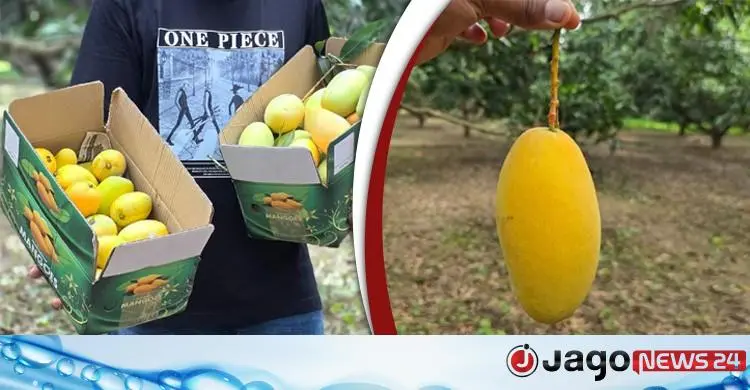
For mango lovers, summer is not just a season but an emotion. Juicy slices of chilled mango from the fridge, aamras or a mango shake seem essential to the hot months. Many varieties of mango are grown across Bangladesh and India, but a small town near Lucknow has built a unique history on its reputation. It is called the world's "mango capital".
The town is Malihabad, about 25 kilometres from Lucknow, the capital of Uttar Pradesh in India. Its name is tied to miles of mango orchards, rich farming practices and the world-famous Dasheri mango.
Mango growing in Malihabad goes back hundreds of years. It is believed that cultivation first began in the area in the time of the Nawabs. Over time the small town became one of India's largest mango-producing areas.
The Dasheri mango
What brought Malihabad worldwide fame is its Dasheri mango. The title is not an institutional global recognition, but because of its long mango heritage and huge output, mango lovers fondly call it the world's mango capital. Mangoes are sent from here to many Indian states and exported to many countries.
The Dasheri is called the pride of Malihabad. It takes its name from Dasheri village in the neighbouring Kakori area. Historians say the variety originated more than 300 years ago. Local lore holds that the original "mother tree" of the variety still survives in the area and is more than 200 years old.
For its incomparable taste and heritage, the Dasheri received a GI (geographical indication) tag in 2010.
Although the Dasheri is Malihabad's main attraction, several other popular varieties are grown here, including Chausa, Langra, Safeda and Amrapali.
A town that smells of mangoes
In the scorching summer, Malihabad takes on a new look, with the smell of mangoes all over the town. Mango traders and tourists come from far and wide at this time. Besides orchard visits, a huge mango market is held. For many local families, mango growing is not just farming but a tradition handed down through generations.
About 23 per cent of India's total mango production comes from Uttar Pradesh, and Malihabad supplies a large part of it. The Central Institute for Subtropical Horticulture is located here. Its scientists say the sweetness of Malihabad's Dasheri and Langra mangoes is above 20 on the Brix scale, far sweeter than ordinary mangoes. This unique taste is why Malihabad's mangoes are prized around the world.
Source: Jagonews24. First published in Bengali on The Agro News.
Comments
(0)