
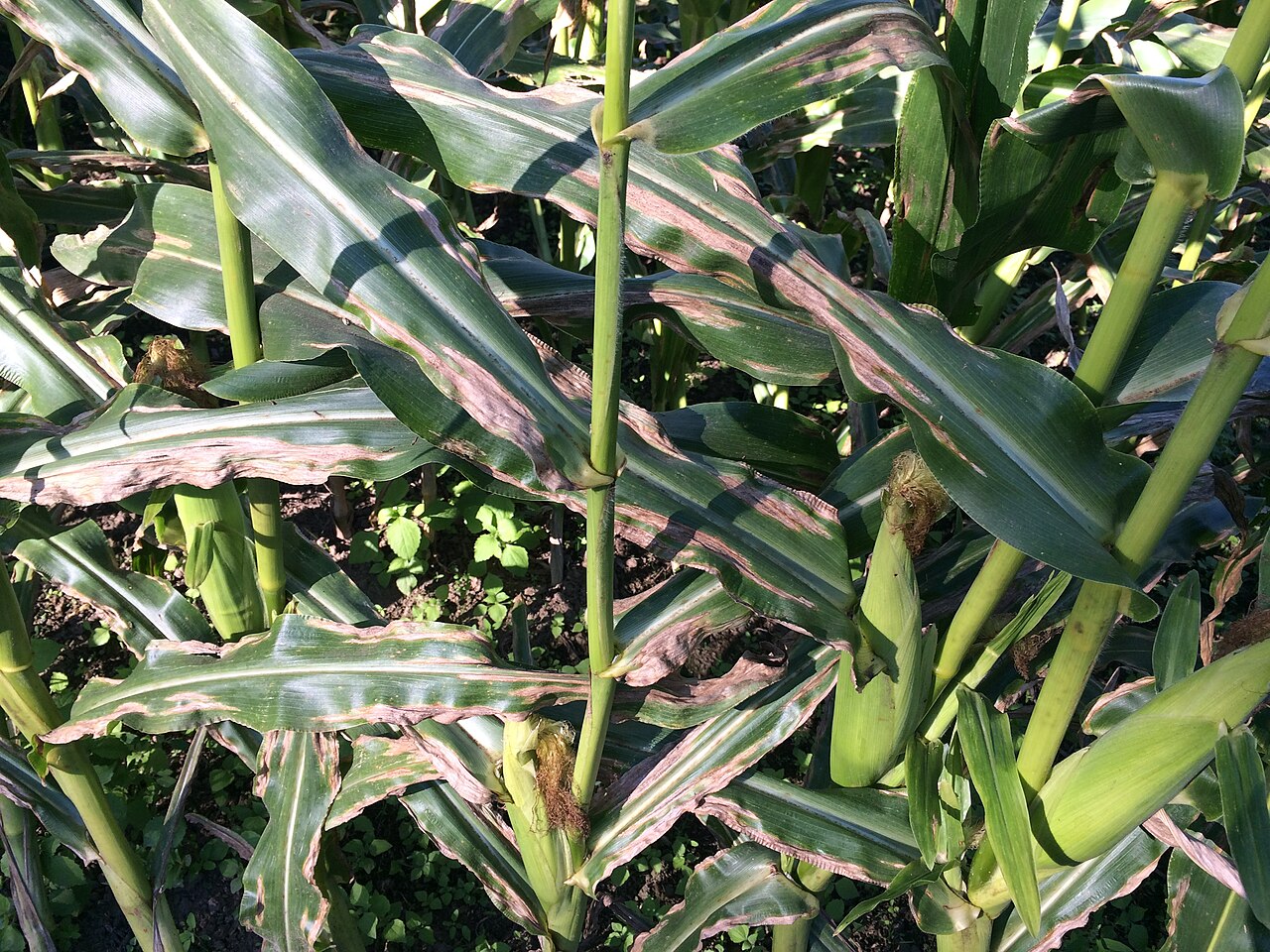
A leaf disease of corn known as maize white spot has spread across Michigan this season and left large amounts of fungal residue in fields, raising concern for the 2027 crop, Michigan State University (MSU) field crops pathologist Dr Marty Chilvers told Michigan Ag Today.
First identified in 14 counties earlier in the season, the disease, historically described as Phaeosphaeria leaf spot, is now confirmed in 20 to 24 counties. "I was able to find it in essentially every field that I walked into," Chilvers said. "Our concern is for next year because there's plenty of inoculum now across the countryside."
It produces bleached white lesions a quarter to half an inch across, with tiny black fruiting bodies inside, and early infections were often mistaken for herbicide burn or nutrient deficiency. In badly hit fields it strips green leaf from the bottom of the plant to the top, causing early shutdown and faster drydown. There are reports of lighter ears but no firm yield loss figures yet, and Chilvers plans to follow up with affected growers.
Elsewhere the season was mixed. Northern corn leaf blight came late on the west side of the state but did damage in places; soybeans had some purple seed stain and lower white mold losses than in past years. Tar spot was widespread but arrived very late and did little harm, which Chilvers put down to weather and to growers screening out the most susceptible hybrids in the 10 years since it was first found in Michigan.
With harvest under way, the focus turns to residue that can overwinter. Chilvers advised against drastic tillage, since long-term MSU trials show it has only a minor effect on inoculum at high fuel cost. Instead he urged growers to choose hybrids with better resistance, spread risk across several varieties and check fungicide efficacy ratings through the Crop Protection Network, noting that in southern Brazil, where the disease also occurs, fungicide is usually applied around the VT-R1 stage.
MSU Extension asks growers and agronomists to scout late fields for white lesions with black dots and send fresh leaf samples to MSU Plant & Pest Diagnostic Services.
Photo: Chroanch / Wikimedia Commons (CC BY-SA 4.0)
Source: Michigan Ag Today



Comments
(0)