
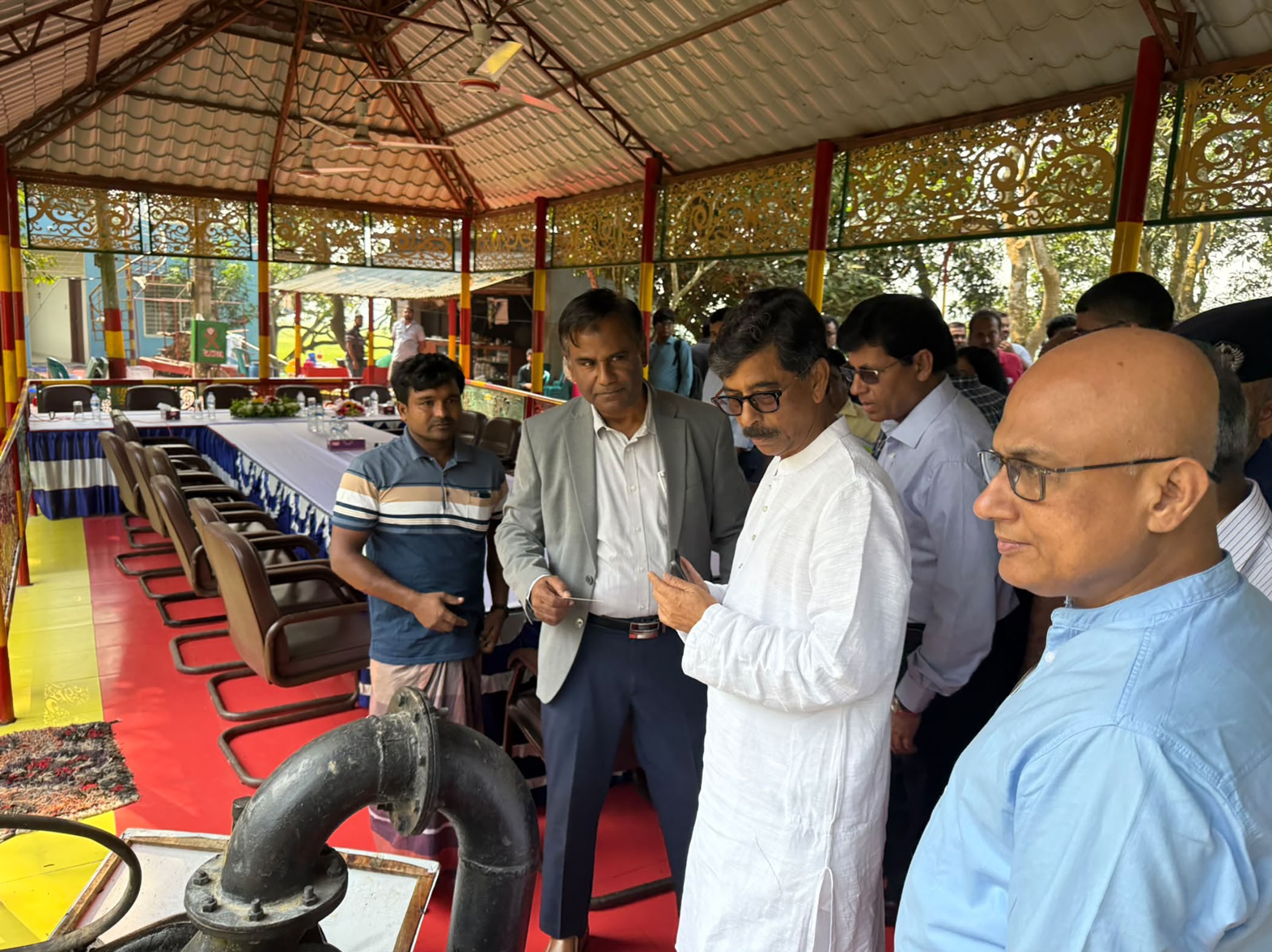
The government has begun re-excavating 700 kilometres of canals and 600 ponds in the Barind region to ease its severe water shortage, BSS reports. About 143 km of canals and 250 ponds have been dug out so far, benefiting farmers and residents and raising crop output.
The Palli Karma-Sahayak Foundation (PKSF), an autonomous body under the Ministry of Finance, is running the project through 18 partner organisations with money from the Green Climate Fund. The US$30 million Extended Community Climate Change Project-Drought (ECCCP-Drought) covers drought-prone parts of Rajshahi, Naogaon and Chapainawabganj and runs until 2028.
It plans rooftop managed aquifer recharge (MAR) systems on 2,500 houses and at 40 ponds; 1,600 rooftops are already fitted. Project coordinator Fazle Hossain told BSS that the systems collect and treat rainwater or surplus surface water and send it into underground aquifers for use in the dry season. Rohanpur Government A.B. High School in Chapainawabganj channels rain from its 3,860-square-metre roof underground this way. Officials expect about 215,000 people to have year-round access to surface water and groundwater when the project is finished.
The canals are being dug up to 15 feet deep so that farmers benefit for at least 15 years, Hossain said, and water is returning to canals that had dried up, cutting irrigation costs. Another official, Samiul Haque Tutul, said canals choked with silt and weeds that had pushed up irrigation costs in Chapainawabganj now hold water, such as the Jolahar canal in Jhilim union and several ponds in Naogaon.
Farmers have been trained not to keep water standing in their fields and to irrigate only when needed, checking the water table through small perforated PVC pipes set in the soil. This has cut water use by 20 to 30 percent while raising yields. Farmer Said Hossain said the same plot gave him about 200 maunds of rice this year against 180 last year, with irrigation costs down about 30 percent.
Irregular rain, long dry seasons and pressure on groundwater have made water especially precious in the three districts. PKSF has also started handing out about one million fruit, medicinal and timber saplings at schools and colleges, including neem, olive, arjun, wood apple, hog plum, sapodilla and jackfruit; about 200,000 have been distributed and planted so far, five to each student, who takes charge of looking after them.
Photo: Press Information Department / Wikimedia Commons (public domain)
Source: BSS

Comments
(0)