
The Government of Canada announced on 16 September that it will invest up to C$1,976,150 in Lucent BioSciences of Burnaby, British Columbia, to develop a biodegradable coating for controlled-release nitrogen fertiliser. The money comes through the Research and Innovation Stream of the Agricultural Clean Technology (ACT) Program.
Most controlled-release nitrogen products on the market are wrapped in polymer coatings that meter out the nutrient over weeks but leave microplastic residues behind in the field. Lucent Bio's alternative is a biopolymer made from surplus starch, designed to give the same slow release without the plastic left in the soil.
The company says the coating is engineered to release nitrogen closer to the time the crop actually takes it up, which should raise fertiliser efficiency, cut nitrogen losses to air and water, and lower the greenhouse-gas emissions tied to fertiliser use. If it performs in commercial use, growers could also apply less product and spend less on inputs.
This is the second federal grant for the technology. In 2022 Lucent Bio received up to C$1.33 million under the same ACT stream to develop the biopolymer for seed coatings, which became a product called Nutreos. The new project extends the chemistry to bulk nitrogen fertiliser, working with A&L Canada Laboratories, Bureau Veritas Canada, Simon Fraser University's chemistry department and 4D LABS.
"We're applying our biodegradable biopolymer technology to controlled-release nitrogen to help growers get more value from the nitrogen they apply while reducing nutrient losses to the environment," said Farah Nour, the company's co-founder and chief science officer. Agriculture Minister Heath MacDonald said the project shows Canadian firms building practical tools that cut costs and emissions at the same time.
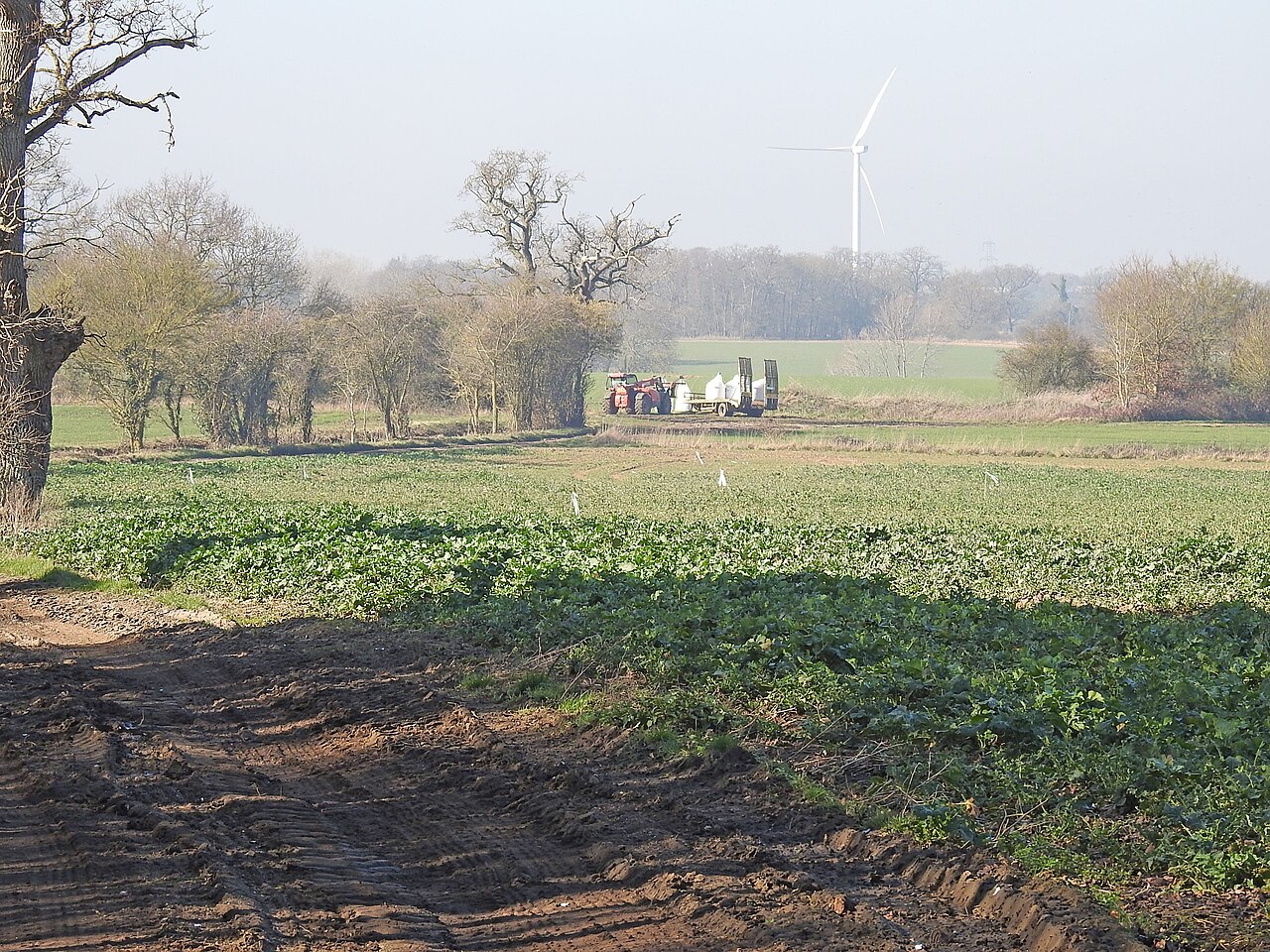
Photo: Adrian S Pye / Wikimedia Commons (CC BY-SA 2.0)
Source: Farms.com

Comments
(0)