
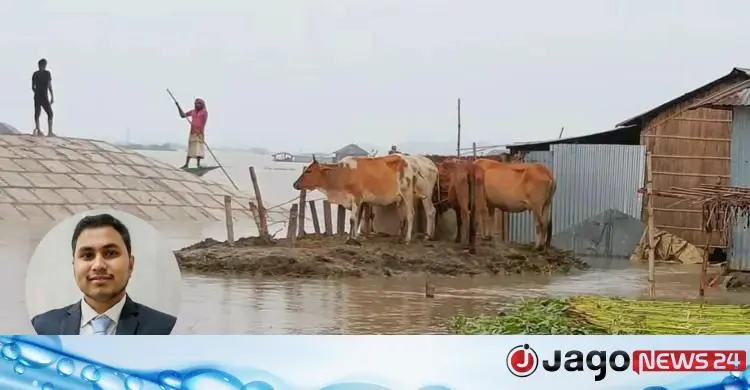
Whenever the monsoon arrives in Bangladesh, parts of the country face the threat of floods. Floods disrupt people's lives and cause heavy losses to agriculture and livestock. Alongside crops, cattle and other farm animals are among the most at risk. For many farming families a cow or a few goats are their most valuable asset and main source of income, so saving livestock during a flood means protecting a family's livelihood and food security, not just the animals.
Intern veterinarian Md Likhon Islam spoke to Jagonews24 about how to prepare to protect livestock in a flood, what deserves special attention and what to do during the disaster.
Prepare in advance
The most effective way to face a disaster is to prepare early. When a flood looks likely, farmers should follow the weather forecast regularly and plan in advance to move their animals quickly to safe, high ground. To avoid shortages of feed and water, they should stock enough dry straw, silage, grass, concentrate feed and clean water. Feed must be stored somewhere high, dry and safe so floodwater does not spoil it. If needed, leaves of banana, jackfruit, bamboo and other safe trees can be used as alternative feed.
Before the flood season starts, animals should be vaccinated under the government programme against foot-and-mouth disease (FMD), lumpy skin disease (LSD), black quarter (BQ), anthrax and other necessary diseases. Separate care plans for cows, calves and sick animals should also be ready in advance.
When the water rises
Once floodwater starts rising, animals must never be tethered in low or risky places. They should be moved quickly to a safe shelter, a high embankment or a designated animal shelter. Animals must never be allowed to drink contaminated floodwater; if possible they should be given clean water, or water that has been boiled and cooled. Wet, rotten or mouldy straw and feed should not be fed, as this can raise the risk of food poisoning and diarrhoea.
The cattle shed should be kept as clean and dry as possible during a flood. If needed, straw, husk or other dry material can be spread to give the animals a comfortable place to stand. Standing in water for long periods can cause foot wounds, pneumonia and other infections, so the animals' condition should be checked regularly.
Dairy cows must be milked regularly to prevent udder inflammation (mastitis). Calves and pregnant animals need special care. If necessary, electrolytes, minerals and vitamins can be given on a veterinarian's advice.
After the flood
The risk does not end when the water recedes; outbreaks of disease can increase at that time. After a flood the shed should be cleaned thoroughly, disinfected, and dried completely before the animals are brought back.
Newly sprouted grass, or grass that has been under floodwater, should not be fed straight after a flood. For the first few days it is better to give dry straw and safe feed. Deworming should be done and any necessary vaccinations completed on a veterinarian's advice.
Animals showing weakness, fever, diarrhoea, loss of appetite, breathing difficulty or lameness should be separated quickly and treated. No dead animal should be left in the open; it should be buried hygienically so disease does not spread.
Planning for the future
Climate change is expected to increase the risk of floods. It is therefore important to set up animal shelters in every village, ensure emergency fodder stocks, expand mobile veterinary services and strengthen regular training for farmers. Every farmer should also draw up a disaster preparedness and management plan for their own farm.
Livestock are not just an economic asset but a foundation of rural families' livelihoods, security and future. With proper planning, early preparation, safe management and timely treatment, livestock losses in floods can be cut significantly. A joint effort by individuals, communities and the government can be the most effective way to protect livestock in a disaster.
Source: Jagonews24. First published in Bengali on The Agro News.
Comments
(0)