
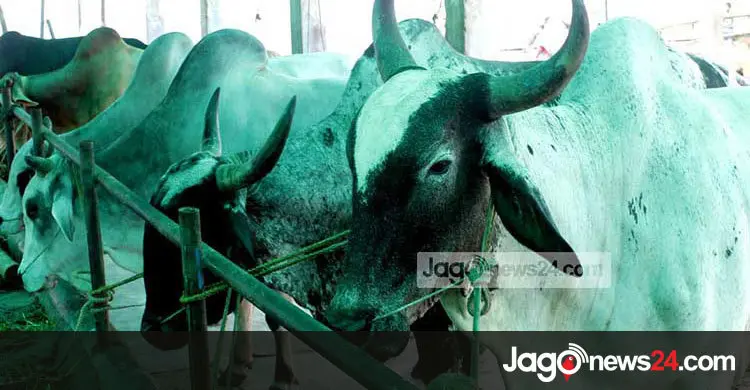
Our household and farm livestock fall ill from time to time with various diseases, which reduce their output. Everyone who keeps animals should have a basic knowledge of these diseases. Here is the first part of a guide to livestock diseases and their remedies.
Blood dysentery
This disease occurs in cattle, buffalo, goats and sheep through infection with a type of protozoan parasite called coccidia, or Eimeria.
Symptoms
- Sudden foul-smelling watery dung.
- Diarrhoea that does not easily ease.
- After a few days, blood and mucus appear in the dung.
- Dysentery-like symptoms develop.
- Blood-stained dung sticks to the base of the tail.
- Heavy straining pushes dung out of the intestine.
- There is a risk of rectal prolapse.
- The animal becomes weak.
- The animal loses its appetite and wastes away.
- The animal has convulsions.
Treatment
On the first day, give a Dimidin injection at 25 to 30 ml per 50 kg of body weight, into the muscle, under the skin or into a vein. From the second day, give half that dose for 3 to 5 days in a row.
Alternatively, give one Sulkatrim bolus per 40 kg of body weight by mouth, once a day or in two divided doses, for 3 to 5 days.
Prevention
- Keep animals in hygienic conditions.
- The calving shed or place must be kept clean and dry.
- Animals should not be kept crowded together.
- Make sure the animals' feed and water are not contaminated with dung.
- The disease can be prevented by giving medicine at set times.
Source: Jagonews24. First published in Bengali on The Agro News.

Comments
(0)