
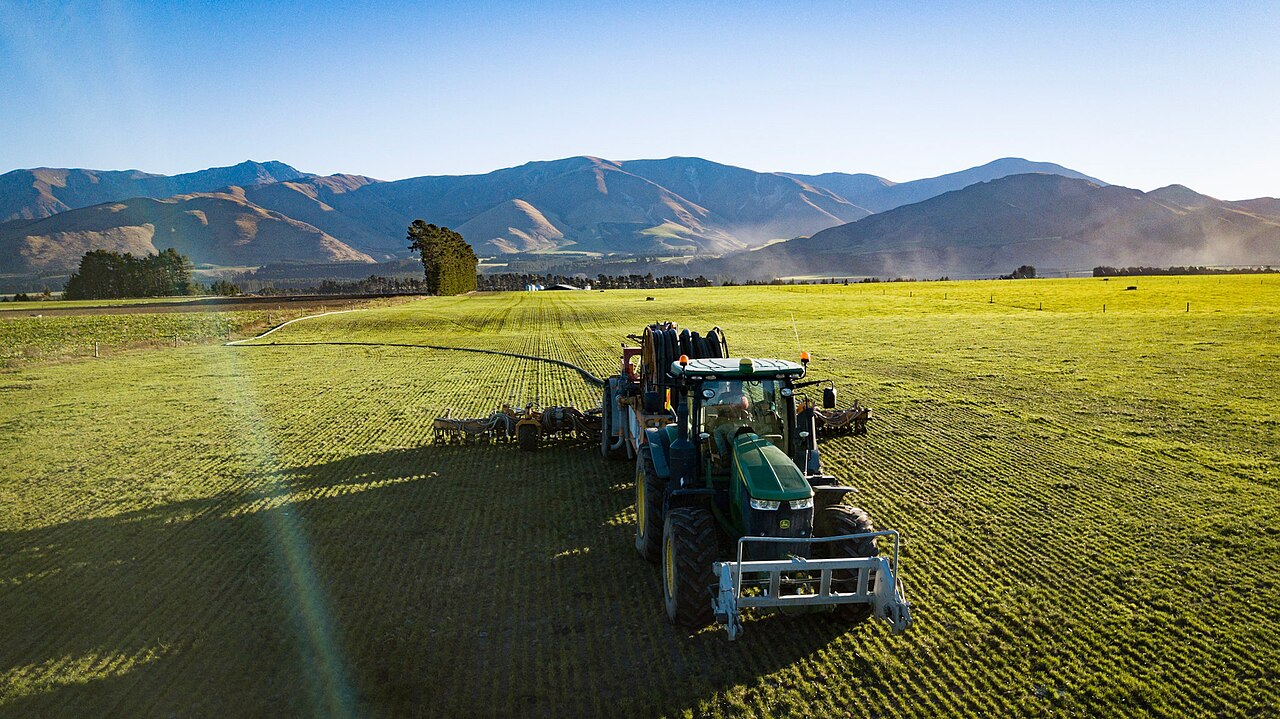
A light, simple disc fertiliser that places liquid plant nutrition in the soil was shown on 11 September in Zwartebroek, Gelderland, at a demo day organised by the Dutch cooperative Gelderse Vallei Kunstmestvrij, and its developers see it as the basis for a future fertiliser robot, Future Farming reported.
In the prototype, the turning discs drive a roller pump that doses the fertiliser, so the pump's output is linked to the movement of the discs, and the discs place the liquid in the soil. The idea is a light machine that delivers nutrients to the root zone when the crop needs them, instead of spreading them on the surface.
Herre Bartlema, chairman of the Dutch Centre for the Development of Circular Precision Fertilisation (NCOK), wants to combine the technique with an electric, self-driving vehicle, which would not need to be heavy for this kind of work. Refilling could also be automatic, through a docking station where the machine takes on fertiliser before going back to the field. Bartlema, who has long campaigned for precision fertilisation and lower emissions, expects RENURE, liquid nutrients recovered from manure, to provide a large supply of fast-acting fertiliser that must reach the roots at the right moment.
The machine is still a prototype. The self-driving robot is not yet a practical reality, the design of the docking station is not settled, and there are no figures yet on working width, tank size, speed, capacity, dosing accuracy or performance in different soils. Practical feasibility and cost remain open questions, the magazine noted. The story was reported by Martin Smits.
Photo: Central Injection Agri / Wikimedia Commons (CC BY 4.0)
Source: Future Farming


Comments
(0)