
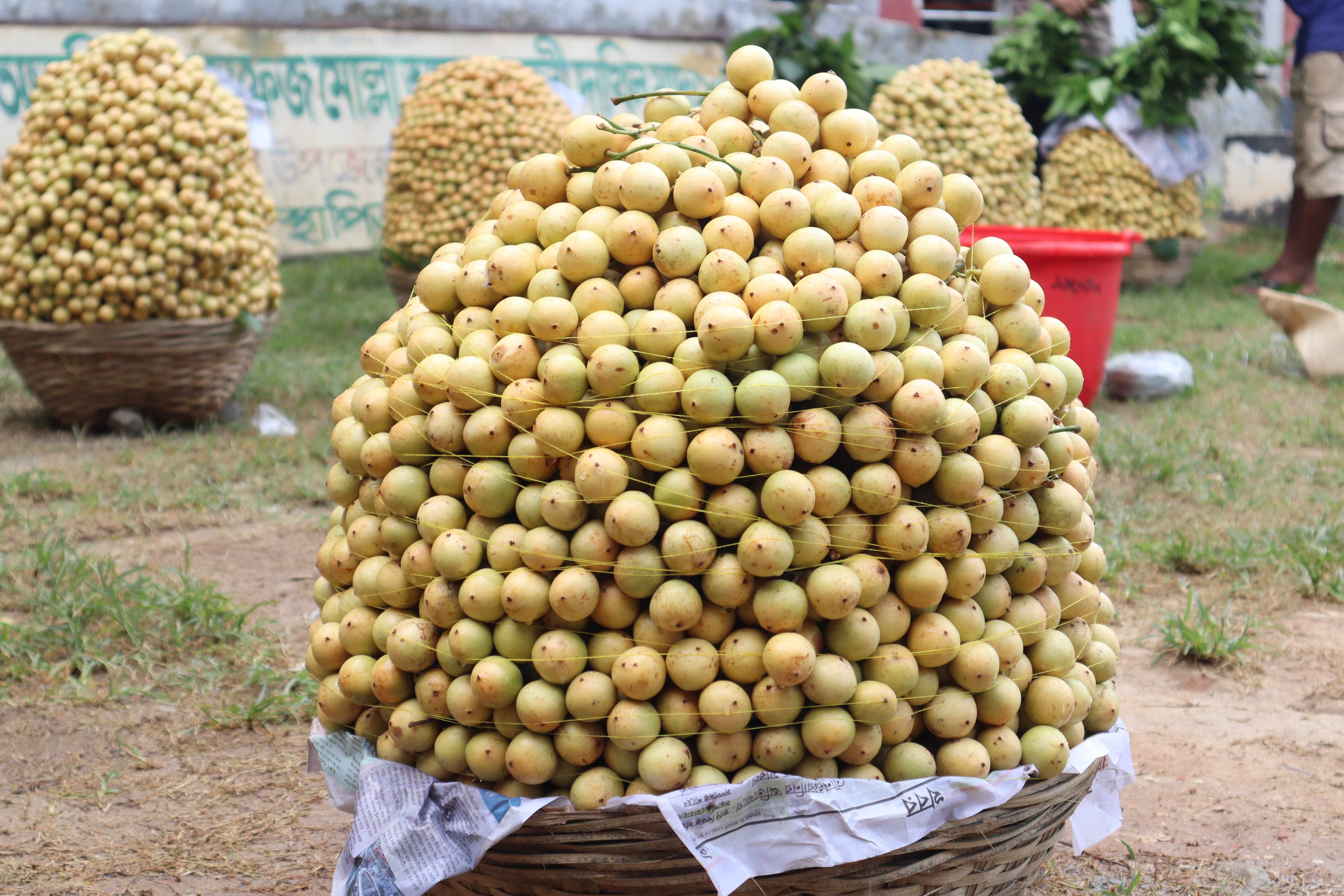
On 17 June 2026, in the middle of the latkan season, the lifestyle section of the Bengali news site Jagonews24 published a report suggesting that latkan, also spelled lotkon and known in English as Burmese grape, could be a companion for people trying to lose weight. The report, which credited the website PinpointMax as its source material, argued that the sour-sweet seasonal fruit could have a supporting place in a weight-control diet, while stating plainly that the claim that latkan works "magic" and directly cuts weight is not true. This account sets out what the report said, what published studies of the fruit had found by that date, where the fruit is grown in Bangladesh, and what health authorities such as the World Health Organization (WHO), the UK's National Health Service (NHS) and MedlinePlus, the consumer health service of the US National Library of Medicine, advised on weight, fruit, fibre and vitamin C.
What the report said
The report began from a familiar picture. Excess weight, it said, had become a common health problem, and irregular lifestyles, fast food, little physical activity and stress left many people worried about it. Many were therefore turning to healthier foods to control their weight, and the seasonal local fruit latkan could be one option on that list.
Its case rested on a handful of points. Controlling calories, it said, is the most important part of losing weight, and latkan is comparatively low in calories, so people following a diet could choose it in place of high-calorie sweets or processed food. It said the fruit contains dietary fibre, which is digested slowly and gives a longer feeling of fullness, so that the urge to eat again and again may ease, and that this fibre helps keep the bowels working. It suggested that the fruit's natural sour-sweet taste could reduce the pull of artificial sweets and make it an alternative to soft drinks and high-sugar foods, and that its vitamin C and minerals could help people who feel weak or tired while dieting.
On the central question the report was cautious. It said that no single food can make a person lose weight, and that a healthy diet, regular walking or exercise, enough sleep and calorie control have to work together. It described latkan as tasty and healthy but not a miraculous way to lose weight, and said that, added to a proper diet, regular exercise and a moderate lifestyle, the fruit could make the effort more pleasant.
Two parts of the original are not carried here. The report gave a calorie figure for 100 grams of the fruit that could not be traced to a food composition table or a published study, and it referred to unnamed online discussions about dieting. The sections below rely instead on the measurements that published research contains and on the advice of named health authorities.
What latkan is
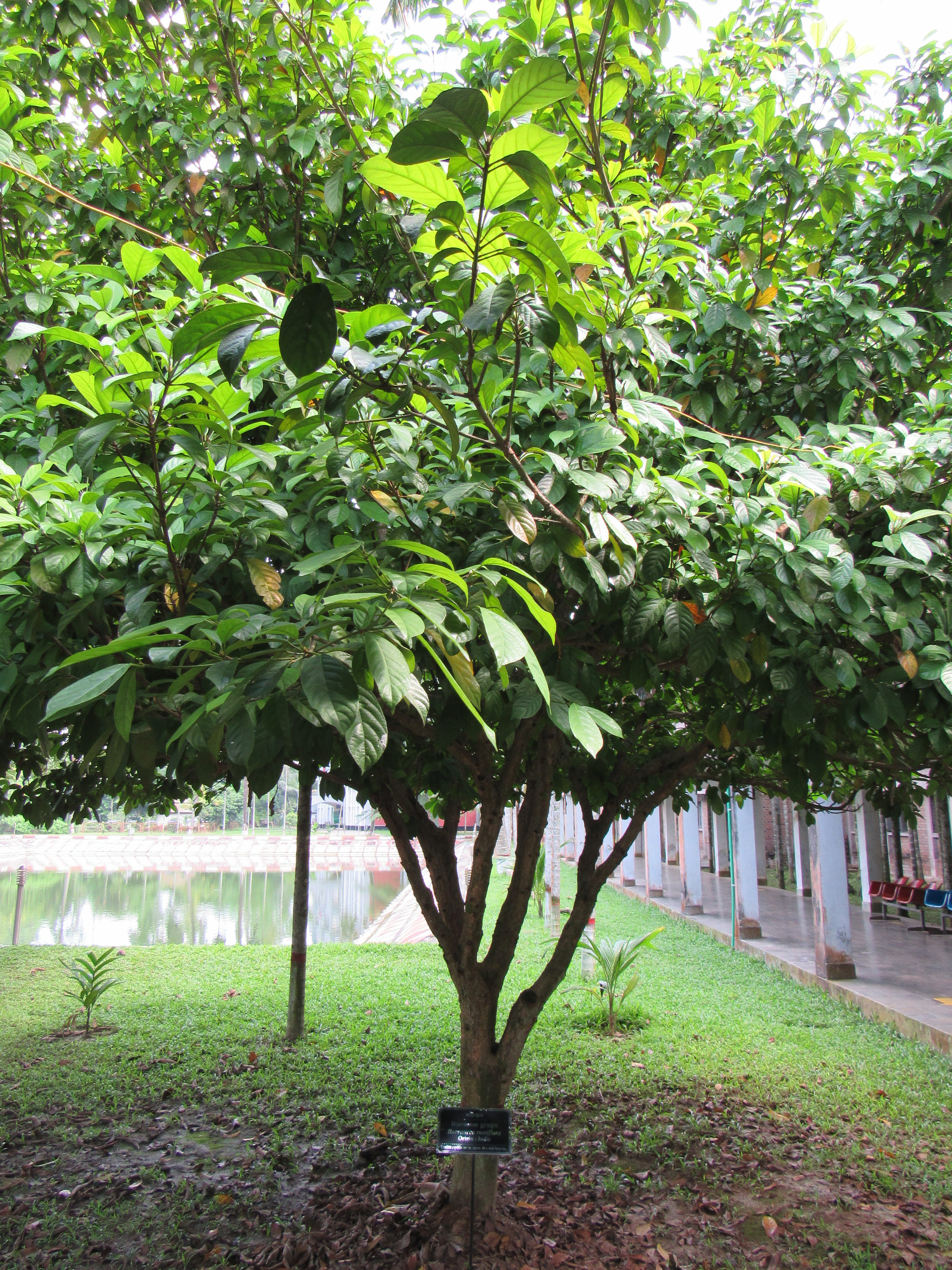
Latkan is the fruit of Baccaurea ramiflora, a slow-growing evergreen tree of the family Phyllanthaceae; some older works place it in the Euphorbiaceae. The tree can reach 25 metres, with a spreading crown and thin bark. Its native range covers Bangladesh, India (including Assam and the Andaman and Nicobar Islands), Nepal, Myanmar, Thailand, Cambodia, Laos, Vietnam, Peninsular Malaysia and southern China including Hainan, where it grows in evergreen forests on a wide range of soils. On the IUCN Red List of Threatened Species it is assessed as Least Concern.
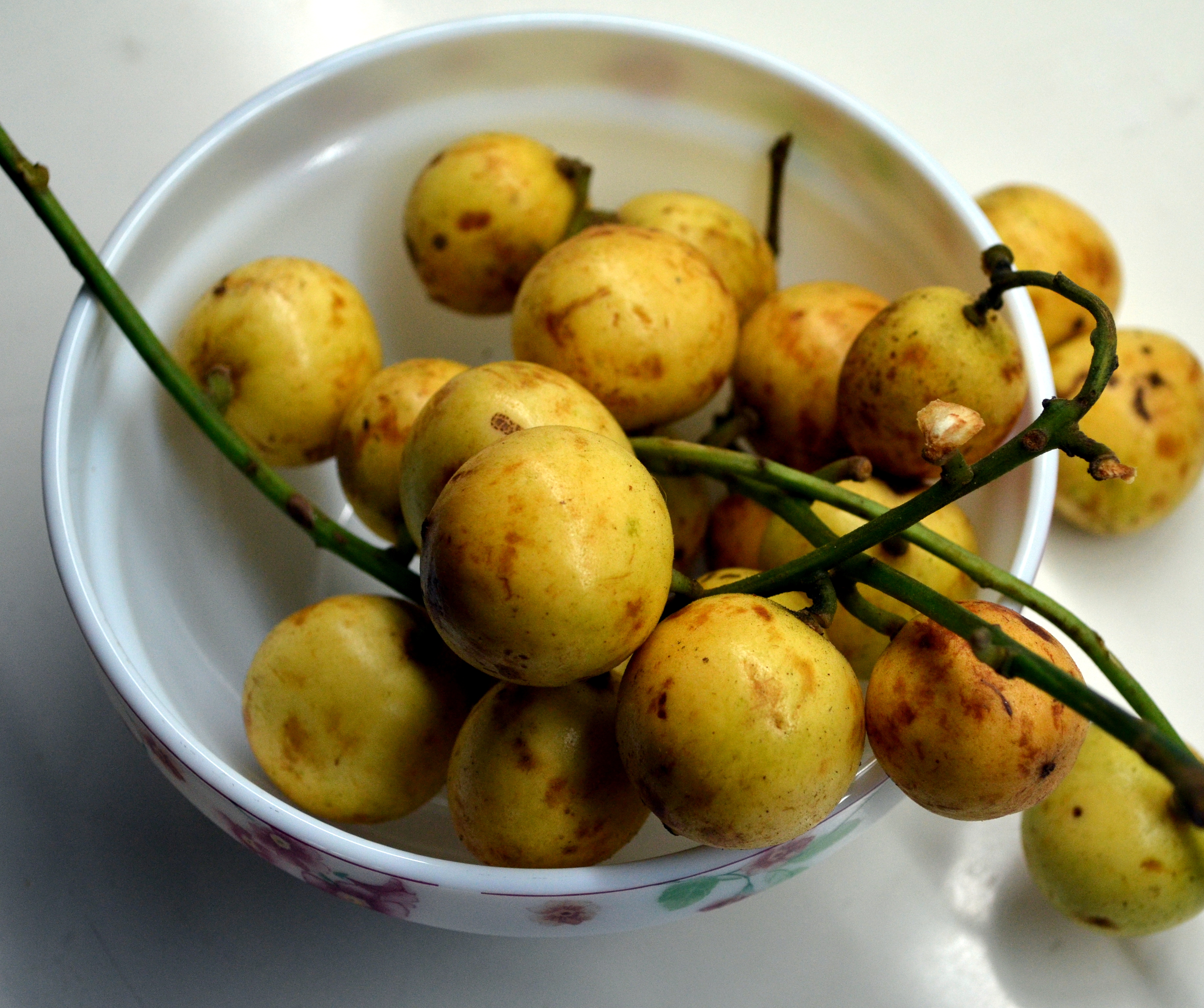
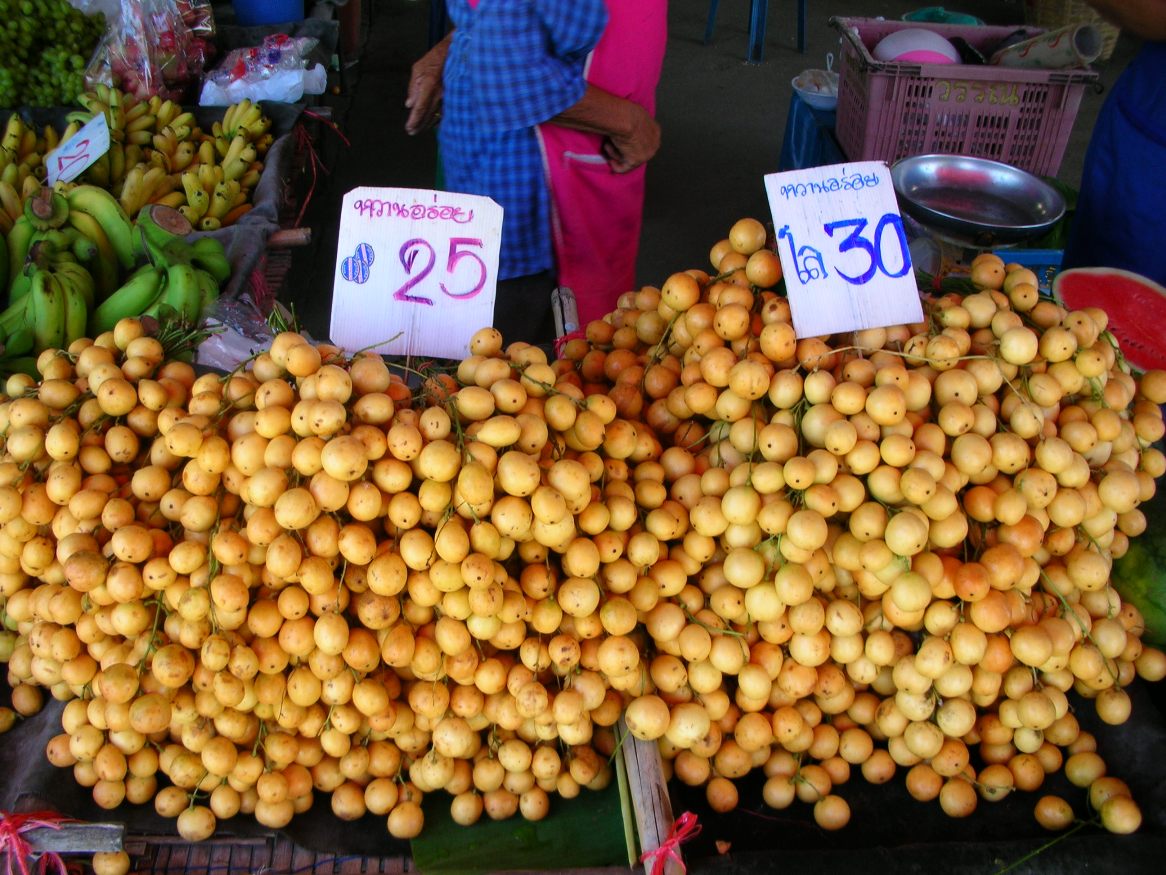
The fruit is oval, 2.5 to 3.5 centimetres across, and turns yellowish to pinkish-red or purple when ripe. Inside are two to four large seeds, each wrapped in a white aril, the soft juicy part that people eat. Besides Burmese grape, the fruit is called leteku in Assam and mafai in Thailand. It is eaten fresh, stewed or made into wine. Fresh fruit keeps for four to five days, and in parts of its range it is boiled with salt and stored in closed jars. The bark, roots and wood are dried, ground and boiled in water for use in traditional medicine.
A 2017 review in the International Journal of Nutrition and Food Sciences, titled "Nutritional Value and Medicinal Uses of Minor Fruits: Burmese Grape", described it as an underutilised minor fruit grown mainly in Bangladesh, Nepal, Thailand, Myanmar, Indonesia, India and Malaysia. It said the pulp is high in vitamins and minerals and is a rich source of pectin, and that the fruit is used to make jam, jelly and wine. A review published the same year in the Annals of Plant Sciences, written from Assam in India, said research had reported a rich content of minerals and vitamin C in the fruit, while noting that the plant remained underutilised and that its economic potential was still untapped.
A study from China published in Food Chemistry: X in October 2024 described the tree as bearing abundant clusters of fruit that hang from its twigs and branches. It gave single fruits a weight of about 14.72 to 15.71 grams and said an adult tree can yield roughly 100 to 150 kilograms of pulp. Besides fresh eating, it listed juice, dried fruit, jam and fruit wine among the products made from it.
Where latkan grows in Bangladesh
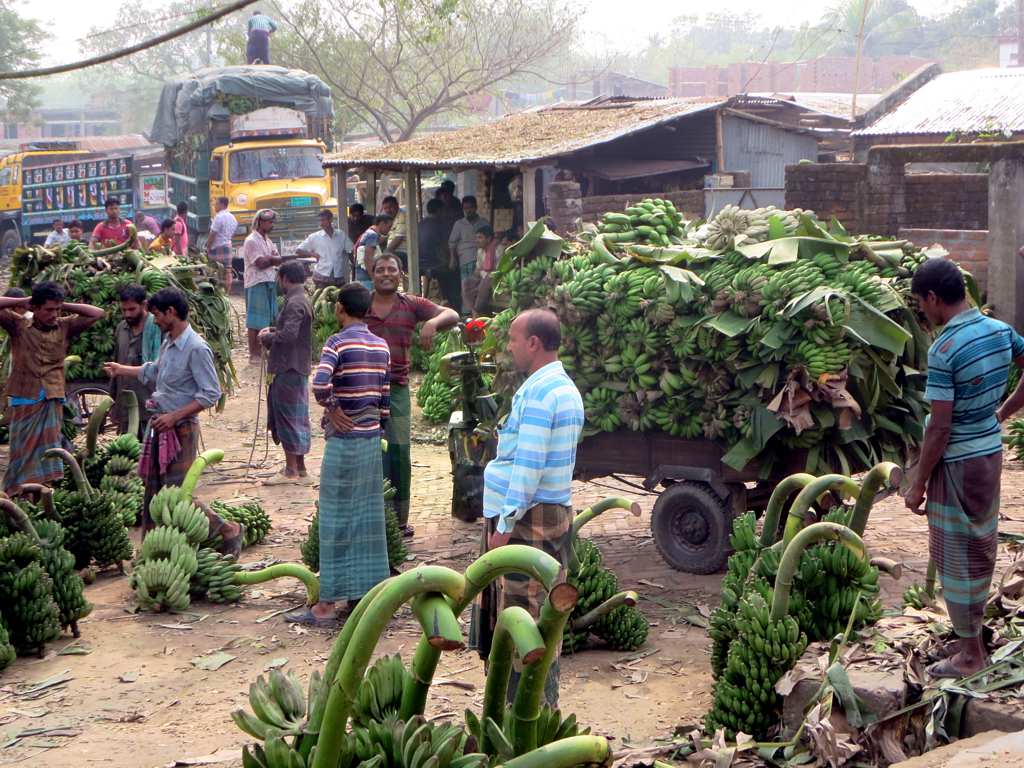
In Bangladesh the best-known latkan district is Narsingdi, north-east of Dhaka. The Daily Star reported in July 2014 that cultivation had grown in the district since the early 1990s and that marginal farmers in Shibpur, Raipura, Polash and Belabo upazilas had improved their incomes by growing the fruit on reddish land. Saplings, the paper said, need eight to ten feet of space and begin to bear within three or four years, and about 200 saplings can be planted on a bigha. Latkan from Narsingdi was then being exported, mainly to the United Arab Emirates and Saudi Arabia.
A Daily Star report from Narsingdi on 27 June 2016 said that about two decades earlier latkan had grown wild in bushes and jungle in Shibpur and Belabo, and that commercial orchards by then covered several hundred acres. The Department of Agricultural Extension (DAE) put the district's area at 581 hectares the previous year and 625 hectares that year, not counting homestead yards and fallow land, and its deputy director in Narsingdi put production at 9,663 tonnes the previous year and 12,000 tonnes that year. The DAE described the red soil of Shibpur, Belabo and Raipura as rich in calcium and other minerals and well suited to the tree. Buyers from other districts came daily to the wholesale markets at Morjal and Shibpur bazars, and the fruit was sent to countries in Europe and the Middle East.
By 2025 the district's latkan had official recognition. The Daily Star reported on 22 June 2025 that Narsingdi had received Geographical Indication (GI) recognition for the fruit on 25 April that year. According to DAE sources in Narsingdi, latkan was then grown on around 1,800 hectares in the district, with a production target of 32,400 tonnes for the year. The same report described a poor season: growers said adverse weather had lowered the yield by around 50 percent compared with the previous year, with trees that usually give three to four maunds bearing only 15 to 20 kilograms. A DAE training officer in Narsingdi said excessive heat and drought during flowering had made the blossoms fall early and that trees in many orchards were ageing. Retail prices in local markets were then Tk 80 to 130 a kilogram, depending on size and quality. A grower in Shibpur upazila told the paper that flowering begins around the Bengali months of Magh and Falgun and that the fruit ripens by the end of Jaistha.
The fruit is grown well beyond Narsingdi. In Lalmonirhat, The Daily Star reported in June 2016, agriculture extension sources counted about 20,000 latkan trees across the district's five upazilas and at least 120 growers farming it commercially; an extension officer there said the tree prefers shade and is often planted beside homesteads, and a grower put the harvest at the first week of June to mid-July. In Pabna, The Financial Express reported in July 2018 that growers were pleased with a good yield, with the fruit selling at Tk 80 to 90 a kilogram in retail markets and Tk 70 to 75 at wholesale.
What analyses of the fruit have measured
Published measurements of latkan's nutrients are fewer than its popularity might suggest. The Food Composition Table for Bangladesh, compiled in 2013 by the Institute of Nutrition and Food Science of the University of Dhaka and published through the Food and Agriculture Organization of the United Nations (FAO), gives values per 100 grams of edible portion of each food it lists, but it carries no entry for latkan or Burmese grape. The figures that do exist come from individual studies.
In 2009 the Bangladesh Journal of Scientific and Industrial Research published an analysis of eight fruits sold in Bangladesh, five minor and three major: melon, guava, papaya, karanda, Burmese grape, velvet apple, wood-apple and pomelo. Among these, the largest amount of iron, 5.34 milligrams per 100 grams, was found in Burmese grape. The study found no arsenic in the Burmese grape samples. The richest vitamin C content among the eight, 80 milligrams per 100 grams, was found in guava, not in Burmese grape.
The Chinese study of 2024 reported, for the fruit it examined, soluble solids of 13.67 to 14.37 percent, titratable acid of 1.25 to 1.39 percent and vitamin C of 3.65 to 3.93 milligrams per 100 grams. Those figures came from fruit grown in southern China and may not match the fruit of Bangladesh; reviews of the plant note that composition differs with plant part, variety, climate and place. Even so, they show that the description of latkan as rich in vitamin C, common in popular writing, rests on uneven evidence.
The same research group followed fruit from flowering to ripeness. Ripening began about 73 days after full bloom and the fruit reached ripeness by about 93 days. Over that period the fruit's main organic acid, citric acid, fell significantly, while the main sugars (L-sorbose, D-glucose and sucrose) did not change significantly; the sugar-acid ratio rose from 3.02 to 3.66. A further study by researchers at Hanshan Normal University and Guangdong Ocean University in China, published in Frontiers in Plant Science on 3 December 2025, compared sweet-tasting and sour-tasting types of the fruit. It identified glucose and citric acid as the main compounds behind the taste, found a higher sugar-to-acid ratio in the sweet type, and detected no fructose in the pulp.
The peel, the seeds and pectin
Only part of each latkan is eaten. A study by researchers at Hajee Mohammad Danesh Science and Technology University in Dinajpur and Bangabandhu Sheikh Mujibur Rahman Agricultural University in Gazipur, published in the International Journal of Food Science on 19 December 2024, said the inedible peel and seeds make up almost 55.5 percent of the fruit and are usually thrown away. The researchers bought fresh, mature fruit from markets and orchards in Gazipur and Narsingdi in August and September and set out to extract pectin from the peel.
Pectin is the gelling agent that gives jams and marmalades their set, and it is classed as a soluble dietary fibre. Under the best conditions the team found, an extraction at pH 2.40 for 56 minutes at 76 degrees Celsius, the experimental yield was 10.56 percent of the peel powder. The pectin had a degree of esterification of 65.79 percent, which places it among high-methoxyl pectins, and the authors described it as having excellent gelling, thickening and stabilising capabilities. They called it a possible industrial alternative, while noting that the work was done at laboratory scale and that scaling up needed further study.
The finding matters for how the fruit's fibre is described. The 2017 review called the pulp a rich source of pectin, and the 2024 study measured pectin in the peel, the part that is usually discarded. Neither study gave a dietary fibre value for the edible aril in grams per 100 grams, and neither examined whether eating latkan affects appetite or body weight.
Laboratory studies are not weight trials
Most of the health research on Baccaurea ramiflora has been done on extracts in test tubes or in laboratory animals. A study from Phranakhon Rajabhat University in Bangkok, Thailand, published in the journal Scientifica on 16 June 2025, made ethanol extracts from the leaves, stems, stem bark, peel and flesh with seeds of plants collected in Nakhon Nayok province. It tested them against alpha-amylase and alpha-glucosidase, two digestive enzymes that the diabetes drug acarbose also targets. The extract of flesh with seed had an IC50 of 0.50 milligrams per millilitre against alpha-amylase, compared with 0.19 for acarbose, and every extract was less potent than the drug against both enzymes. The authors suggested that the extracts might find a use in functional foods, but they tested them on no animals or people.
Researchers in Bangladesh have studied the fruit in mice. A team from Atish Dipankar University of Science and Technology, State University of Bangladesh and Northern University, writing in BMC Complementary and Alternative Medicine in January 2018, gave methanol extracts of the pulp and seeds to mice at 200 milligrams per kilogram and reported analgesic, anti-inflammatory, sedative and antidiarrhoeal effects. A 2016 study in the Indian Journal of Experimental Biology found strong antioxidant activity in the fruit's juice and no toxic effect on mouse cells in its tests, and a 2020 paper in the International Journal of Biosciences reported antioxidant activity in extracts of the peel.
These studies describe what concentrated extracts do under laboratory conditions. None of them tested whether eating latkan as a fruit changes body weight in people, and none was designed to. Their results therefore cannot be read as evidence that the fruit helps weight loss, controls blood sugar or treats any illness in those who eat it.
What health authorities advise on weight, fruit and fibre
The general principle behind the report matches health-service advice. The NHS explains that the energy in food and drink is measured in calories, often given in kilocalories (kcal), and that as a rough guide an average man needs 2,500 kcal a day and an average woman 2,000 kcal, figures that vary with age, size and activity. Eating more than the body uses leads to weight gain because the extra energy is stored as fat; eating less than it uses leads to weight loss as the body draws on that store.
Among its tips for losing weight, the NHS advises people to aim for their 5 A Day, with 80 grams of fresh, canned or frozen fruit or vegetables counting as one portion; to be active for 150 minutes a week, which can be split into shorter sessions; to swap sugary drinks for water; to cut down on food that is high in sugar and fat; and to keep unhealthy food out of the house, naming fruit among the healthier alternatives. The NHS separately advises that adults' fibre intake should rise to 30 grams a day as part of a healthy balanced diet, and says that eating plenty of fibre is associated with a lower risk of heart disease, stroke, type 2 diabetes and bowel cancer.
The WHO's fact sheet on a healthy diet, dated 26 January 2026, says that everyone older than ten should aim for at least 400 grams of fruits and vegetables a day and at least 25 grams of naturally occurring dietary fibre. It advises limiting free sugars to less than 10 percent of total energy intake, which it puts at about 50 grams, or 12 level teaspoons, for a person of healthy weight eating about 2,000 calories a day. It says that keeping total fat to 30 percent or less of daily energy may help prevent unhealthy weight gain in adults, and that salt should be limited to less than 5 grams a day.
On vitamin C, MedlinePlus says the vitamin is needed for the growth and repair of tissues in all parts of the body, including the formation of collagen, the healing of wounds and the absorption of iron, and that all fruits and vegetables contain some of it. It gives a recommended intake of 90 milligrams a day for men and 75 milligrams for women aged 19 and older. It also says that vitamin C supplements or vitamin C-rich foods do not reduce the risk of catching the common cold.
Read against this advice, latkan is one of many fruits that can count towards a day's fruit and vegetables, as an alternative to sugary snacks and drinks. No health authority has named it, or any single fruit, as a means of losing weight. Anyone who wants to lose weight, or who lives with diabetes or another long-term condition, should ask a doctor or a registered dietitian before changing their diet.
Photo: Faruk raz / Wikimedia Commons (CC BY-SA 4.0)
Sources: Jagonews24 (17 June 2026), The Daily Star (16 July 2014, 9 June 2016, 27 June 2016, 22 June 2025), The Financial Express (16 July 2018), Bangladesh Journal of Scientific and Industrial Research (2009), International Journal of Nutrition and Food Sciences (2017), Annals of Plant Sciences (2017), Indian Journal of Experimental Biology (2016), BMC Complementary and Alternative Medicine (2018), International Journal of Biosciences (2020), Food Chemistry: X (2024), International Journal of Food Science (2024), Scientifica (2025), Frontiers in Plant Science (2025), Food Composition Table for Bangladesh (INFS, University of Dhaka, 2013), World Health Organization, NHS, MedlinePlus, Wikipedia.
Comments
(0)