
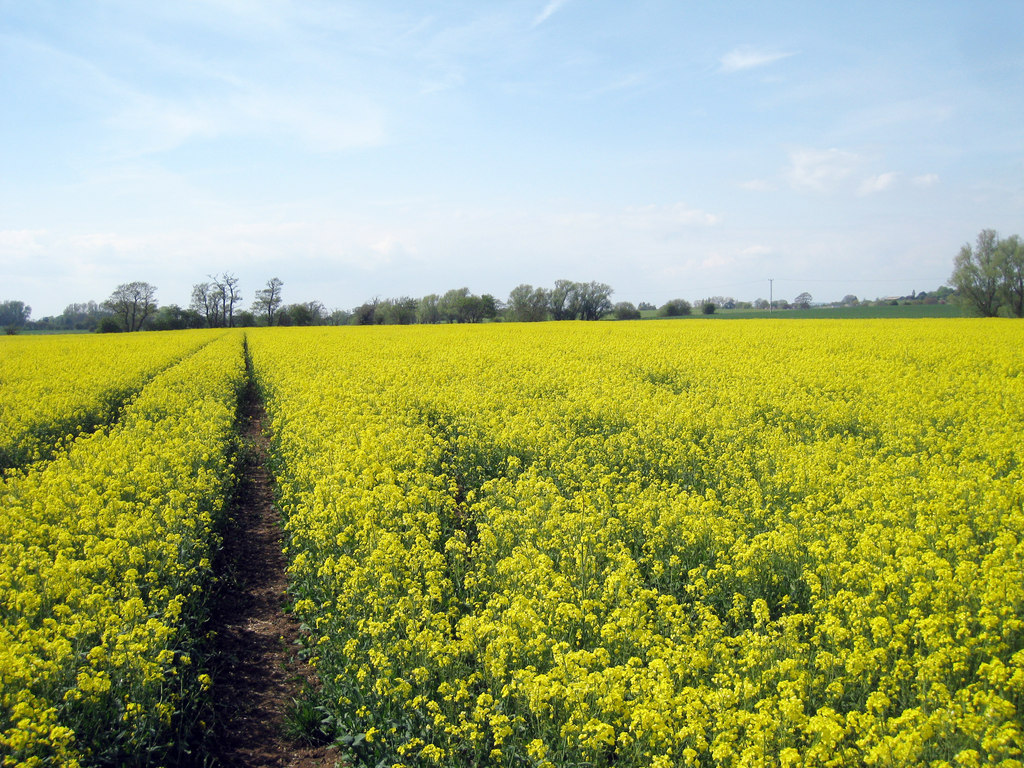
Winter oilseed rape drilled later than the old early-September target can still come through the winter and yield well, according to trial results from the plant breeder NPZ UK and the experience of a Lincolnshire grower, reported by Richard Allison in Farmers Weekly. Hot, dry summers, milder autumns and a better understanding of cabbage stem flea beetle have pushed drilling later in recent seasons.
Craig Padley, who runs NPZ UK's trial sites in Cambridge and Wisbech, said the old calendar no longer holds. "It used to be that we would drill by 10 September, but with climate change that's no longer relevant," he said, adding that he would be happy to drill in the third week of September, when plants still go into winter with about eight leaves.
In NPZ UK's trials last season, the late-sown plots averaged 4.68 t/ha against 4.37 t/ha for crops drilled on the usual date. Padley put the difference largely down to spring damage from cabbage stem flea beetle larvae: earlier-drilled crops in warmer soils carried about 20 larvae per plant on average, while the late-sown plots escaped them. This autumn's dry start meant the company's early trial only went in on 20 August.
Padley explained the biology with day-degree research funded by NPZ at the University of Applied Sciences in Kiel. A plant needs about 150 day degrees to germinate and roughly 120 to 150 for each pair of leaves, and begins forming flower buds after about 1,000. An early crop passes 1,200 day degrees and starts stem extension before winter, fixing its potential flower number; a later crop keeps differentiating buds into the spring. NPZ applies plant growth regulators at four to six leaves to hold the plant for two to three weeks.
Variety choice matters most for late drilling, Padley said: growers need one that emerges quickly in autumn and keeps developing fast. These are often hybrids, but not every hybrid suits a late slot.
On the Lincolnshire Wolds, James Thompson farms 260 ha of silty clay loam over chalk and avoids drilling before the end of the first week of September. He leaves long wheat stubble, applies chicken manure and drills 85 to 100 seeds per square metre, with a buckwheat and phacelia companion crop to distract pigeons and flea beetles. He rolls twice, watches for slugs and flea beetles and applies two foliar feeds. He said his crops have never needed a growth regulator, and that vigour is the first thing he looks for in a variety.
Photo: Oast House Archive / Wikimedia Commons (CC BY-SA 2.0)
Source: Farmers Weekly


Comments
(0)