
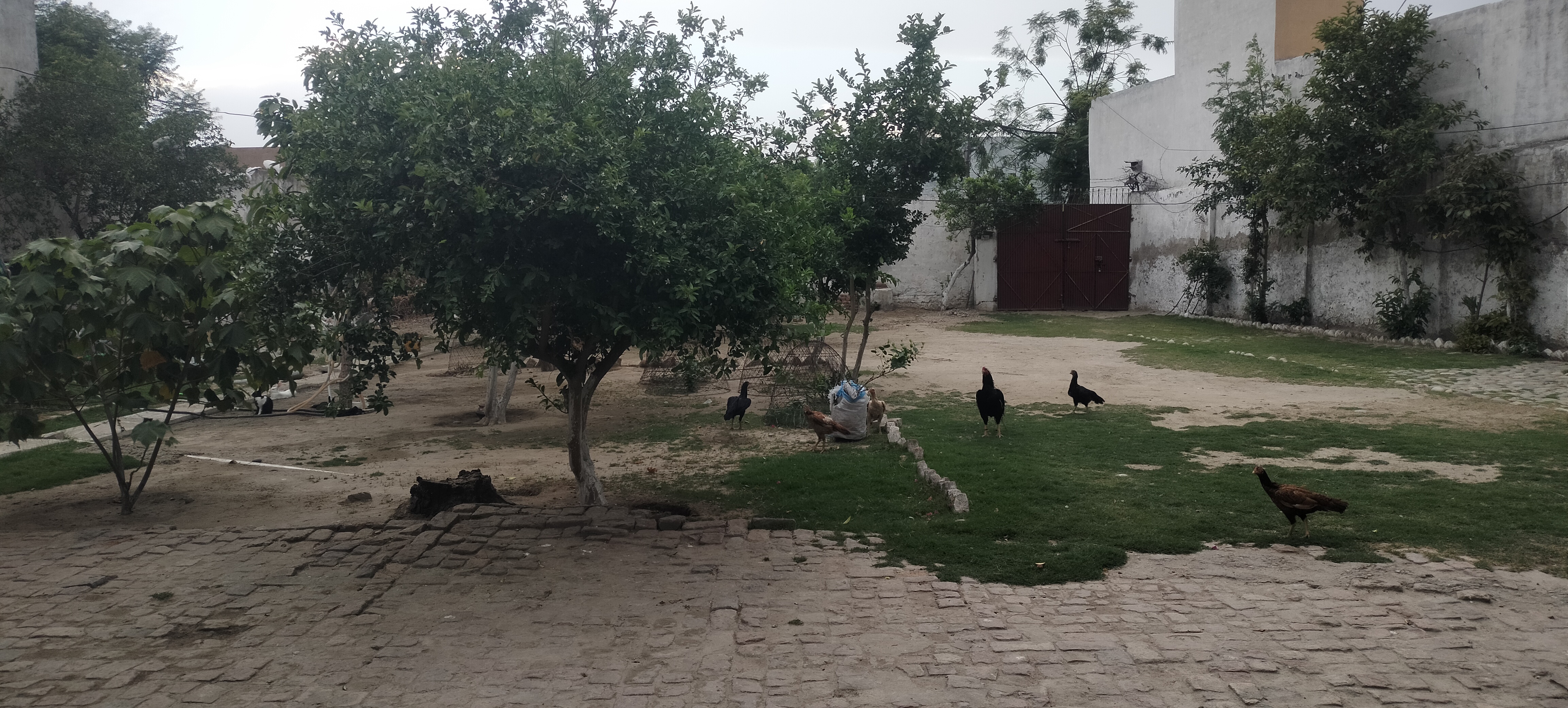
In August 2023 a family in Lahore, Pakistan, that had no cash to pay a lawyer gave him a pet chicken as his fee for defending a relative held in jail on terrorism-related charges. The Bangladeshi news site Jagonews24 reported the case from its international desk on Friday 18 August 2023, citing the Pakistani newspaper The News. According to the report, the accused, a Lahore resident named Mohsin Abbas, was in custody accused of involvement in terrorist activities; his case came up at an anti-terrorism court in Lahore on Friday, and a lawyer who had accepted the bird argued on his behalf. The chicken belonged to Abbas's young nephew, a child whom Abbas had been bringing up.
How a pet chicken became a lawyer's fee
The report described a household that could not meet the cost of a criminal defence. Abbas's family, it said, did not have the money to keep up a legal fight. Its members went to a lawyer and offered him, in place of a cash fee, a pet chicken kept at their home. After hearing the whole story, the lawyer agreed to work for them.
At the hearing in the anti-terrorism court on Friday, the report said, the lawyer argued Abbas's case. Because the family had no cash, the chicken was handed over as the fee. The bird was the pet of Abbas's nephew, and Abbas himself had raised the boy. The child was seen in tears as he handed his favourite chicken to the lawyer.
The report, as it stood on 18 August 2023, did not give the lawyer's name, the exact charges, the date of the arrest or the outcome of the hearing. It did not say whether bail had been sought, and it did not report a decision by the court. This account keeps to what the report said.
The lawyer's account of the arrest and a bribe claim
The rest of the report rested on what the defence lawyer said. According to him, Abbas was arrested in an area called Pattoki on charges of involvement in terrorist activities. The lawyer alleged that after the arrest the police demanded a bribe of 25,000 rupees to release him, and that the family paid it. Instead of freeing Abbas, he said, the Pattoki police handed him over to the Lahore police. The lawyer also claimed that Abbas had not been involved in any crime and that he had strong evidence to show it.
These are the claims of the lawyer for the accused. The report carried no response from the police in Pattoki or in Lahore, and none of the claims, about the bribe or about Abbas's innocence, had been tested in court at the time of the report.
Pakistani law treats a bribe taken by an official as a crime in itself. Section 161 of the Pakistan Penal Code of 1860 makes it an offence for a public servant to accept or obtain from any person any gratification, other than legal remuneration, as a motive or reward for doing or not doing an official act, or for showing favour or disfavour to any person in the exercise of official functions. Whether any such thing happened in this case was the lawyer's allegation, not a finding.
The Constitution of Pakistan also sets out what must happen after an arrest. Article 10(1) says that no person who is arrested shall be detained in custody without being informed, as soon as may be, of the grounds for the arrest, nor be denied the right to consult and be defended by a legal practitioner of his choice. Article 10(2) requires every person who is arrested and detained to be produced before a magistrate within 24 hours of the arrest, not counting the time needed for the journey to the nearest magistrate's court, and bars detention beyond that period without a magistrate's authority.
Anti-terrorism courts under the 1997 Act
The court that heard the case was one of Pakistan's anti-terrorism courts, set up under the Anti-terrorism Act, 1997, dated 20 August 1997. The Act describes itself as a law "to provide for the prevention of terrorism, sectarian violence and for speedy trial of heinous offences", and it extends to the whole of Pakistan. The provisions below are taken from the compilation of the Act published by the Sindh Judicial Academy, which records its amendments up to 24 September 2020.
Section 13 provides for the courts themselves. For the speedy trial of cases under the Act and of the offences listed in its schedule, the Federal Government, or the Provincial Government if so directed, may establish by notification one or more anti-terrorism courts for each territorial area specified by the High Court concerned. Where an area has more than one such court, the Government, in consultation with the Chief Justice of the High Court, designates one judge as the administrative judge, before whom all cases of that area are filed and who may try them or assign them to the other courts. The section also provides for an additional anti-terrorism court at the principal seat of each High Court, with a judge of that High Court appointed to it.
Section 19 sets out procedure and time limits. The investigating officer, not below the rank of inspector, or a joint investigation team, must complete the investigation of a case triable by the court within thirty working days; if it is not finished within thirty days of the first information report, an interim report goes to the court through the public prosecutor, and the court starts the trial on that basis unless it records reasons not to. The court may take cognizance of a case directly. Once it has taken cognizance, it must hold the trial from day to day and decide the case within seven days; if it fails, the matter is brought to the notice of the Chief Justice of the High Court for directions.
The same section limits delay by the defence. An anti-terrorism court may not give more than two adjournments during a trial. If the defence counsel does not appear after two consecutive adjournments, the court may appoint a state counsel with at least seven years' standing in criminal matters, from a panel of advocates the court maintains in consultation with the government, to defend the accused and go on with the trial.
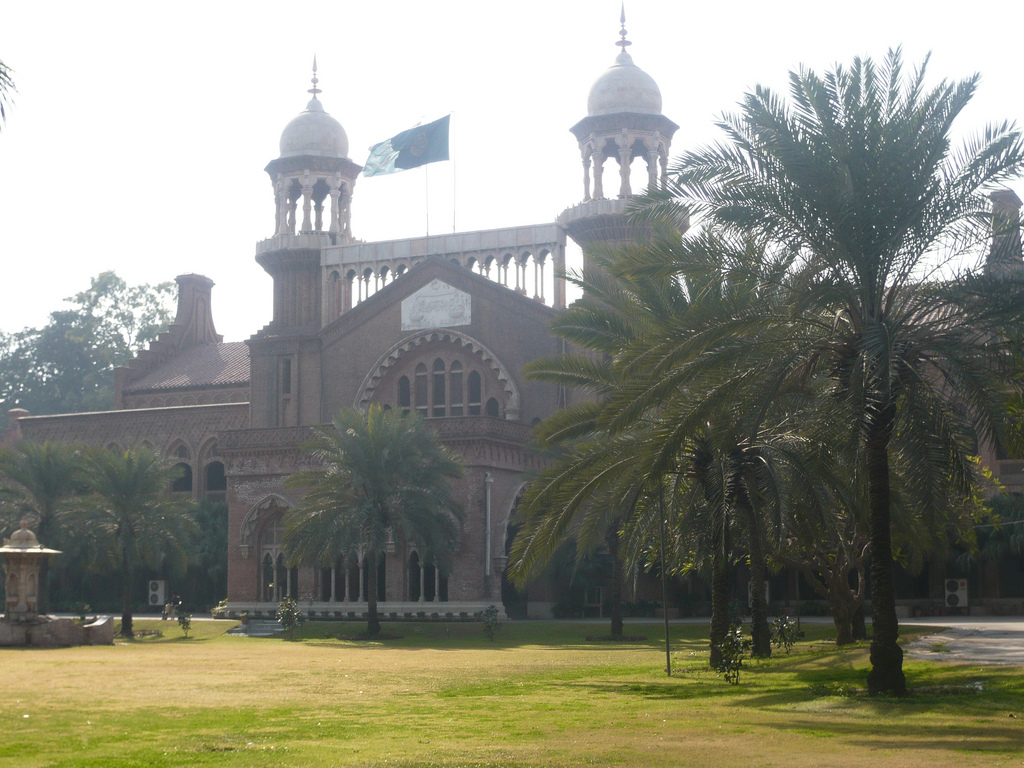
Bail in these cases follows special rules in section 21D, inserted in 2001. No court other than an anti-terrorism court, a High Court or the Supreme Court may grant bail to, or otherwise release, a person accused in a case triable by an anti-terrorism court. Offences under the Act punishable with death or with imprisonment of more than three years are non-bailable, and a person shall not be released where there are reasonable grounds to believe he is guilty of an offence punishable with death, life imprisonment or at least ten years in prison. Otherwise the court may grant bail unless it is satisfied that there are substantial grounds to believe the person would fail to surrender, commit an offence while on bail, interfere with a witness or obstruct justice, or break the conditions of release.
Section 25 governs appeals. An appeal against the final judgment of an anti-terrorism court lies to a High Court. Copies of the judgment are to be given to the accused and the public prosecutor free of cost on the day it is pronounced, and the trial record is to reach the High Court within three days. A person sentenced by the court may appeal within fifteen days, the government may appeal against an acquittal or a sentence within thirty days, and the High Court is to hear and decide the appeal within seven working days.
What the law counts as terrorism
Section 6(1) of the Act defines terrorism as the use or threat of action where the action falls within the list in section 6(2) and the use or threat is designed to coerce and intimidate or overawe the government, the public or a section of the public, community or sect, or a foreign government or population or an international organisation, or to create a sense of fear or insecurity in society.
The breadth of that definition was the subject of a ruling of the Supreme Court of Pakistan in 2019. As Dawn reported on 31 October 2019, a seven-judge bench held that the definition in section 6 was too wide because it covered acts with no real connection to terrorism. The court said that the intent and motive behind an act decide whether it is terrorism, not whether fear was in fact created; that fear produced only as a by-product of a crime does not make it terrorism; and that crimes committed to settle personal enmity or a private vendetta are not terrorism even if they frighten the public. It recommended that Parliament adopt a shorter definition, and that offences with no link to terrorism be removed from the Act's Third Schedule, observing that such offences placed an unnecessary burden on the anti-terrorism courts and delayed the trials of genuine terrorism cases.
The Jagonews24 report did not say which section of the Act Abbas had been charged under. It described the accusation only as involvement in terrorist activities.
Paying for a defence: the right to a lawyer and legal aid
Since 2010 the Constitution has also guaranteed a fair trial. Article 10A, inserted by the Constitution (Eighteenth Amendment) Act, 2010, with effect from 19 April 2010, says that for the determination of his civil rights and obligations or in any criminal charge against him, a person shall be entitled to a fair trial and due process.
For people who cannot pay a lawyer, Pakistan has a district-level legal aid system run under rules made by the Law and Justice Commission of Pakistan. The District Legal Empowerment Committee (Constitution and Functions) Rules, 2011 were notified on 2 July 2011 (S.R.O. 684(I)/2011) and published in the Gazette of Pakistan on 9 July 2011, under section 9(1) of the Law and Justice Commission of Pakistan Ordinance of 1979. They define a "deserving litigant" as one who might otherwise be unable to obtain legal aid or assistance to protect his genuine legal rights or interests in litigation because of limited financial resources.
Under the 2011 rules each committee is chaired by the District and Sessions Judge, and its members are the district's coordination officer or deputy commissioner, the superintendent of the district or central jail, the president of the district bar association and a co-opted representative of civil society. The rules list the costs a committee may cover:
- the professional fee or honorarium payable to a lawyer;
- court fees;
- copying charges;
- process fees; and
- any other cost the committee considers appropriate in a particular case.
A litigant applies in writing on plain paper to the committee's chairperson, with a national identity card or other identity document. The jail superintendent may forward the applications of under-trial or convicted prisoners after checking that they are deserving, and any court may refer a person whose case is pending before it. The committee is to meet at least once a month and may hold special meetings for urgent applications. A person for whom an advocate, public prosecutor or government pleader has already been appointed in the same case under another law is not entitled to this aid.
The committee keeps, with the approval of the Chief Justice of the High Court, a list of lawyers with at least five years' standing at the bar. As notified in 2011, the rules said the committee would set the lawyer's fee case by case, but that it could not exceed 20,000 rupees for a case in any circumstances, paid in two instalments, the first when the case is assigned and the second after the outcome is verified. The Jagonews24 report did not say whether Abbas's family had applied for such aid.
Pattoki and Lahore
Pattoki, where the lawyer said the arrest took place, is a city in Kasur District of Punjab province and the headquarters of Pattoki Tehsil, in Lahore Division. It lies about 73 kilometres from Lahore on the N-5 National Highway and has a railway station on the line between Okara and Lahore. The 2017 census counted 87,757 people in the city. In the colonial era it was a cotton town; after 1947 it turned gradually to growing flowers, and it is known as the "City of Flowers", with plant nurseries lining the highway near the toll plaza.
Pattoki is also home to the Ravi Campus of the University of Veterinary and Animal Sciences (UVAS), Lahore. In June 2002 the Punjab government allotted about 1,000 acres at Pattoki for the sub-campus, where the university teaches a BS (Hons) programme in poultry science.
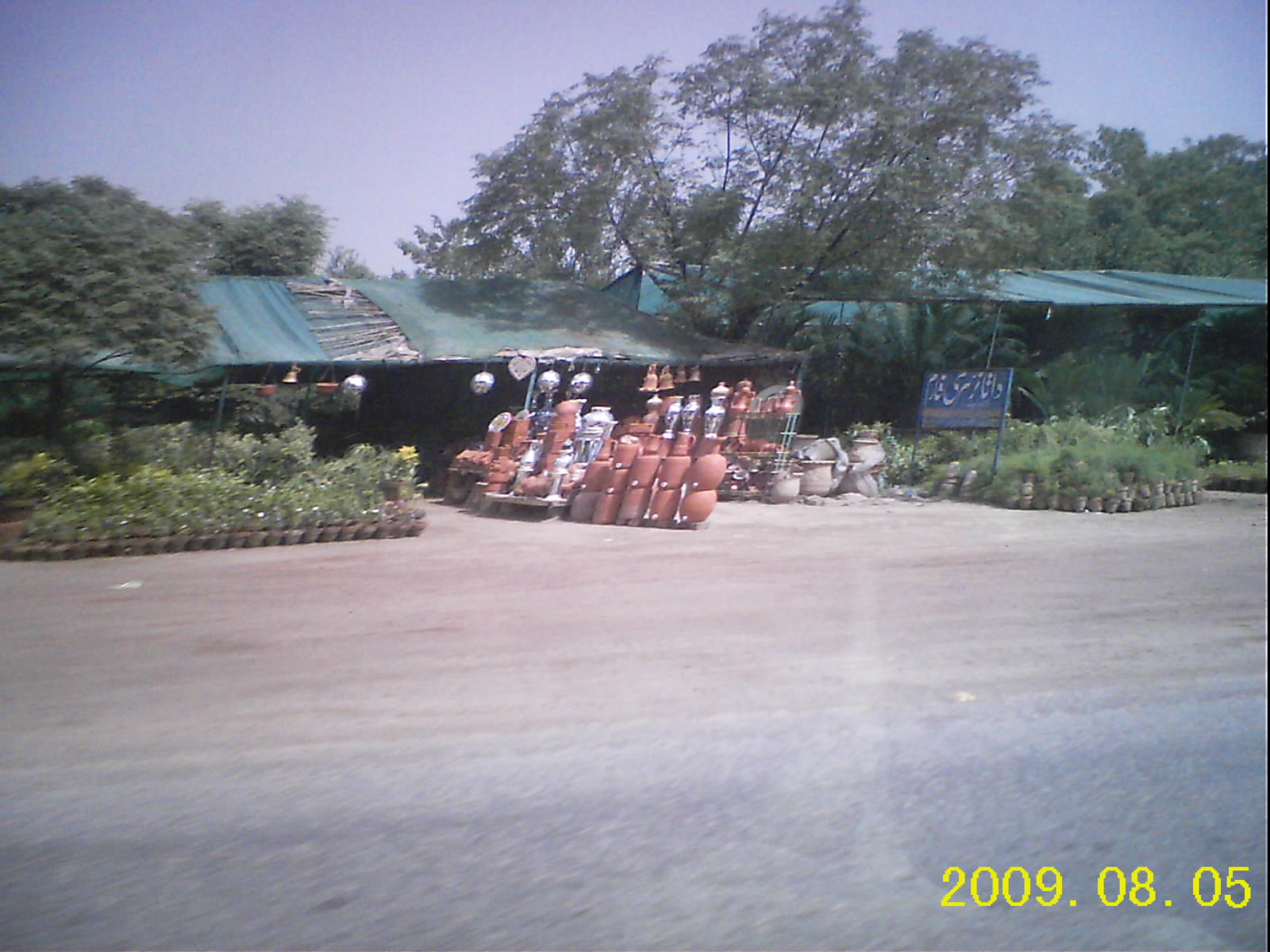
Lahore, where the case was heard, is the capital and largest city of Punjab province and the second-largest city in Pakistan after Karachi. It stands on the Ravi River in central-eastern Punjab and is the seat of Lahore District and Lahore Division. The Lahore High Court also sits in the city. Under section 13(4) of the 1997 Act, an additional anti-terrorism court is to be set up at the principal seat of each High Court, with a judge of that High Court appointed to it.
Backyard chickens in Pakistani households
The chicken at the centre of the story was a household bird of the kind kept in a great many Pakistani homes. The Pakistan Economic Survey 2022-23, published by the Finance Division in June 2023, said livestock made up about 62.68 percent of agricultural value added and 14.36 percent of national GDP in the 2022-23 fiscal year, and that more than 8 million rural families were engaged in livestock production, deriving 35 to 40 percent of their income from it.
The survey's estimates for domestic or rural poultry in 2022-23, worked out from figures of 2005-06, were:
- 94.04 million domestic poultry birds in all;
- 13.55 million cocks, 46.34 million hens and 34.15 million chickens;
- 4,634 million eggs from these birds; and
- 132.36 thousand tonnes of meat.
Commercial farming is far larger. The survey put commercial poultry at 1,792.46 million birds in 2022-23, most of them broilers, and total poultry at 1,887 million birds, with 23,819 million eggs and 2,160 thousand tonnes of poultry meat. It said the poultry industry employed more than 1.5 million people, had attracted investment of more than 1,056 billion rupees, had grown at an average of 7.3 percent a year over the past decade, and had made Pakistan the eleventh-largest poultry producer in the world.
The government has also tried to spread household birds. The same survey described a federal backyard poultry project, run under the national agriculture emergency programme, that aimed to distribute five million high-laying, pre-vaccinated backyard birds at subsidised rates over four years. The project cost 1.6 billion rupees, with 30 percent paid jointly by the federal and provincial governments and the rest by beneficiaries; since its launch in July 2019 it had distributed 3,257,205 birds to 454,293 beneficiaries across the country.
The Food and Agriculture Organization of the United Nations (FAO) uses the term "family poultry" for the full variety of small-scale poultry production by individual households for food security and income in rural, urban and peri-urban areas of developing countries. Such birds are usually left to scavenge and are rarely fed more than kitchen leftovers and some grain; flocks of up to about 50 birds are kept mainly for the household, larger ones mainly for sale. FAO says family poultry is rarely a household's main livelihood but plays important social and economic roles, and that in low-income food-deficit countries it accounts for 80 percent of poultry stocks.
The university whose campus stands in Pattoki is one of the oldest centres of veterinary teaching in the region. UVAS traces its history to 1882, when a veterinary college was founded in Lahore under British rule; the college became a university in June 2002. Besides the bachelor's degree in poultry science at the Ravi Campus, it offers M.Phil and PhD programmes in poultry production.
How the story reached Bangladeshi readers
Jagonews24 carried the story in Bengali under its international section on 18 August 2023, published at 4:50 pm Dhaka time, crediting the Pakistani English-language daily The News for the account. It filed the report under tags for chicken rearing, animals, Pakistan and offbeat news. The report did not name the lawyer, and its account of the arrest and the alleged payment came from the lawyer alone.
Photo: Shehrology / Wikimedia Commons (CC BY-SA 4.0). The top picture shows chickens in a village courtyard in Hund, Pakistan, as background; it is not a picture from the case.
Sources: Jagonews24 ("জেলবন্দি চাচা, মামলার ফি হিসেবে উকিলকে পোষা মুরগি দিলো ভাতিজা", 18 August 2023, read from the Internet Archive copy), citing The News (Pakistan); Anti-terrorism Act, 1997 (Sindh Judicial Academy compilation, amendments to 24 September 2020); Constitution of Pakistan, Articles 10 and 10A; Pakistan Penal Code, section 161; Law and Justice Commission of Pakistan, District Legal Empowerment Committee (Constitution and Functions) Rules, 2011 (Gazette of Pakistan, 9 July 2011); Dawn (31 October 2019); Finance Division, Pakistan Economic Survey 2022-23; FAO; Wikipedia (Pattoki; University of Veterinary and Animal Sciences).
Comments
(0)