
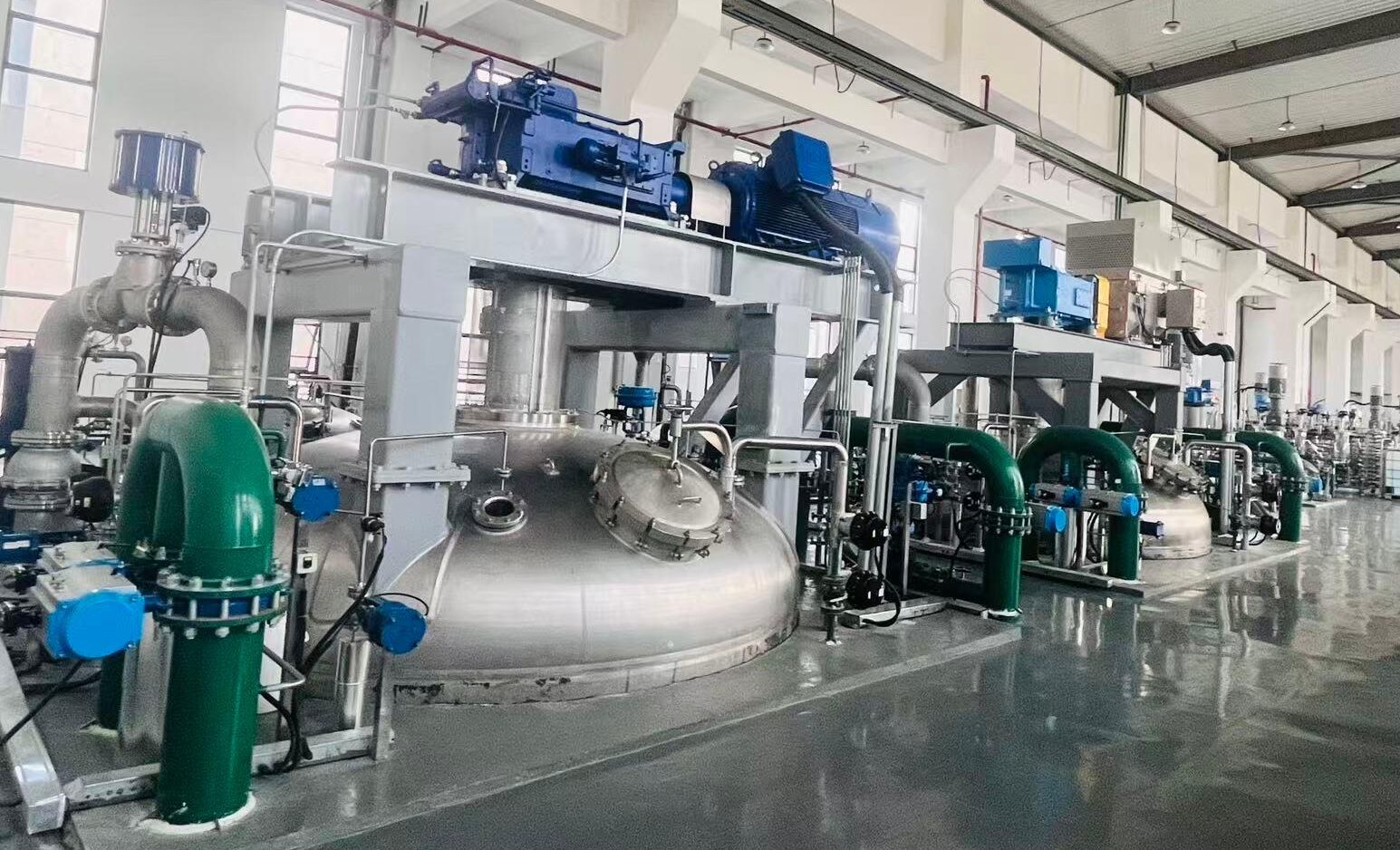
Knip, a Boston-based startup that makes functional ingredients for feed and food through biomass fermentation, has stepped up manufacturing of its postbiotic aquafeed ingredient JUV, moving production into 165,000-litre bioreactors at a contract manufacturer with 10,000 tonnes of available capacity. Its previous contract manufacturer offered 250 tonnes at 60,000-litre scale.
The company launched commercially 18 months ago and is producing for two commercial customers. CEO Caitlin Wege told AgFunderNews Knip is deliberately not competing with single-cell protein producers such as Calysta. "These companies are creating a commodity protein and having to fight against the cost of fishmeal and soy, which is very tough. That's not where we're playing," she said, adding that standard fermentation equipment keeps capital spending off Knip's balance sheet and lets it stay margin-positive with a contract manufacturer.
Instead of replacing soy or fishmeal, JUV is sold as a functional ingredient to improve stress resilience in fish and shrimp at inclusion rates of 2–5%. It holds US FDA GRAS status for finfish feed at up to 10% of the diet and for crustacean feed at up to 6%. The pink powder is "pulse fed" for short periods around stressful events — transfer, vaccination or the earliest life stages — rather than mixed in continuously, with the payback coming from lower mortality.
In one commercial demonstration with a large trout producer, Knip tested JUV on four groups of 100,000 fish and raised survival from 70% to 85%, Wege said. "We've run over 60 trials spanning 10 aquatic species across warm and cold water, freshwater and marine environments, and we're seeing similar performance across those species."
Knip was founded in 2013 by industrial biotechnologist Larry Feinberg and Harvard evolutionary biologist Chris Marx. JUV comes from a genetically engineered strain of a leaf bacterium; the whole biomass is fermented, pasteurised, de-watered and spray-dried rather than extracted. The dried biomass carries protein, PHB and rare carotenoids that Wege says act as antioxidants comparable to astaxanthin without colouring the fish pink. It survives feed extrusion, so mills can add it straight into pellets without affecting pellet structure, she said.
Knip currently ferments on methanol from several sources and plans to switch to green methanol within a year — e-methanol from captured CO2 and green hydrogen, or biomethanol from forestry residues, farm waste or biogas — at what Wege says would be only a small increase in cost of goods.
The commercial focus is Latin America, especially the shrimp industry in Ecuador, where a distributor has built a pipeline of producers trialling the product; there is interest from the Asia-Pacific region and work with a North American salmon producer. Knip is also exploring pet food under NDA with a large ingredient maker and has signed a contract for an ornamental-fish product. The firm has just closed an oversubscribed bridge round and plans another equity round shortly, having historically raised about $9 million in equity plus $1 million in non-dilutive funding.
Source: AgFunderNews
Comments
(0)