
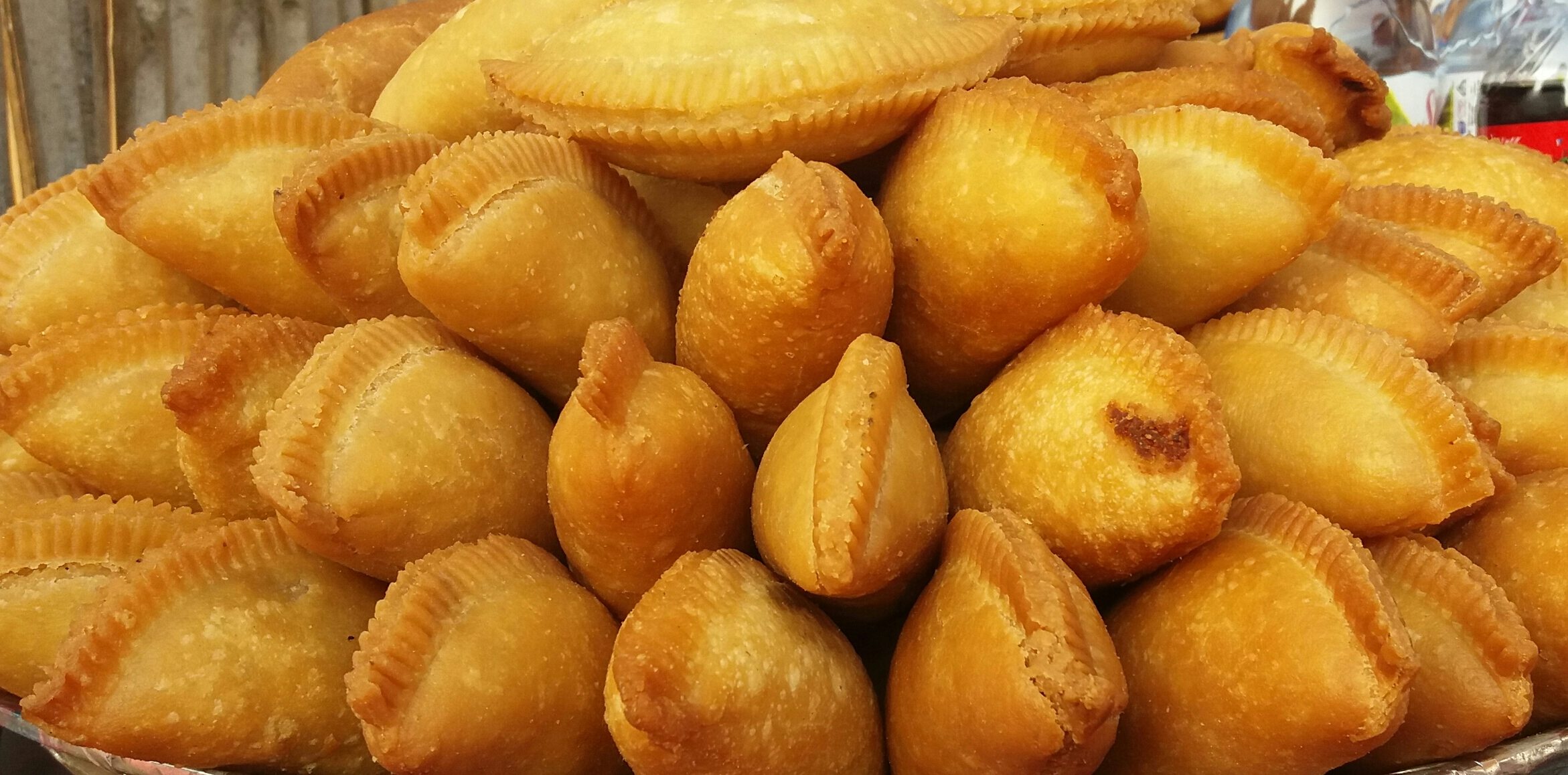
On the morning of 26 December 2025, with the winter pitha season under way across Bangladesh, the lifestyle desk of the news site Jagonews24 published a short home recipe for kheersa pitha: a thick round of rice-flour dough wrapped around a filling of kheer, the sweet milk reduction of Bengali kitchens, and deep-fried over a low flame until brown. The recipe opens by recalling that winter means a festival of pitha, that the many rice cakes sweetened with date juice or date molasses leave a taste that lingers, and that winter pitha is not only about date molasses: kheersa pitha, with its kheer filling, is one of the most tempting of the other kinds.
The recipe is given below as Jagonews24 published it, with its ingredients and steps set out as lists. The sections after it explain what kheer is in Bengal and how it differs from the rice pudding of the same name, where this pitha sits among the country's winter cakes, where its rice flour and milk come from, and what health and safety authorities had said, up to the date of the recipe, about raw date-palm juice, frying, cooked milk and sugar.
The recipe as Jagonews24 published it
Ingredients
Jagonews24 listed two groups of ingredients, one for the filling and one for the dough. The measures are ordinary kitchen measures: a kilogram of liquid milk, cups for the powders and the flour, a pinch of cardamom. The recipe gives no weight for a cup and leaves the amount of water and salt to the cook.
For the filling (pur):
- Liquid milk: 1 kg
- Powdered milk: half a cup
- Condensed milk: half a cup
- Ground cardamom: 1 pinch
For the dough:
- Rice flour: 2 cups
- Salt: a little
- Water: as needed
The recipe also calls for oil for deep-frying, which it does not list among the ingredients and for which it gives no amount.
Method
- Boil the milk for the filling first.
- Add all the other filling ingredients and stir.
- Keep stirring until the mixture thickens.
- When it turns sticky, take it off the heat and let it cool.
- Make a dough with the rice flour, as you would for roti.
- Shape the dough into thick rounds, like thick roti, place some of the kheer filling inside and press the edges together to seal it.
- Deep-fry the pitha in oil over a low flame.
- When they turn brown, lift them out of the oil and serve the kheersa pitha hot.
The recipe does not say how many pitha the quantities make, how long the milk should be cooked, or how hot the oil should be beyond a low flame. Those are left to the cook's judgement, as in most home recipes of its kind.
What kheersa pitha is
Pitha is the Bengali name for a large family of home-made cakes, mostly of rice flour. The online encyclopedia Wikipedia describes pitha as a variety of foods similar to pancakes, dumplings or fritters, sweet or savoury, usually made from a dough or batter that is then steamed, fried or griddled. Some are filled. When a pitha is filled, the outer case of dough is called the khol, literally a container, and the filling is called the pur. Kheersa pitha belongs to this filled group: the khol is rice-flour dough and the pur is kheer.
The same reference notes that sweet pithas are typically made with sugar, jaggery, date juice or palm syrup and are often flavoured with cardamom or camphor, and that pithas may be fried in oil or ghee, roasted over a fire, steamed or baked. The Jagonews24 recipe uses cardamom for flavour and frying in deep oil for cooking, and it draws its sweetness from condensed milk rather than from date molasses, which is the point its introduction makes.
Kheer appears in other well-known Bengali pithas as well. Puli pitha is described as a dumpling-like pitha stuffed with a coconut mixture or kheer, fried or steamed, and patishapta as a thin crepe stuffed with jaggery and coconut or with kheer. Kheersa pitha takes the same filling but wraps it in a thicker round of dough and fries it, so the result is a crisp brown shell around a soft, sweet centre.
Kheer in Bengal: milk cooked down, not rice pudding
The word kheer means different things in different parts of the subcontinent, and the difference matters for this recipe. In much of North and South India, kheer or payasam is a rice pudding: milk, sugar or jaggery and rice boiled together, sometimes with cardamom, saffron, nuts or vermicelli. In Bangladesh that dish is usually called payesh. The word itself comes from the Sanskrit kshira, meaning milk or a milk-based dish.
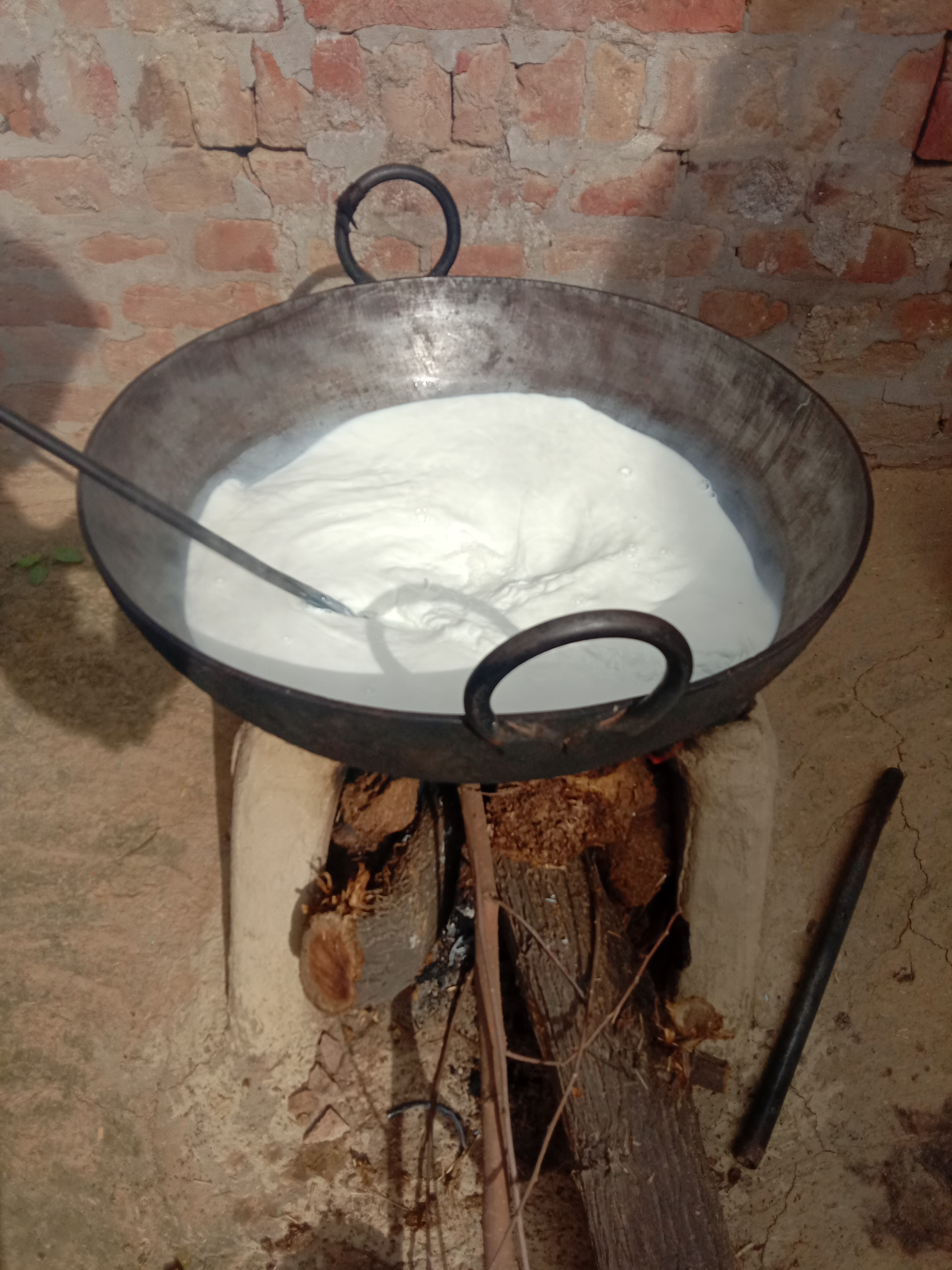
In Bengal, kheer, also called meoa, is something else: milk boiled down until it is thick. According to Wikipedia's article on the Bengali sweet, kheer is made by boiling cow or buffalo milk for a long time, typically more than an hour, until it is reduced to about one-third of its original volume. Sugar, arrowroot or suji (semolina) are sometimes added during boiling to change the sweetness and texture. If the boiling goes on until the milk is reduced to a fourth or a fifth of its volume, the result is khoa, which is harder than kheer. Bengali sweet-makers use kheer as the base of many sweets, among them rasmalai, in which small balls of chhana are soaked in kheer; the kheerkadam of Meherpur in Khulna division is another. The long patience that kheer needs is behind the Bengali saying 'sobure meoa fole', patience bears sweet fruit.
The same reference work describes khoa as made by simmering full-fat milk in a large, shallow iron pan for several hours over a medium fire, with about 80 degrees Celsius as the ideal temperature to avoid scorching. It also records a quicker method: adding full-fat milk powder to skimmed milk and heating the mixture until it becomes thick, though the result may not have all the characteristics of the traditional product. The Jagonews24 recipe follows that quicker route. Powdered milk and condensed milk go into the boiling liquid milk, and the mixture is stirred until it is thick and sticky, so the filling sets in far less time than plain milk would take.
Condensed milk is cow's milk from which roughly 60 per cent of the water has been removed, and it is most often sold with sugar added, as sweetened condensed milk: a very thick, sweet product that, when canned and unopened, keeps for years without refrigeration. In this recipe it does two jobs at once, thickening the filling and sweetening it, which is why the list has no separate sugar.
Pitha in Bengali homes and the winter season
Banglapedia, the national encyclopedia published by the Asiatic Society of Bangladesh, describes pitha as traditional home-made cakes that are usually not part of the daily menu. They are served on special occasions: when a bridegroom or bride is received, when guests are entertained, at family gatherings. Children or older members of the family often ask for pitha, and mothers or grandmothers make them; in some places neighbouring families make pitha together and turn the work into a social occasion.
Most pithas are sweet and a few are savoury. Some are made all year, but Banglapedia says the pithas of the winter season are the most delicious, because date juice and molasses from date juice and sugarcane are available then. The pitha season itself starts in late autumn, when farmers harvest paddy from the field. In 1991 the Bangladesh Shishu Academy held an exhibition at which 106 kinds of pitha were displayed. Among those known across the country, Banglapedia lists chitoi, patishapta, pakan, bhapa, andosha, kulshi, kata pitha, chit-pitha, gokul pitha, chutki pitha, muthi pitha, jamdani pitha, hadi pitha, nakshi pitha, pata pitha and bibikhana pitha. The same pitha often carries different names in different areas.
The encyclopedia also records a change. In towns, cakes, pastries and other commercially made foods have been gradually replacing home-made pitha, yet pitha still draws people: pitha exhibitions have become popular events in cities, specialised shops sell costly pitha, and small vendors on street corners make their living from cheap ones. Wikipedia adds that special pithas are strongly tied to harvest festivals such as Nabanna, the festival of new rice, and to Poush Parbon or Makar Sankranti in mid-January, and that during autumn and winter pitha melas and pitha utshob, fairs and festivals of pitha, are held locally all over Bangladesh.
Rice flour and the 2025 Aman harvest
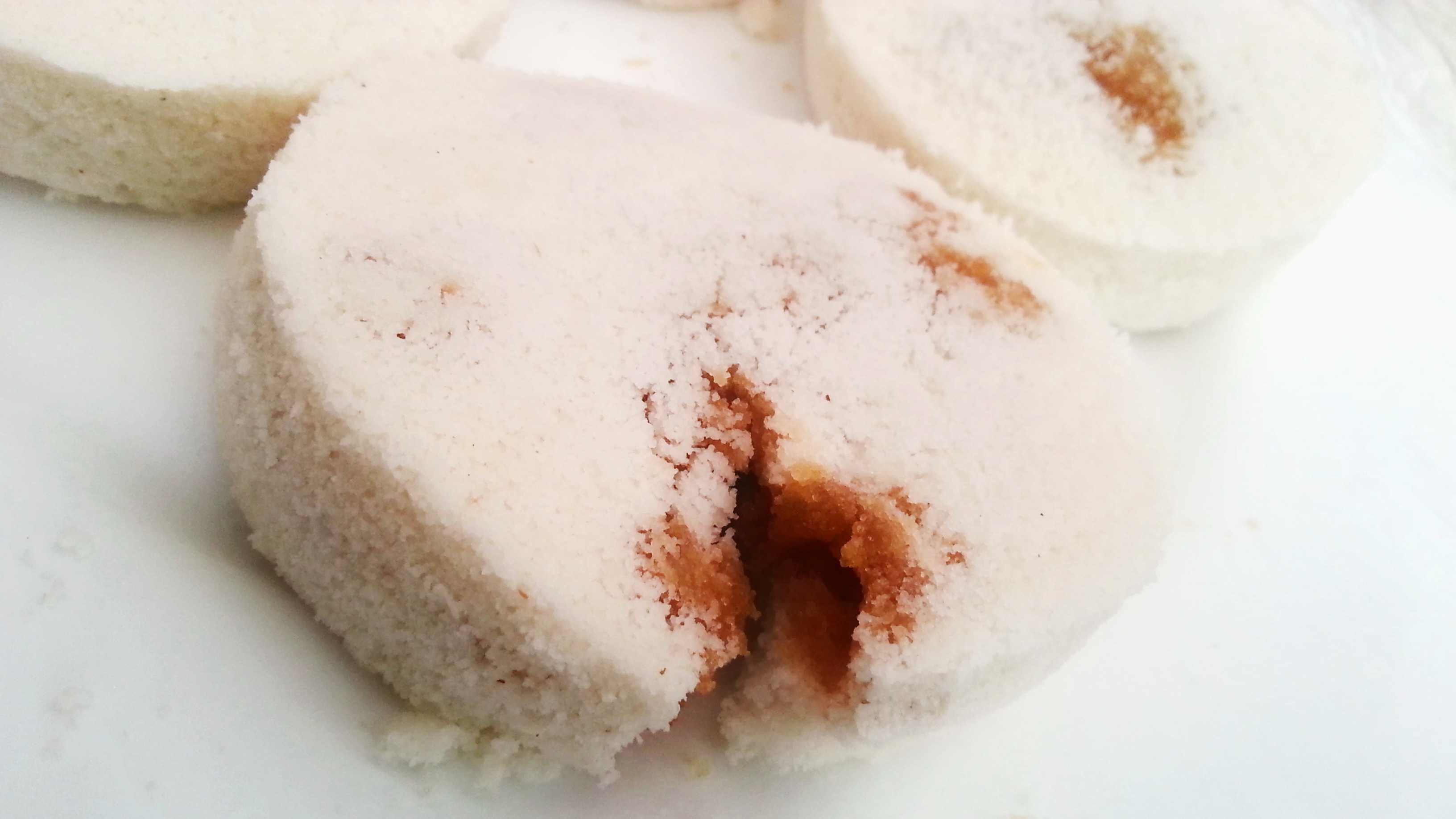
The dough of kheersa pitha is rice flour, salt and water, and the Bengali pitha season follows the rice calendar. Banglapedia dates the start of the pitha season to late autumn, when farmers harvest paddy from the field, and that harvest is the Aman crop.
For the 2025-26 fiscal year the government set a target of producing more than 4.41 crore tonnes of rice and wheat, The Business Standard reported on 18 November 2025. Under that target, a Department of Agricultural Extension (DAE) report compiled the week before expected more than 1.81 crore tonnes of Aman rice from more than 59 lakh hectares. By variety, the DAE expected around 17.50 lakh tonnes of hybrid Aman, 1.51 crore tonnes of high-yielding varieties, 9.75 lakh tonnes of local varieties and around 3.30 lakh tonnes of broadcast or deep-water Aman. At the time of that report around 20 per cent of the crop had been harvested, and the director of the DAE's Field Service Wing said the harvest would be completed by the first week of December.
A month later, regional figures showed how the harvest had turned out in the north. The state news agency BSS reported from Rangpur on 21 December 2025 that farmers in the five districts of the DAE's Rangpur region, Rangpur, Gaibandha, Kurigram, Lalmonirhat and Nilphamari, had produced 20,00,614 tonnes of clean Aman rice from 6,21,398 hectares, against a target of 20,10,505 tonnes, despite drought-like conditions early in the season. The DAE's additional director for the region put the average yield at 3.23 tonnes of clean rice per hectare, against 3.21 tonnes the previous year. Coarse Aman paddy was selling in local markets at Tk 1,200 to Tk 1,300 per 40-kilogram maund and fine varieties at Tk 1,500 to Tk 1,700, and the agency reported that farmers in rural areas were celebrating Nabanna with their newly harvested rice.
Milk in Bangladesh: production, demand and powdered milk
The filling in this recipe begins with a kilogram of liquid milk, and milk is one of the main products of the country's livestock sector. The Department of Livestock Services (DLS), in its Livestock Economy at a Glance table for 2024-25, prepared in July 2025 from Bangladesh Bureau of Statistics data, put provisional milk production for 2024-25 at 155.38 lakh tonnes, up from 150.44 lakh tonnes in 2023-24 and 72.75 lakh tonnes in 2015-16. Against those figures the DLS calculated a demand of 162.33 lakh tonnes, based on 250 millilitres per person per day, and an availability of 239.29 millilitres per person per day. The same table counted 251.71 lakh cattle and 15.32 lakh buffaloes in 2024-25.
The shortfall is long-standing. Banglapedia's entry on milk notes that total milk production in Bangladesh has been much lower than national demand, so a considerable quantity of milk powder is imported, and that a large part of the available milk goes into milk products. Powdered milk and condensed milk, both used in this recipe, belong to that wider supply.
Banglapedia gives the average composition of cow's milk as 87.6 per cent water, 3.7 per cent fat, 3.2 per cent protein, 4.8 per cent lactose and 0.72 per cent ash, and describes whole milk as an excellent source of calcium, phosphorus, riboflavin, protein and vitamin A. It notes that most milk in Bangladesh is consumed after boiling, for not less than 20 minutes, while pasteurised milk, available in several cities, has been heated to at least 63 degrees Celsius for 30 minutes or to at least 72 degrees for 15 seconds and then cooled quickly. The long boiling that a kheer filling needs fits that household habit of boiling milk well before use.
Date juice, gur and the Nipah warning
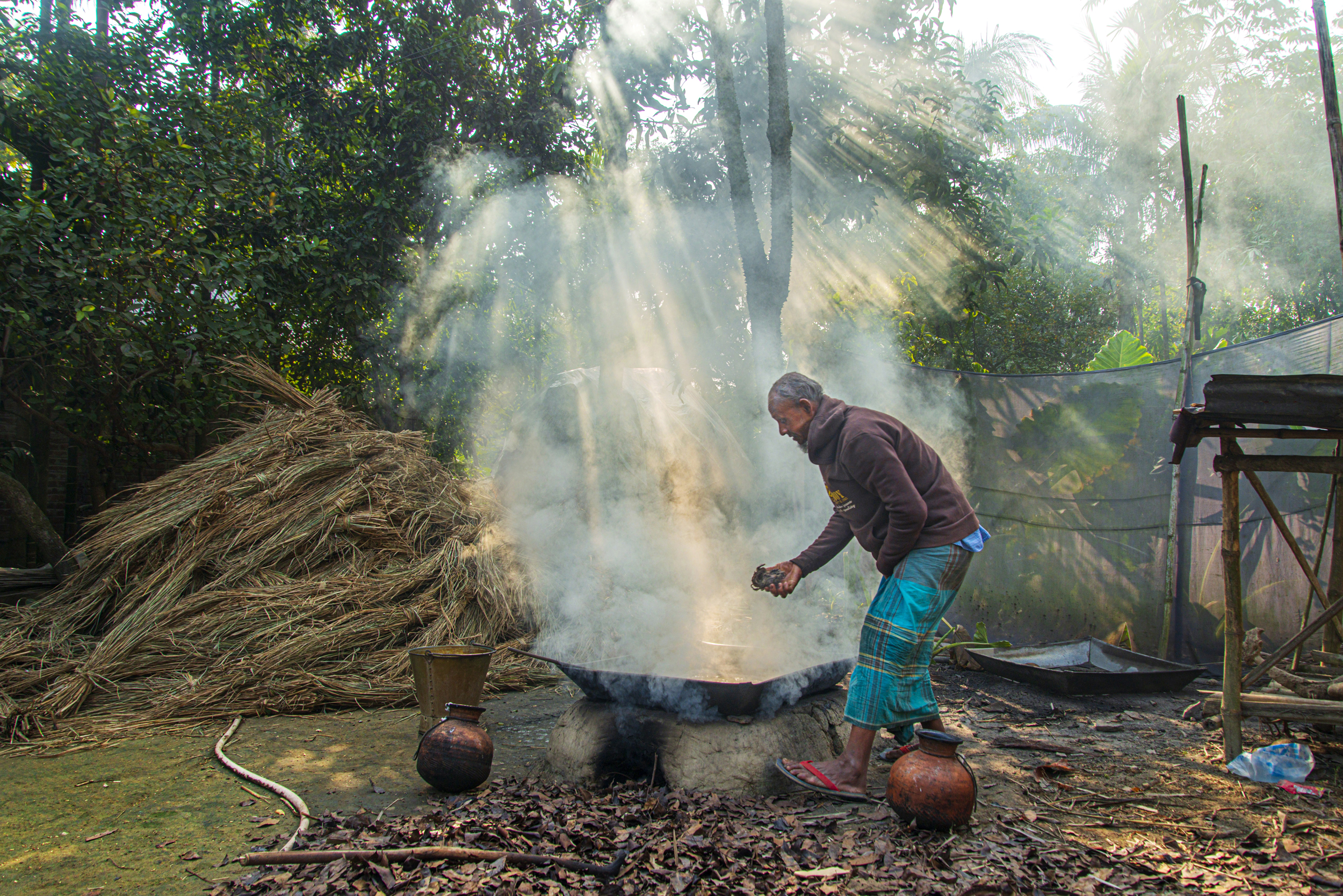
The Jagonews24 recipe opens with date juice and date molasses, the flavours most Bangladeshis link to winter pitha. Banglapedia's entry on gud explains that gachhis, the date-palm tappers, extract juice from mid-November to mid-March by slicing the soft top of the trunk, and that the tree tops are made ready early in December. Juice is collected through a narrow bamboo pipe into a pitcher overnight, in six-day cycles: the first night's juice, jiran, is the best in sweetness and quantity, the second night's is doket, the third night's jhara, and the tree then rests for three days. An average healthy tree yields about 6 litres a day, the largest yields come in December and January, and the juice has to be boiled quickly to keep it from fermenting. The khajura gud of Jessore and the hazari gud of Madaripur are the best known.
Raw date-palm juice carries a serious risk. In its disease outbreak news of 18 September 2025, the World Health Organization (WHO) reported that Bangladesh had notified four confirmed fatal Nipah virus infections between 1 January and 29 August 2025, from four districts in the Barisal, Dhaka and Rajshahi divisions. The first three of those people had a history of drinking raw palm sap. Since the first recognised outbreak in 2001, Bangladesh had documented 347 Nipah cases through its surveillance system, with a case fatality rate of 71.7 per cent, and in 2024 all five laboratory-confirmed cases were fatal. WHO noted that the typical season for cases runs from December to April, exactly the months of the date-juice harvest.
Fruit bats are the natural hosts of the virus, and they can contaminate sap as it drips into the open pitcher. There is no specific drug or vaccine for Nipah infection. WHO's advice is to keep bats away from date-palm sap and other fresh food, to boil freshly collected date-palm juice before drinking it, to wash and peel fruit thoroughly and throw away any fruit with signs of bat bites. Raw date-palm juice should not be drunk. Gur and pitha made from juice that has been boiled are the safe way to enjoy the season's sweetness.
Frying in deep oil, and keeping a milk filling safe
Kheersa pitha is deep-fried, and the kind of fat matters. Partially hydrogenated oil, known in Bangladesh as dalda or banaspati ghee, is the main source of industrially produced trans fat, which raises the risk of heart disease. The Financial Express reported on 2 December 2021 that the Bangladesh Food Safety Authority (BFSA) had adopted the Limiting Trans Fatty Acids in Foodstuffs Regulations, 2021, following WHO best practice, with the aim of limiting trans fat to a maximum of 2 per cent of total fat in all oils, fats and foodstuffs by 31 December 2022. The same report cited a 2019 study which found that in 92 per cent of samples of leading partially hydrogenated oil brands in Dhaka the trans fat level was above that 2 per cent threshold, and noted that WHO ranked Bangladesh among the 15 countries with the highest burden of deaths from heart disease caused by trans fat.
The filling needs care too. WHO's Five Keys to Safer Food manual, published in 2006, sets out five rules for the home kitchen: keep clean; separate raw and cooked food; cook thoroughly; keep food at safe temperatures; and use safe water and raw materials. The manual names milk, together with meat, seafood, cooked rice, cooked pasta, cheese and eggs, among the foods that provide ideal conditions for microorganisms to grow, and explains that one bacterium can become two in just 15 minutes, so that within six hours a single bacterium can multiply to over 16 million. It defines a danger zone of 5 to 60 degrees Celsius in which microorganisms grow and multiply very fast.
For a kheer filling that has to cool before it can be wrapped, the manual's own checklists apply: it treats leaving cooked food out of the refrigerator for more than two hours as unsafe, counts storing leftovers in a cool place within two hours of cooking as safe practice, and asks that cooked food be reheated until it is piping hot throughout. The pitha themselves are served hot from the oil, as the recipe says.
Sugar in a festive sweet
Kheersa pitha is a festive sweet, not an everyday food, and its sweetness comes almost entirely from condensed milk. WHO's guideline on sugars, issued on 4 March 2015, recommends that adults and children reduce their daily intake of free sugars to less than 10 per cent of their total energy intake, and says that a further reduction to below 5 per cent, roughly 25 grams or six teaspoons a day, would bring additional health benefits. Free sugars are those added to foods and drinks by the manufacturer, the cook or the consumer, along with sugars naturally present in honey, syrups and fruit juices. The guideline does not cover the sugars naturally present in milk, for which WHO found no reported evidence of adverse effects, but the sugar added to sweetened condensed milk does count as free sugar.
WHO based its recommendation on evidence that adults who eat less sugar have lower body weight and that higher intakes of free sugars are linked to more tooth decay. Anyone with diabetes or another condition that limits sugar or fat should ask a doctor before adding fried, sweet pitha to their winter table.
Photo: Mmrsafy / Wikimedia Commons (CC BY-SA 4.0)
Sources: Jagonews24, Banglapedia (Asiatic Society of Bangladesh), Department of Livestock Services, Department of Agricultural Extension via The Business Standard, Bangladesh Sangbad Sangstha (BSS), World Health Organization (WHO), Bangladesh Food Safety Authority via The Financial Express, Wikipedia (pitha, kheer, khoa, condensed milk)


Comments
(0)