
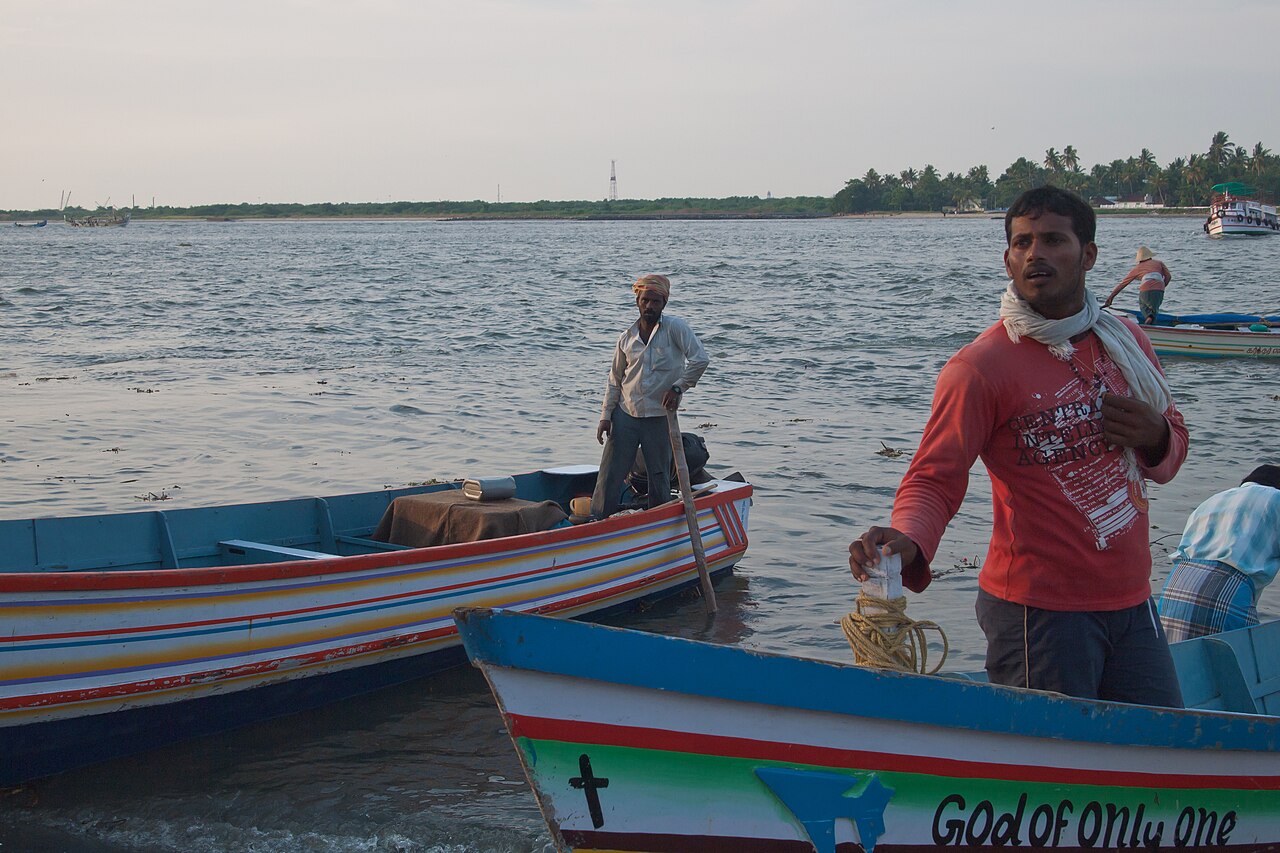
A fisherman from Marianad, a village in Thiruvananthapuram district, was puzzled this July: the sea felt cooler than he remembered, in a year when El Nino was supposed to be warming the oceans. In a commentary for Mongabay India, John Kurien, a development practitioner who has worked with small-scale fishers for five decades and a former professor at the Centre for Development Studies in Thiruvananthapuram, sets out why. The views are the writer's own.
The sea had been rough, the fisherman told him, but boats still went out because fish were plentiful in deeper water and the murky water made them easier to net. With fewer boats landing catch, prices on the shore were high and earnings good.
El Nino, a warming of the tropical Pacific first named by Peruvian and Ecuadorian fishers, shifts pressure patterns across the tropics and often weakens the flow of moisture to India, Kurien explains. But that is a tendency, not a rule: the Indian Ocean Dipole can offset it, so some El Nino years bring India a poor monsoon and others a normal one.
The cold water off Marianad has a local cause. During the southwest monsoon the wind blows parallel to Kerala's north-south coast, pushing surface water out to sea so that cold, nutrient-rich water rises from below. This upwelling is why the monsoon has long been a productive fishing season, and studies place its strongest band between about 8 and 10 degrees north, where Marianad lies. A basin-wide warming and a local coastal cooling can happen at the same time, he writes; a fisher in the surf feels only the local one.
Kurien notes that the shelf waters off southern Kerala hold more than a hundred species of phytoplankton, and that this stretch of coast supports an unusually wide range of fish and fishing gear. He suggests, as his own inference rather than an established finding, that the two may be linked.
His wider point is that fishers' inherited signals, clouds, winds and the timing of the rains, are becoming less reliable as the ocean warms and the monsoon grows more erratic. Fishers are usually the first to notice such shifts, long before they appear in data, he argues, and their observations deserve to be taken seriously.
Photo: Vyacheslav Argenberg / Wikimedia Commons (CC BY 4.0)
Source: Mongabay India
Comments
(0)