
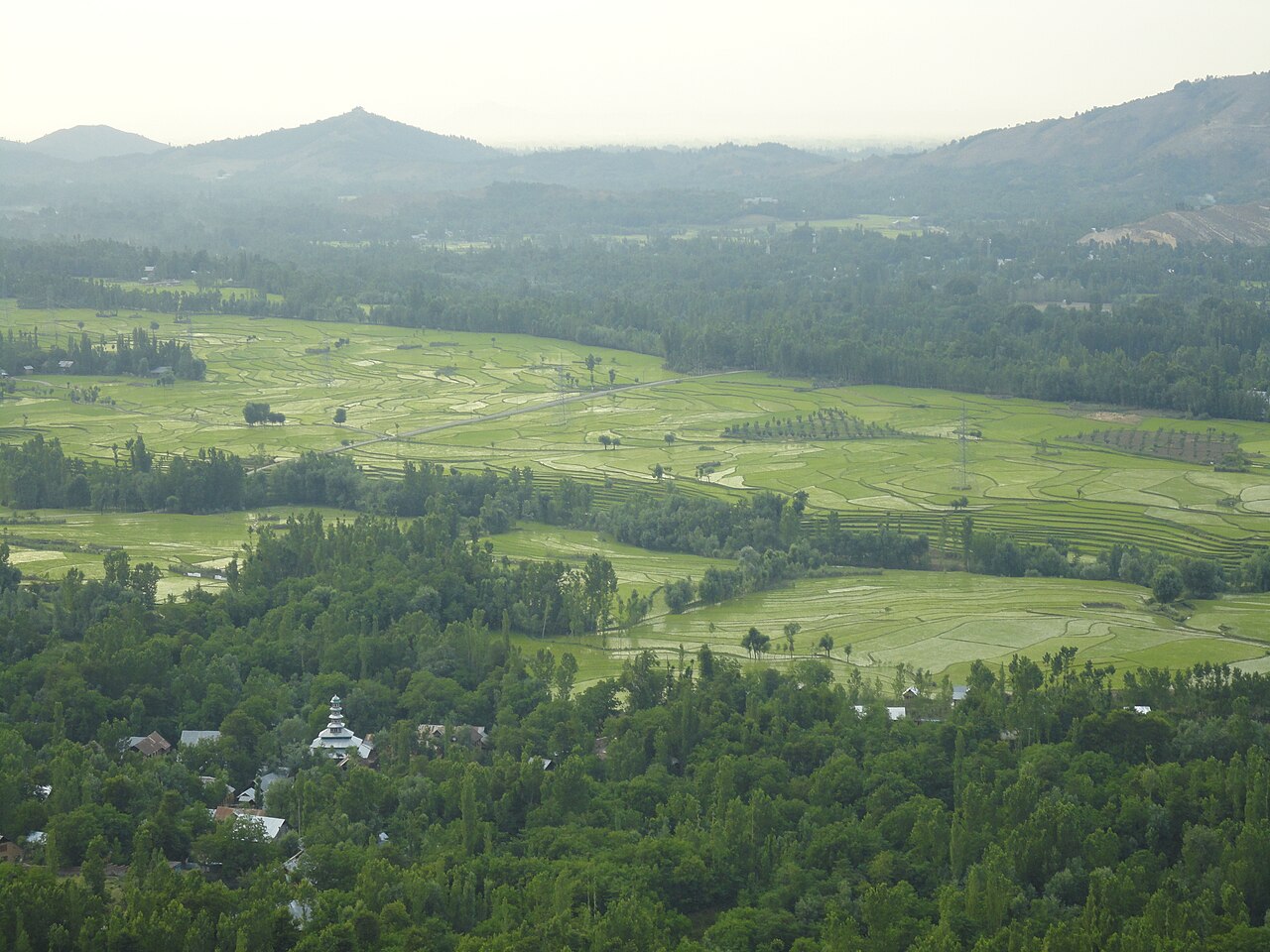
Paddy farmers in Kashmir are bringing in their best harvest in years. After seasons of floods, dry spells and erratic weather, this year brought the temperature, sunshine and rain that rice needs, Down To Earth reports from the Kakapora area of Pulwama, about 25 kilometres south of Srinagar. Harvesting is under way in Kulgam, Anantnag, Pulwama and Ganderbal.
"Last year, floods destroyed our crops as water submerged the paddy fields. It remained there till harvesting season," said Mohammad Maqbool Ganaie, 47, of Wandakhpora village, who said he had not seen such a harvest in 15 years. Abdul Rasheed, 70, of Awantipora, said his fields usually suffer because the river is far off and the water is often too low for the lift irrigation pumps; this year steady rain solved that.
Waheed Ur Rehman, Pulwama's Chief Agriculture Officer, said temperatures stayed where the crop needs them, and credited high-density varieties of the Shalimar Rice series. SR 4, SR 2 and Shalimar Sugandh-1 are widely grown in Pulwama along with K 332, a high-altitude variety released in 1982, and he said they resist diseases such as rice blast better. Farmers are also becoming more aware of zinc deficiency in their soil. Crop-cutting experiments are under way and exact figures will follow the harvest. "For now we estimate a far better production this year compared to previous years," he said.
Weather data back the farmers. The India Meteorological Department recorded 259.7 mm of rain in Jammu and Kashmir in July against a normal 192.6 mm, a 35% surplus after a long dry run. Baramulla had the largest surplus at 165%, Ganderbal 110% and Pulwama 108%; Shopian was the only Valley district in deficit, at 40%. Kashmir-based environmentalist Mohammad Anees said moisture was there at the key growth stages and the rain was better spread than last year's, though climate variability remains a worry.
Last September, heavy rain submerged thousands of hectares of paddy and orchards across Jammu and Kashmir; some farmers, unable to cut a crop still under water, burned it standing.
The longer trend is less cheerful. Paddy covers about 150,000 hectares in the Valley, by a 2020 SKUAST Kashmir study, 16,500 of them in Pulwama. But the area under paddy in the Kashmir Division fell from about 169,000 hectares in 1980 to nearly 129,000 in 2024, a loss of some 40,000 hectares or nearly 24%. Better yields have made up part of that, but one good year cannot secure rice farming if the land keeps going.
Reported by Arjumand Wani for Down To Earth.
Photo: Akshey25 / Wikimedia Commons (CC BY 3.0)
Source: Down To Earth


Comments
(0)