
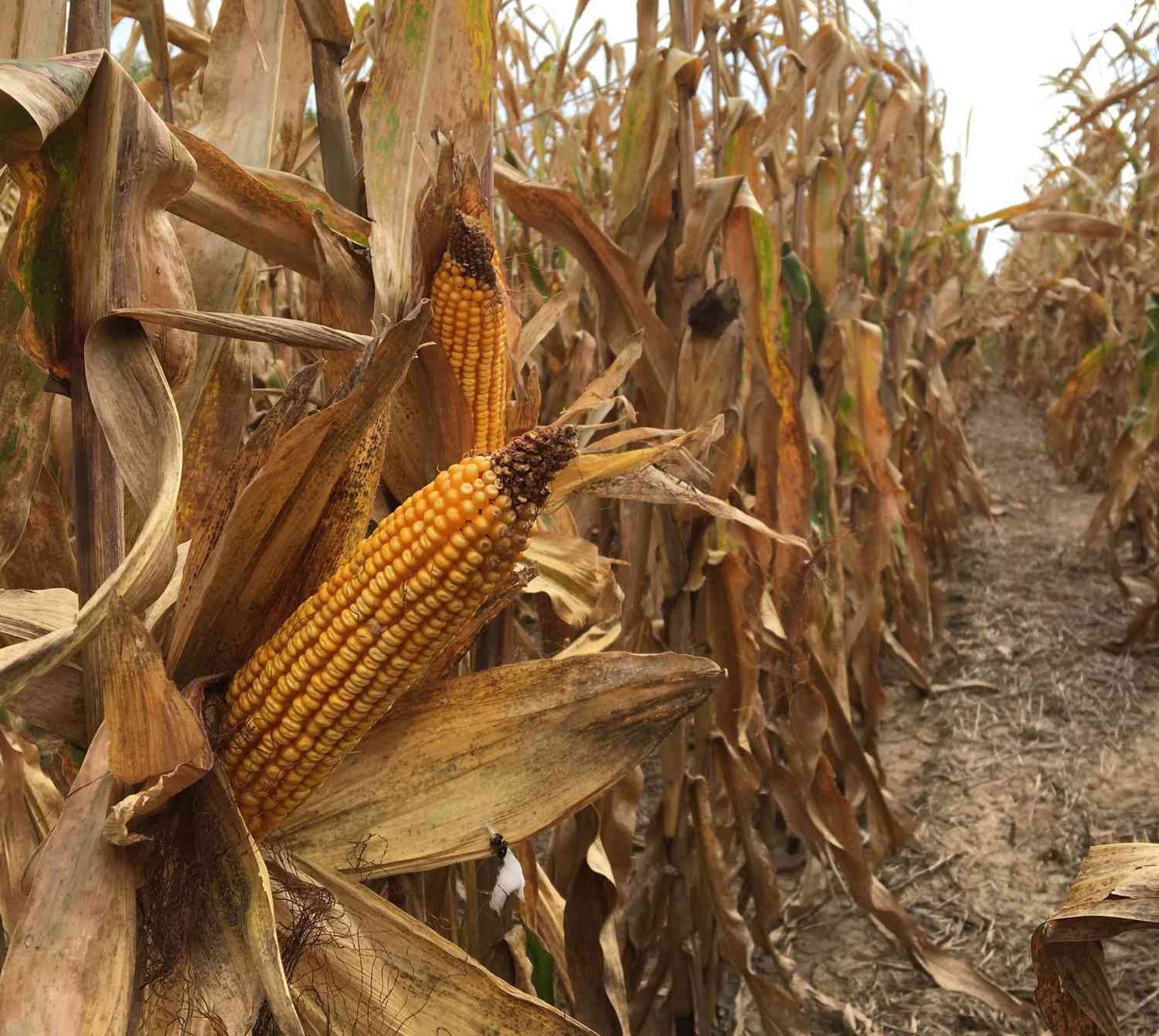
Kansas corn and sorghum growers are starting an early harvest with little to show for a summer that, in one farmer's words, turned into an oven at the end of June. The US Drought Monitor's map of 10 September recorded temperatures 10 to 15 degrees Fahrenheit above normal across the state and a large expansion of moderate, severe and extreme drought through south-central and south-east Kansas, with abnormal dryness spreading into the north-east.
Paige Clawson, who farms in south-western Kansas and sits on the Kansas Corn Commission board, had come off the best dryland yields she had seen in 2025 and good winter rain. Then the rain stopped and the wheat burnt up. June brought enough moisture to get crops started, but "the end of June came, and it completely shut off, and the oven turned on," she said. Pollination problems, heat blasting and tip-back followed.
In Sheridan County in the north-west, Brent Rogers, also a commission board member, said a mild, dry winter had left no moisture in the soil profile, so the season depended entirely on scattered rain. "You go five miles either way anywhere in the northwest part of the state and conditions change dramatically," he said. A hailstorm mowed off some of his crops, which were replanted to sorghum.
Both farmers described hot wind as the killer. "The biggest thing with the heat that ends up being the killer is when you get a 30 mph wind with it. It's just like a blowtorch," Rogers said, adding that even good irrigated corn could not take it.
Joel Lisonbee of the Cooperative Institute for Research in Environmental Sciences, speaking on the September Southern Plains drought webinar, said drought had sat over the southern Plains for most of the spring and summer, with a long run of high temperatures and low rainfall in Kansas, Oklahoma and Texas driving up evaporation.
Rogers expects a fair dryland crop by the standards of the year, which he credits to a corn-wheat-fallow rotation that idles a third of his acres, minimal tillage, heavy residue and a recently adopted see-and-spray system that cuts the cost of keeping fallow ground clean. "They might be the difference between 40-bushel corn and 80-bushel corn," he said. Clawson began harvest a month and a day earlier than last year and expects below-average yields; some dryland fields, she said, will not see a combine.
USDA rated Kansas corn 17% very poor, 20% poor, 22% fair, 31% good and 10% excellent for the week ending 6 September, and soybeans 10% very poor, 19% poor, 34% fair, 30% good and 7% excellent. Reporting by Kacey Birchmier.
Source: Successful Farming

Comments
(0)