
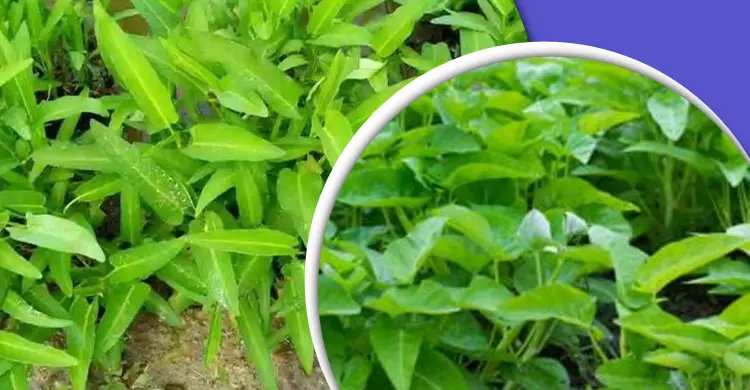
Kalmi shak, or kangkong, was once eaten only by a small number of people in villages. Now it is popular almost everywhere in the country, including among city dwellers. Kangkong is a semi-aquatic tropical creeper, and its commercial cultivation is growing day by day.
Kangkong growing in water bodies is a local type with low yields. So in 1983 the Bangladesh Agricultural Research Institute (BARI) developed an improved variety, Gima Kalmi-1, which yields well. It can be grown all year, but the best time to sow is from Chaitra (mid-March to mid-April) to Srabon (mid-July to mid-August).
Sowing and fertiliser
Plough the land five or six times and level it with a ladder until the soil is fine and crumbly. Seed can be sown in lines or broadcast, but line sowing makes care easier. Keep 20 centimetres (8 inches) between lines and 15 centimetres (6 inches) between seeds. It is best to sow at least two seeds together; if more than one seedling comes up, keep one and cut the rest. About 40-50 grams of seed is needed per decimal.
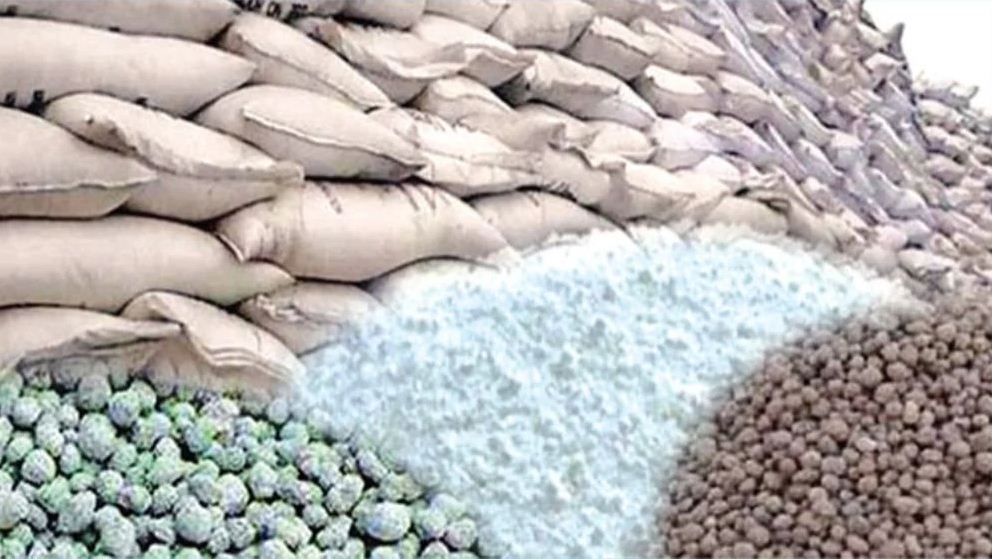
Balanced fertiliser is needed for a good yield, applied according to soil fertility, ideally based on a soil test. If that is not possible, use normal doses. Per decimal, apply 560-650 grams of urea, 400-490 grams of TSP, 400-490 grams of MoP and 32-40 kg of organic manure. All fertiliser except urea should be mixed well into the soil at the final ploughing. Urea should be applied in three instalments, after each leaf harvest.
Care, pests and harvest
As with any crop, weeds must not be allowed to grow in a kangkong field, because they compete for nutrients and shelter pests and diseases. Pull them out as soon as they appear.
Irrigation is essential in the dry season. It is usually not needed in the rainy season, but if there is a dry spell then, arrange irrigation.
Kangkong suffers from almost no pests or diseases, but some insects can attack, such as beetles, hairy caterpillars and grasshoppers. Pick them off by hand; if that is not possible, use organic pesticides. If the land stays too damp, the base of the plants can rot because of damping-off disease; spray an approved fungicide.
The leaves are ready to harvest within 25-30 days of sowing. After the first harvest, leaves can be picked every 8-10 days. The average yield is about 160-180 kg per decimal.
Information: Agricultural Information Service
Source: Jagonews24. First published in Bengali on The Agro News.

Comments
(0)