
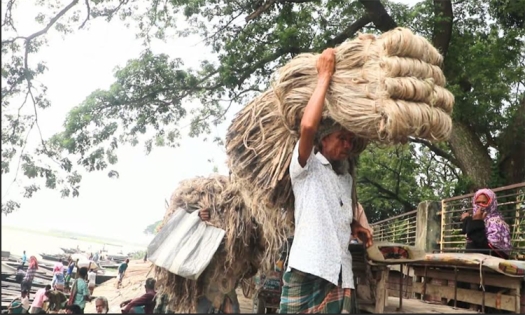
Jute prices in Gaibandha have reached a record for the peak of the season. By grade, a maund is selling at Tk 3,800 to 4,100 at the district's haats, which farmers say is the highest in-season price in at least ten years. After years of frustration, growers are covering their costs and making a profit.
At Kamarjani haat in Gaibandha Sadar and the Fulchhari haat in Fulchhari upazila, trading has a festive air. Farmers from the char areas arrive by boat from dawn, and jute changes hands on the boats as well as on the market ground. In Fulchhari's Udakhali, Uria, Fazlupur and Kanchipara unions, families are drying and stripping the fibre for sale.
Abdus Salam, a jute grower from Bagbari in Fulchhari union, said farmers are pleased with the price and will grow more if the market holds. Abed Ali Bepari said growers are in profit after all costs for the first time in a decade, though he wonders how long it will last. Khorshed Alam, a wholesale buyer from Ghutail bazar in Jamalpur, said the best fibre is being bought at Tk 4,050-4,100, medium grades at Tk 3,900-4,000 and lower grades at Tk 3,800.
According to the Department of Agricultural Extension in Gaibandha, jute was grown on 13,987 hectares this year, 170 hectares more than the 13,817 hectares of last year. In 2022 the district's seven upazilas had 16,460 hectares under jute; the area then fell for several years before edging up over the last two. This year's output is estimated at 34,987 tonnes, with the crop on 48 hectares damaged. Even with seed and fertiliser incentives, the district has never met its area or production targets.
Farmers say they grow jute on borrowed money and under the threat of flood and drought, while the price is set by mill owners and trader syndicates, so that most years they lose their capital and many have given up. Faruk Hossain of Uttar Rasulpur in Kanchipara union said traders push prices up only once 90 per cent of farmers have nothing left to sell; this year that pattern broke, but he wants government oversight to keep the market honest. Alfaz Ali, selling at Fulchhari haat, said he had been forced to sell early in the season at Tk 1,800-2,500 a maund, only to see the same jute fetch double a few weeks later.
Asaduzzaman, acting deputy director of the DAE in Gaibandha, said the market is good and farmers are being encouraged to grow jute alongside other crops. This year 2,100 farmers received one kilogram of seed and five kilograms each of DAP and MOP free for 2,000 bighas, with sub-assistant officers advising them in the field. The report is from BSS, published from Gaibandha on 10 September.
Source: BSS
Comments
(0)