
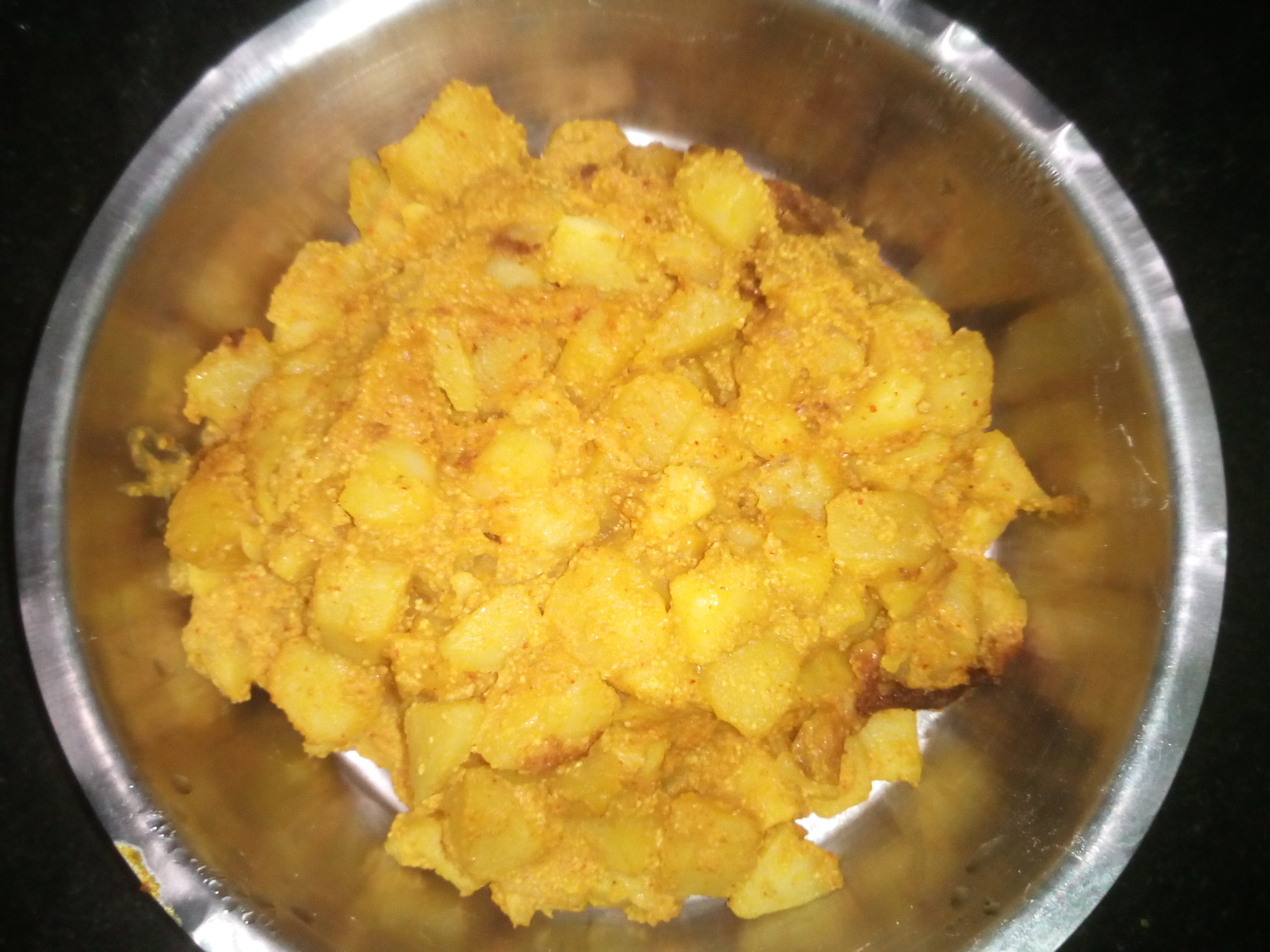
On 15 April 2026, the second day of the Bengali year 1433, the lifestyle desk of Jagonews24 published a recipe meant for the heat: jhinge-aloo posto, ridge gourd and potato cooked in a paste of poppy seeds. The paper's argument was simple. On hot days many people turn away from heavy, oily and very spicy food and look for something light and easy to digest, especially with rice at lunch. Ridge gourd, known in Bangladesh as jhinga or jhinge, is in season at that time of year, and with potato and poppy seed it makes a homely dish that needs few ingredients and little time. This report keeps that recipe as the paper gave it and adds what a reader in April 2026 would have wanted to know: the weather it was written for, what each ingredient is, where it comes from, and what was happening on the farms that grow it.
The heat the recipe was written for
The recipe appeared in the middle of the first heatwave of the Bengali new year. On 14 April, Pohela Boishakh, the Bangladesh Meteorological Department (BMD) reported a mild heatwave over Rajshahi, Pabna, Sirajganj, Jashore, Chuadanga and Kushtia, and said it could continue and spread on 15 April, according to Prothom Alo. The highest temperature that day was 37.6 degrees Celsius in Rajshahi, followed by 37.5 degrees at Ishwardi in Pabna and 37 degrees at Baghabari in Sirajganj, in Chuadanga and at Kumarkhali in Kushtia. Jashore recorded 36 degrees and Dhaka 35 degrees. The department expected daytime temperatures to rise by another one to two degrees.
The hot spell had been building for days. The Daily Star reported on 13 April that a mild to moderate heatwave was affecting Dhaka, Tangail, Sirajganj, Pabna, Rajshahi and Faridpur as well as ten districts of Khulna division, and that the country's highest temperature on the previous Saturday had been 38.2 degrees in Jashore. A BMD meteorologist told the paper that heavy rain was unlikely across the country, with some chance of rain in Sylhet.
BMD's outlook for the month, reported on 4 April, had warned of two to four mild to moderate heatwaves and one or two severe ones in April 2026. The department grades heat by the day's maximum temperature: 36 to 37.9 degrees Celsius is a mild heatwave, 38 to 39.9 degrees a moderate one and 40 to 41.9 degrees a severe one. Chuadanga had already reached 39.7 degrees on 3 April. Meteorologists said heatwaves in April were normal, but they did not expect a prolonged spell like the one in 2024, which lasted 36 consecutive days. It was in this weather that the paper suggested a lighter plate for lunch.
Ingredients, as Jagonews24 gave them
The recipe is meant for a family meal and uses only eight ingredients, most of them found in any Bangladeshi kitchen. The quantities below are the paper's own.
- Ridge gourd: 3 to 4, cut into pieces
- Potato: 1 to 2, cut into pieces
- Poppy seed paste (posto bata): 3 tablespoons
- Chopped onion: 1
- Green chillies: 2 to 3
- Turmeric powder: a little (optional)
- Salt: to taste
- Mustard oil: 2 tablespoons
How to cook it, step by step
The method relies on the gourd's own juice, so very little water is added. The paper set out the steps in this order.
- Heat the mustard oil in a pan and fry the chopped onion and green chillies.
- Add the potato pieces and fry them for a while until they turn lightly golden.
- Add the ridge gourd and stir. The gourd releases water as it cooks, so there is no need to add much water separately.
- Add the turmeric and salt, cover the pan and let it cook over a medium flame. The dish is fine without turmeric if you prefer to leave it out.
- When the gourd and potato are almost cooked through, add the poppy seed paste, mix it in well and keep stirring.
- Cook a little longer, and take the pan off the heat when the curry has thickened and coats the vegetables.
- Serve with hot rice.
Because the gourd gives off water, the timing of the poppy seed paste matters: added at the end, it binds the cooking liquid into a thick coating rather than a thin gravy. Potato goes in first because it takes longer to soften than ridge gourd, whose flesh is mostly water. Jagonews24 described the result as a light and soothing dish for hot days.
Ridge gourd: the summer vegetable at the centre of the plate
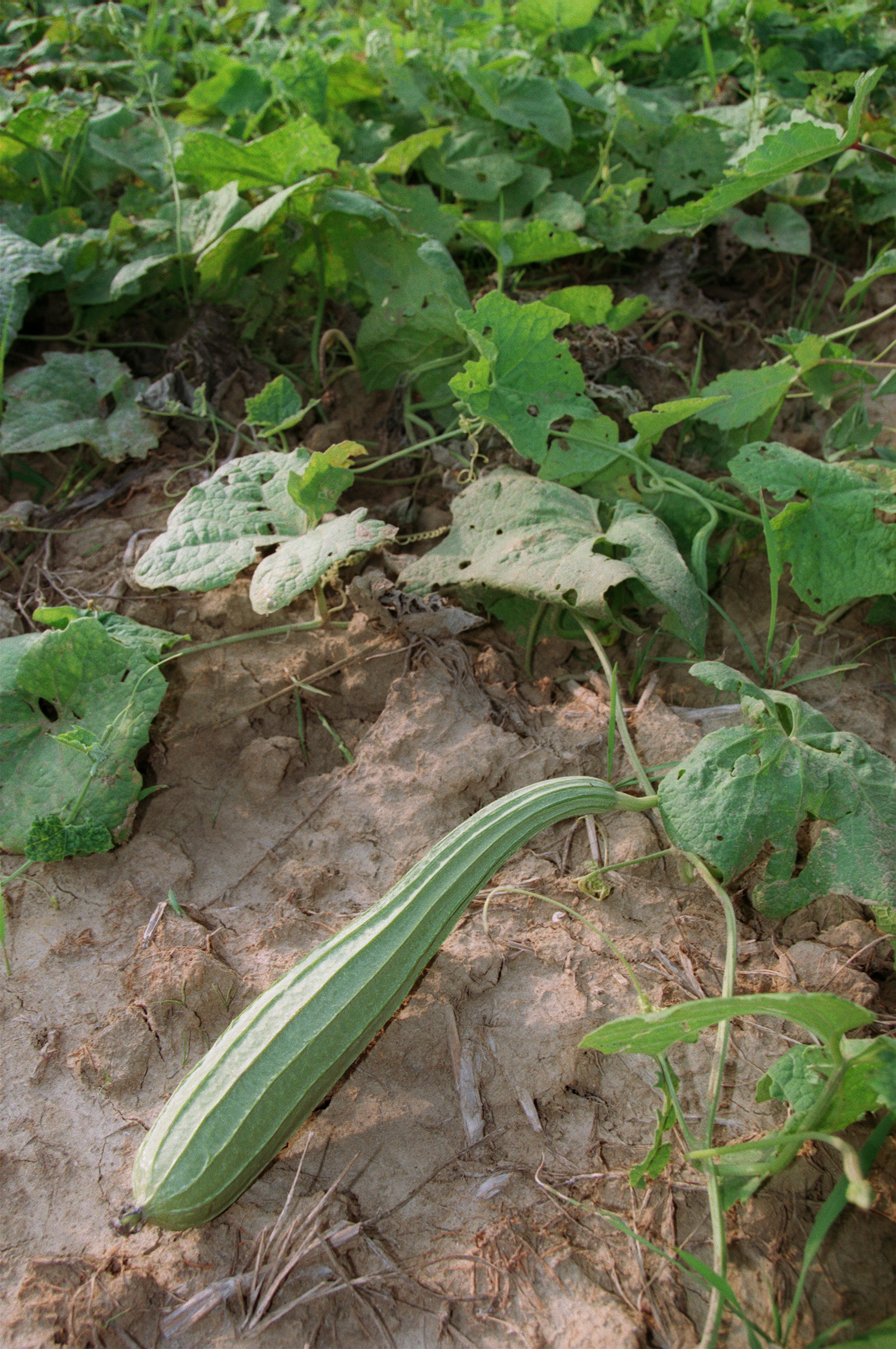
Ridge gourd is the fruit of Luffa acutangula, a climbing vine of the gourd family, Cucurbitaceae, native to South Asia and naturalised in other regions. In English it is also called angled luffa, ribbed gourd, Chinese okra or silk gourd. The fruit looks a little like a cucumber or a courgette with sharp ridges running along its length. It is grown commercially for its unripe fruit, which is cooked as a vegetable, pickled or occasionally eaten raw; the shoots and flowers of some varieties are eaten too. Left on the vine, the fruit dries into a mass of fibre that can be cleaned and used as a sponge, much like its close relative, the sponge gourd. The plant carries separate male and female flowers, and small nectar glands on the plant attract weaver ants.
Banglapedia, the national encyclopaedia of Bangladesh, lists ribbed gourd, jhinga, among the country's major summer vegetables, alongside pumpkin, bitter gourd, teasle gourd, ash gourd, okra, yard-long bean and Indian spinach. It notes that summer vegetable growing is limited by the harsh climate and by pests. For gourds, the main insect enemies it names are the melon fruit fly and the pumpkin beetles, and the main diseases are powdery mildew, downy mildew, Cercospora leaf spot and cucurbit mosaic. Farmers who see these problems are best advised to consult their upazila agriculture officer before using any pesticide.
Researchers have been working on the same problems. A study published in July 2020 in the journal Agriculture by scientists working with the World Vegetable Center (WorldVeg) noted that ridge gourd and sponge gourd are cultivated widely in Asia by smallholder farmers and have significant economic and nutritional importance, but that tomato leaf curl New Delhi virus and downy mildew are major limits on their production. Testing landrace-derived breeding lines at a WorldVeg station in Kamphaeng Saen, Thailand, where both diseases occur naturally, the team found 13 ridge gourd lines resistant to both.
A village of ridge gourd fields in Moulvibazar
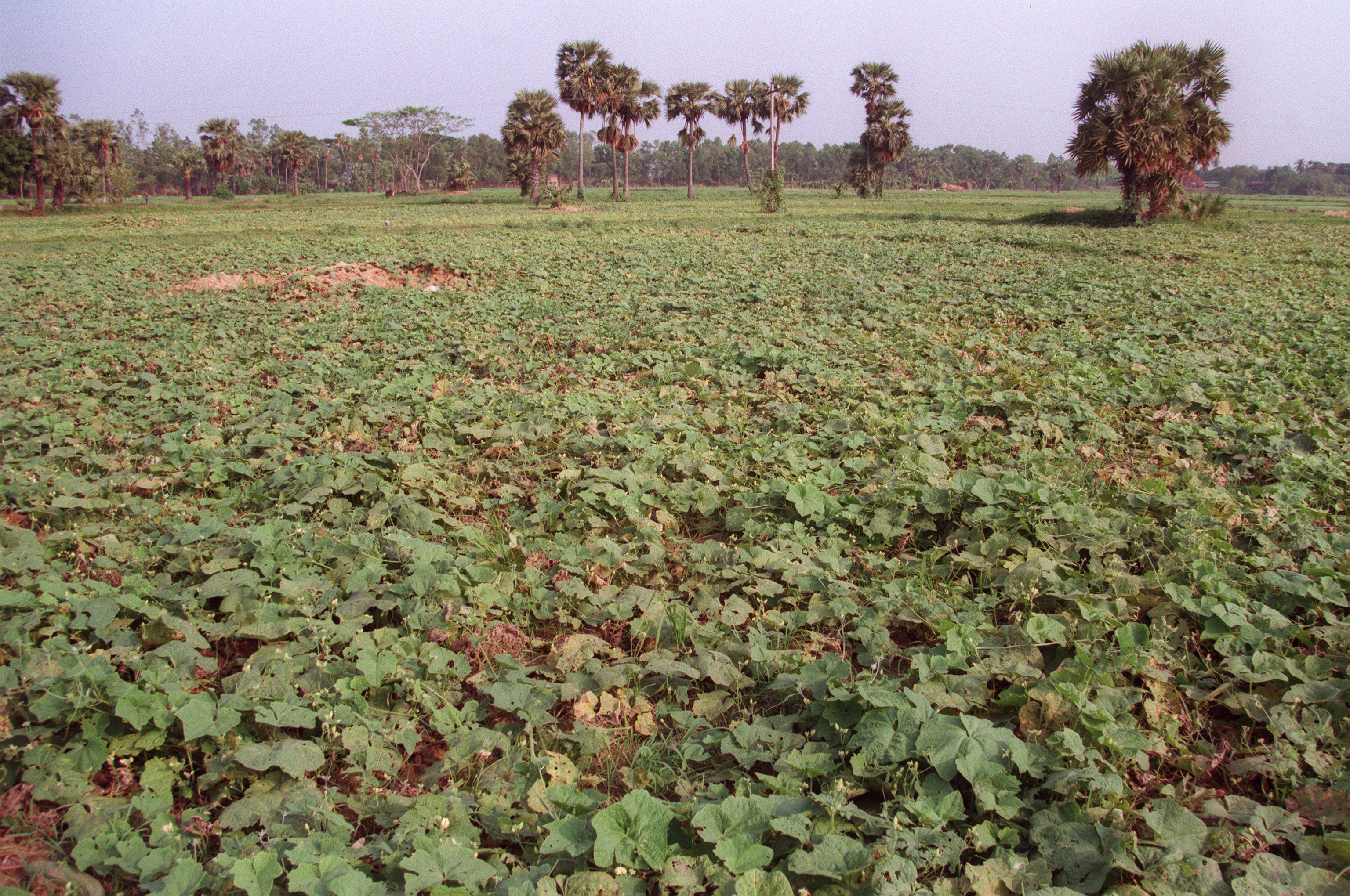
How profitable the crop can be was shown in a Prothom Alo report of 11 May 2024 from Mohammadnagar, a village in Baralekha upazila of Moulvibazar district. About 200 bighas of land in the village were under ridge gourd, about 400 bighas in South Shahbazpur union and 1,320 bighas in the whole upazila. The upazila agriculture office said commercial growing had gone on for 20 to 25 years, and villagers said about three quarters of the families grew the vegetable.
The calendar there follows potatoes. Farmers plant ridge gourd in late February, after the potato harvest, and start picking 50 to 55 days later. Harvest then continues for three to three and a half months, with the fruit picked every three days. Growers reported a yield of about 50 maunds per kiyar, a local unit of 30 decimals of land. Early fruit had sold at 45 to 55 taka a kilogram and the price at the time of the report was 40 to 45 taka. Farmers put the cost at 20,000 to 25,000 taka a bigha and the profit at 70,000 to 75,000 taka. They sold to wholesalers at the Baralekha sadar market on Sunday, Tuesday and Friday mornings, while some traders bought straight from the fields. Growers said the crop suffered fewer pests and diseases than others, and that water ran short only in the dry season. The upazila agriculture officer said farmers received local training and irrigation equipment, and that those on demonstration plots were given seed and fertiliser free.
What the plate holds: the official food composition figures
The original recipe said ridge gourd is full of water and helps keep the body cool. The first half of that is borne out by the Food Composition Table for Bangladesh, published in June 2013 by the Institute of Nutrition and Food Science at the University of Dhaka with support from the Ministry of Food, FAO and others; this report leaves the cooling claim aside, as no health authority we consulted states it. Per 100 grams of edible portion, raw ridge gourd contains 92.4 grams of water and gives 29 kilocalories, with 1.3 grams of protein, 0.4 grams of fat, 4.6 grams of available carbohydrate and 1.1 grams of dietary fibre. It also supplies 21 milligrams of calcium, 1.3 milligrams of iron, 139 milligrams of potassium and 4.6 milligrams of vitamin C. The table counts about 82 percent of the fruit as edible, the rest being peel and ends.
The other ingredients change the balance of the dish. Raw potato of the Diamond variety, the type listed in the table, has 81.7 grams of water and 66 kilocalories per 100 grams, with 14 grams of carbohydrate, 2.1 grams of fibre, 286 milligrams of potassium and 19.1 milligrams of vitamin C. Poppy seeds are a dense food: 100 grams give 523 kilocalories, 43.1 grams of fat, 17.2 grams of protein and 19.5 grams of fibre, along with 1,490 milligrams of calcium and 9.6 milligrams of iron. Mustard oil is pure fat, at 900 kilocalories per 100 grams. The three tablespoons of paste and two of oil in the recipe are therefore where most of the dish's energy comes from, while the gourd supplies most of its bulk. Anyone following a diet for a medical condition should ask a doctor or a registered nutritionist how such a dish fits it.
Potatoes: a record crop and hard-pressed farmers
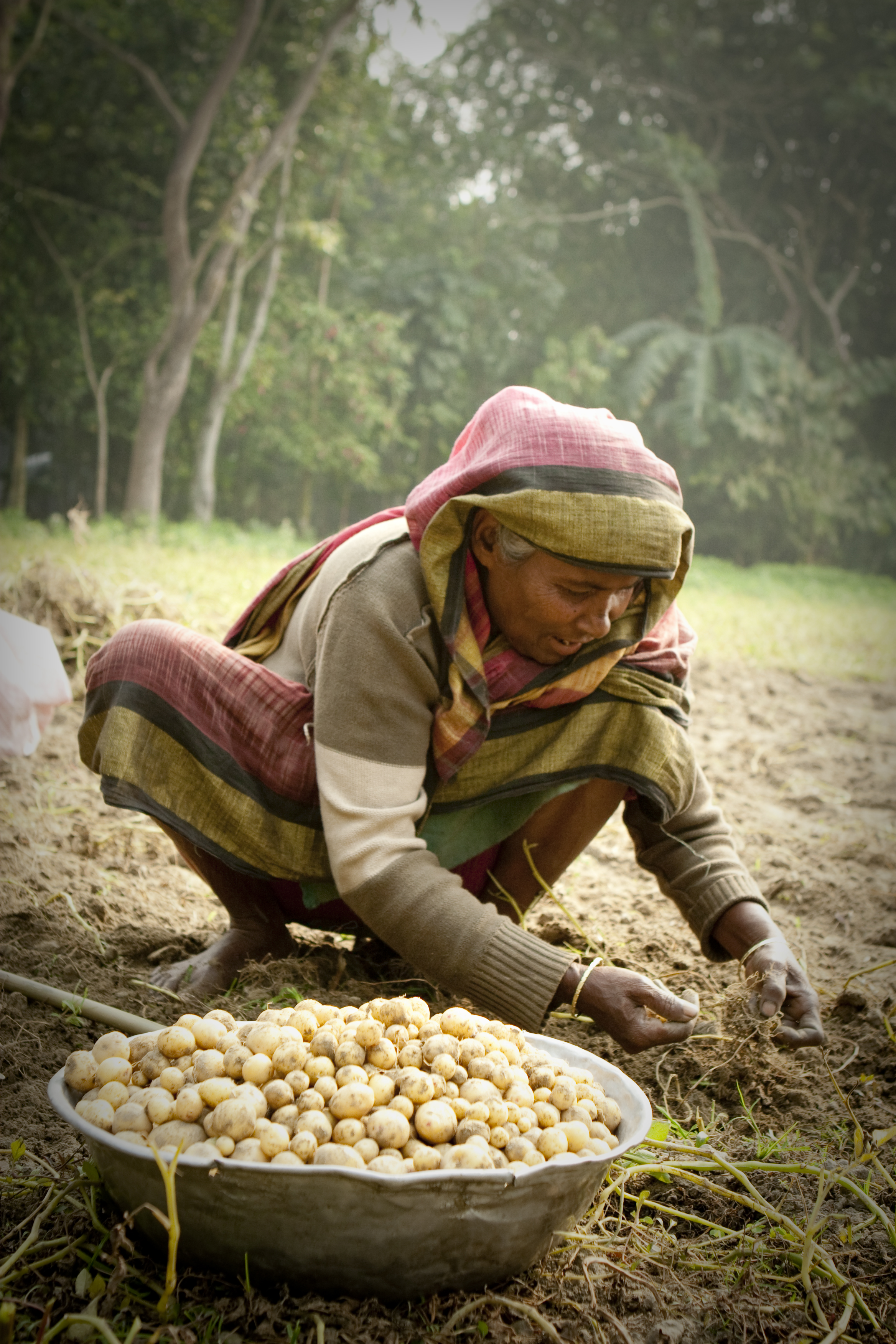
Potato, the second vegetable in the pan, came to the subcontinent late. Banglapedia says it is assumed to have been brought to India by Portuguese sailors at the start of the 17th century, and that its cultivation spread to many provinces under Governor Warren Hastings (1772 to 1785). In Bangladesh it is a winter crop, best planted in the first fortnight of November and harvested in February and March, and it is mostly eaten as a vegetable, in curries with fish, meat or eggs.
By April 2026 the country was growing far more of it than it could eat. According to Bangladesh Bureau of Statistics estimates reported by The Daily Star in August 2025, production in the 2024-25 fiscal year reached a record 1.15 crore tonnes, up 9 percent from 1.06 crore tonnes the year before, on 4.92 lakh hectares. The Tuber Crops Research Centre and the Bangladesh Cold Storage Association (BCSA) put total national need at just over 90 lakh tonnes, including about 10 lakh tonnes kept as seed. BCSA put farmgate prices at that time at 14 to 15 taka a kilogram against production costs of 25 to 27 taka.
The 2025-26 harvest was hit by weather. Heavy rain in mid-March 2026 flooded potato fields in the north; The Daily Star reported on 15 March that about 49 millimetres fell in Rangpur over three days, that 90 hectares of potatoes were affected in Joypurhat and that potatoes on about 6,000 hectares in Thakurgaon were still unharvested. In a letter to the Ministry of Agriculture dated 25 March, BCSA estimated that about 45,000 hectares of potato land had been damaged across twelve northern districts, with losses of about 675 crore taka, and said farmers with rain-damaged potatoes were selling at 5 to 6 taka a kilogram against an average cost of about 16 taka. The association also wrote that 2025 production of 1.12 crore tonnes had exceeded demand by about 22 lakh tonnes.
District reports told the same story. In Thakurgaon, where farmers planted 28,285 hectares against a target of 28,000 and the production target was 7 lakh tonnes, one grower told Prothom Alo on 16 March that a kilogram cost him 15 taka to produce but sold for 9 to 10 taka; the district's deputy director of agricultural extension said the area grew more potatoes than it needed and that consumption had to rise for farmers to get a fair price. In Rajshahi, where the potato area fell to 34,280 hectares from 38,500 the year before, Prothom Alo reported on 28 March that the price of a jute sack had risen from 75 to 80 taka the previous year to as much as 195 taka, and that the potato price had dropped from 16 to 13 taka a kilogram in two days. A recipe that puts potato on the lunch plate in April was, in that season, also a use for a crop the country had in abundance.
Posto: a Bengali staple from a restricted plant
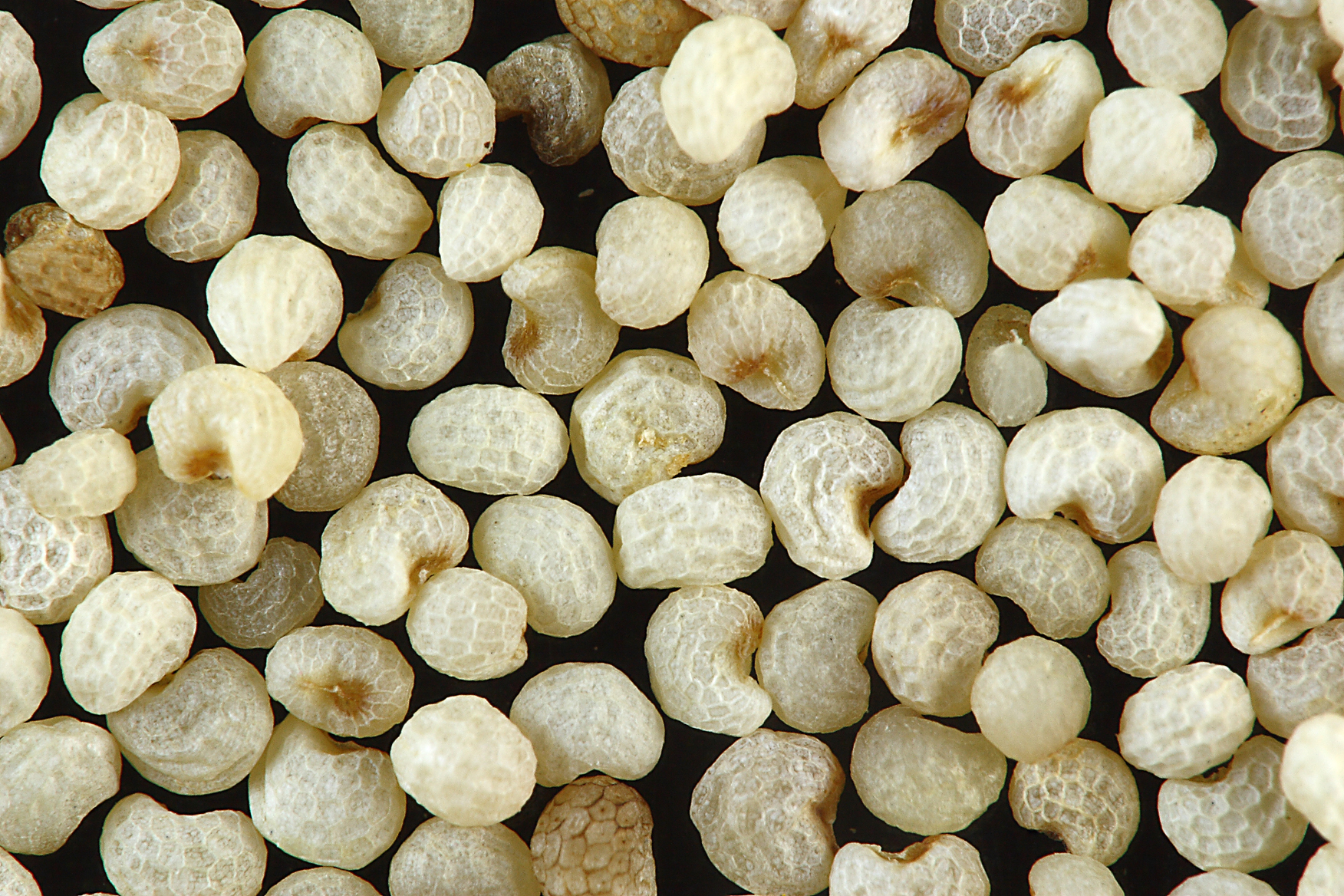
Posto is the Bengali name for poppy seed, the seed of the opium poppy, Papaver somniferum. In Bengali cooking the white seeds are ground to a paste and added for thickness, texture and flavour. Aloo posto, potato in poppy seed paste, is the best-known dish, and the same base is used with onion, pointed gourd (potol posto), ridge gourd (jhinge posto), chicken and prawns. Posto is also fried into fritters, posto bora, and eaten raw as kacha posto bata, the paste mixed with mustard oil, chopped green chillies and onion and eaten with rice, a dish popular in West Bengal and in Bangladesh. The seeds are tiny: about 3,300 of them weigh a gram.
In Bangladesh the seed is not an ordinary commodity. When customs officers at Chattogram seized about 25 tonnes of poppy seeds worth about 6.5 crore taka in October 2025, a consignment from Pakistan that had been declared as bird food, the deputy commissioner of customs told The Daily Star that importing poppy seeds was completely prohibited under the Import Policy Order 2021-2024, and that if the seeds were able to germinate they would fall under Class A narcotics under the Narcotics Control Act, 2018. Samples were tested by the Plant Quarantine Wing at Chattogram port, the Nanotechnology Centre of Dhaka University and Khulna University of Engineering and Technology.
The seed itself is not a drug, but it can carry traces of one. The European Food Safety Authority (EFSA), in an updated scientific opinion published on 16 May 2018, explained that poppy seeds do not contain opium alkaloids such as morphine and codeine, but can become contaminated with them through pest damage and during harvesting. EFSA confirmed an acute reference dose of 10 micrograms of morphine per kilogram of body weight, and found that eating seeds from high-alkaloid varieties grown mainly for pharmaceutical use would exceed it in most age groups, while seeds of varieties grown for food could exceed it only at high levels of consumption. The three tablespoons of paste in a family-sized pan of jhinge-aloo posto are a cooking quantity, but it is one reason to buy posto from a trusted seller.
Photo: Biswarup Ganguly / Wikimedia Commons (CC BY 3.0)
Sources: Jagonews24, Prothom Alo, The Daily Star, Bangladesh Meteorological Department (as reported), Food Composition Table for Bangladesh (Institute of Nutrition and Food Science, University of Dhaka, 2013), Banglapedia, World Vegetable Center study in Agriculture (2020), European Food Safety Authority, Wikipedia



Comments
(0)