
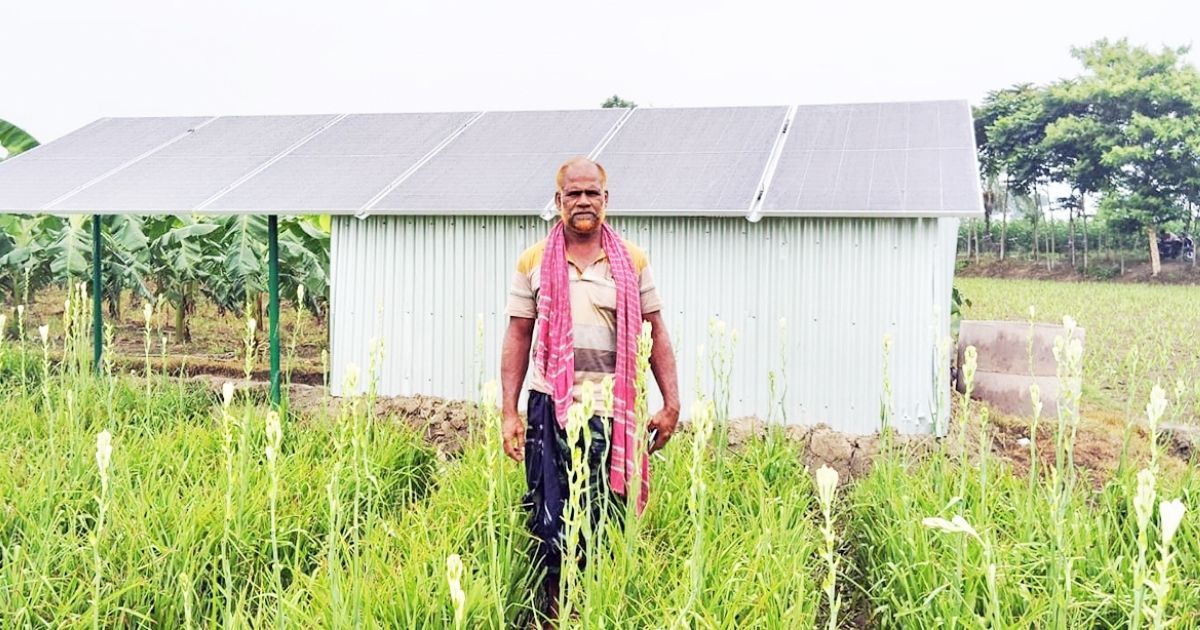
With fuel and electricity costs making irrigation a heavy burden, smallholders in Jhenaidah are turning to solar-powered pumps. Thirty-six have already been installed in Sadar, Kotchandpur and Maheshpur upazilas — three, one and 32 respectively — and installation is being extended to other parts of the district in stages.
The pumps are going in under the SMART project, financed by the World Bank with technical support from the Palli Karma-Sahayak Foundation (PKSF) and implemented by the Rural Reconstruction Foundation (RRF). Farmers using them say running costs are lower than for diesel-driven irrigation, and that besides watering their own land they can earn extra by irrigating neighbours' fields — an opening the project has created above all for flower growers along the border in Maheshpur.
Habibur Rahman, a farmer in Jhenaidah Sadar, said his solar pump cost Tk 170,000, of which Tk 45,000 came as a grant from RRF's SMART project. Sadikul Rahman of Maheshpur installed his with a project loan and grant and now irrigates 15 bighas of other farmers' land besides his own; RRF, he said, is working with flower growers in the border area for the first time. Flower grower Gafur Mia said he now pays nothing for fuel or electricity and earns extra income as well.
Dr Asit Baran Mondal, senior assistant director at RRF, said 36 pumps had been installed with PKSF's support and more than 100 more were planned. Irrigating a bigha used to cost Tk 400-500; with a solar pump it costs about Tk 200, cutting farmers' outlay and reducing environmental harm at the same time.
Where diesel prices and power cuts make boro-season irrigation uncertain, farmer-owned solar pumps in this south-western district are turning growers into water sellers — a model the project intends to spread across a hundred more units. The report is by Dainik Bangla.
Source: Dainik Bangla

Comments
(0)