
Shah Alam now has an orchard of various fruits, including more than 700 malta trees, on 7 bighas of land, and local young people have set up more than 150 orchards with malta saplings from him.
Malta farming is becoming popular in Jhalokati. The soil here suits malta and yields are good. Because it brings high profits from little land and very small investment, Jhalokati's young people are turning to commercial malta growing. The agriculture department says it is encouraging farmers and giving regular advice to expand malta farming in future.
The district's largest orchard
The largest malta orchard in the district is Shah Alam Howlader's Sharina Malta Bagan in Siddhakathi union of Nalchity upazila. Out of curiosity he first planted 100 malta saplings as a trial in the yard of his own home and made a good profit. As little land and money brought high returns, he later leased four acres and set up another commercial malta orchard. Seeing his orchard, many in the upazila are now interested in malta farming. Being free of chemicals, the fruit is in good demand in the market, and malta sells from the orchard at Tk 200 a kg.
Shah Alam Howlader, owner of Sharina Malta Garden in Nalchity, says he became interested in malta after seeing a television report on malta farming in Pirojpur district. In 2016 he started a malta orchard with 100 trees on just 10 decimals of land given by his father, and has never looked back. In just three years he has become a successful malta grower, selling about Tk 4 lakh worth of malta from his orchard a year. He now has an orchard of various fruits, including more than 700 malta trees, on 7 bighas of land, and more than 150 orchards have been set up by local young people with saplings from him.
Besides malta, Shah Alam's orchard grows 80 varieties of local and foreign mango, including coloured mangoes, Saudi Arabian dates, sweet oranges and Dinajpur litchi. But he has paid special attention to malta, growing three varieties: BARI Malta-1 (Poysa malta), Berikata malta from Thailand and Prolito malta from India. Although trees start fruiting within two years of planting, a tree really begins bearing fully at three years, and a three-year-old mature tree carries 400 to 450 fruits a season. Five people work to look after his orchard. Shah Alam's malta goes beyond his own area to the fruit markets of neighbouring Bakerganj and Barishal city. Fruit traders from far away buy malta from his orchard to sell, and many book in advance.
With government support and low-interest bank loans, he dreams of expanding his malta orchard further and spreading his nursery across the country. He also wants to set up a cattle farm.
Shah Alam also said: "My orchard will not only have poison-free malta; in a little while Saudi dates and foreign mango varieties will start bearing too. I want the unemployed young people of the area to follow my example, set up orchards like this and become self-reliant. Anyone can come to me for advice."
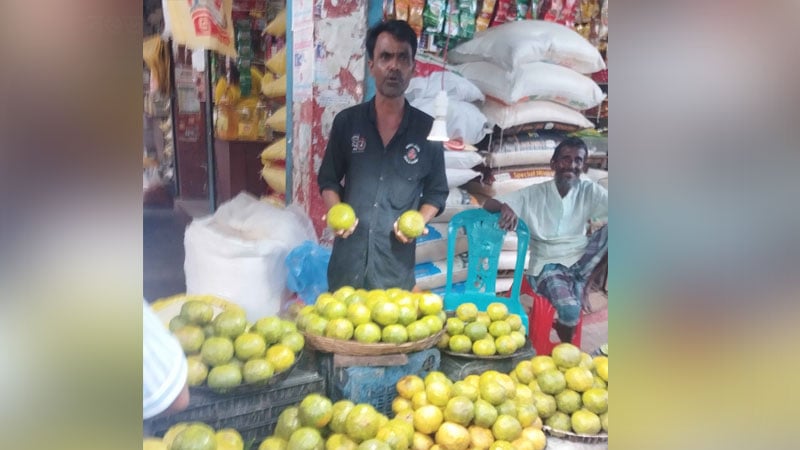
On a visit to his orchard, Shah Alam was busy selling malta to wholesalers, who had come from various places and were weighing and packing the fruit.
Other growers and officials
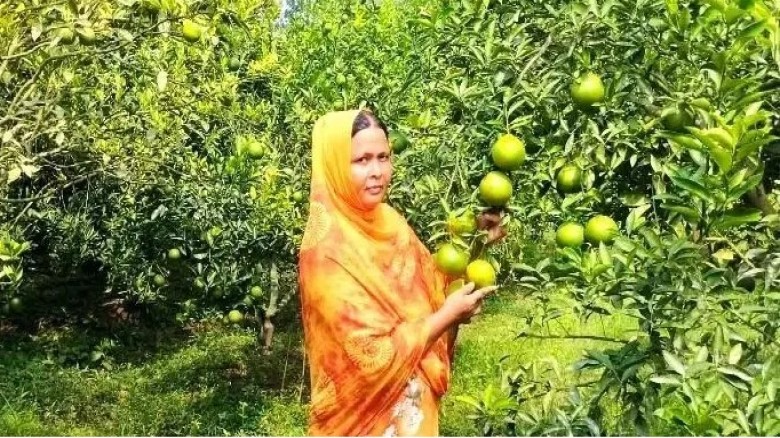
In Bikna village of Jhalokati Sadar upazila, Khandaker Iqbal Mahmud was found tending the malta trees in his orchard. He planted 800 malta saplings on three acres in 2017, and every tree has borne fruit since last year. He says the yield this year is much better than last year, and he hopes to sell Tk 5 to 7 lakh worth of malta. He plans to expand the orchard further in future.
Nalchity Upazila Agriculture Officer Israt Jahan Mili said: "The Nalchity agriculture department buys saplings from the orchard of Shah Alam, the largest malta grower in the upazila, and distributes them free to farmers. The malta grown in Shah Alam's orchard is large and sweet. He keeps in constant touch with our agriculture office, and we always advise him on applying modern techniques."
Md Fazlul Haque, deputy director of the Department of Agricultural Extension (DAE) in Jhalokati, said: "The young people of the area are turning to malta farming because it is highly profitable with little capital. We are encouraging malta growers and giving them every kind of help. This year malta has been grown commercially on about 30 hectares in the district."
Source: Dhaka Tribune. First published in Bengali on The Agro News.
Comments
(0)