
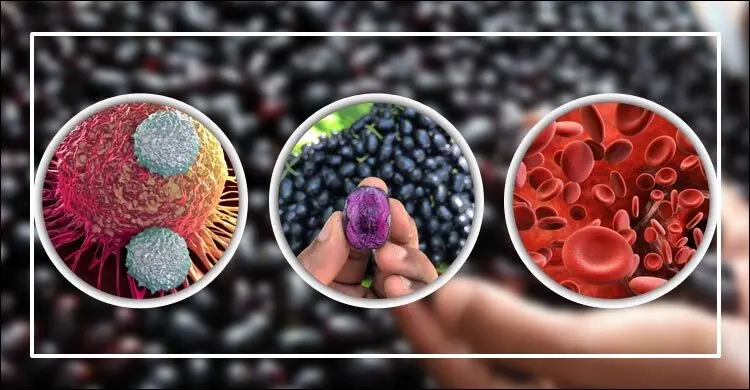
The sight of small, black, sweet-and-sour jamun makes everyone's mouth water. But the fruit is valued for more than its taste: it has countless health benefits. Jamun contains vitamin C, iron, potassium, antioxidants and other nutrients, and it helps relieve stomach ache, diabetes and rheumatic pain.
The fruit also eases dysentery, bloating and other digestive problems. It is very useful for keeping the body cool in hot weather: because it contains minerals such as phosphorus and iodine together, eating it keeps the body hydrated. A small amount of jamun every day is recommended to keep cool in summer.
Why jamun is good for you
The various properties of jamun boost the body's immunity. It also has antibacterial properties that help fight internal and external infections. It contains essential minerals such as iron, calcium, magnesium and potassium, which strengthen bones and teeth.
Jamun also helps prevent cancer, purifies the blood and helps stop various infections. It has antibacterial, anti-infective and anti-malarial properties, and contains malic acid, tannins, gallic acid, oxalic acid and betulinic acid.
Jamun is rich in dietary fibre, which activates the liver and improves digestion, and it relieves problems such as constipation. But a few rules should be followed when eating it:
Rules for eating jamun
- Do not eat more than 100 grams of jamun a day.
- Always wash jamun well in salt water before eating.
- Never eat jamun on an empty stomach.
- Do not drink milk for about two hours before or after eating jamun.
- Pregnant and breastfeeding women are better off not eating jamun.
- Diabetes patients must eat jamun only in small amounts.
- Besides the fruit, you can also take jamun honey and vinegar.
- Dried and powdered jamun leaves and bark are also beneficial.
Citing India.com and NDTV.
Source: Jagonews24. First published in Bengali on The Agro News.


Comments
(0)