
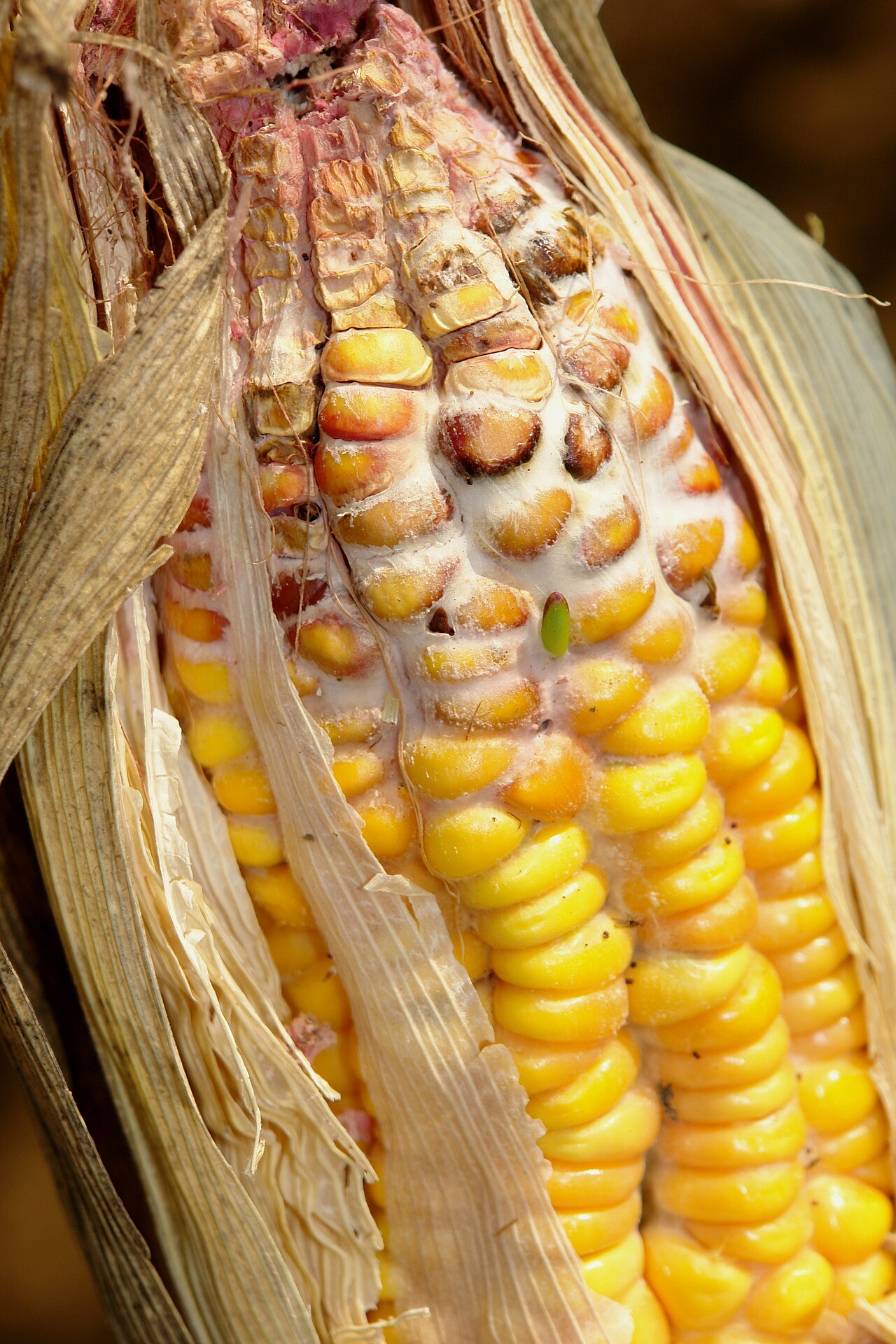
Heavy September rain across parts of the US Corn Belt has left farmers facing grain quality problems as harvest gets going, DTN reports. "Of the 58 weather stations we have in Iowa, nearly three-quarters of them reported at least 4 inches of rain in September," said Gretchen Mosher, who manages the Grain Testing Laboratory in Iowa State University's Department of Agricultural and Biosystems Engineering, with some stations recording 400% to 600% of normal. The wet weather has favoured mould, fungus and seed diseases in both corn and soybeans.
Much of the crop is still in the field. The USDA Crop Progress report of 5 October showed only 7% of Iowa's corn and 5% of its soybeans harvested, against five-year averages of 20% and 38%.
In corn the main worry is field mould and ear rot, which cut yield and grain quality; some ear-rot fungi also produce mycotoxins that are hazardous to animals and people, and contaminated grain must be kept separate. Much of the corn will also be wetter than normal. "Fungus likes wet and warm, so we need to get that corn cool and dry as it's coming out of the field," Mosher said.
Soybeans were often still filling pods when the rain began, so pods and seeds may split or sprout, leaving beans open to mould. One problem is purple seed stain, caused by the fungus Cercospora kikuchii, which discolours beans and can reduce germination. It does not cut yield but can lower value through dockage, as can splits and damaged kernels. Drying soybeans is a balancing act because of their oil, Mosher said: not too hot, but quickly.
Her advice is to harvest infected fields first and dry the grain as soon as possible, because quality will not improve in storage, and to check bins more often over winter, since out-of-condition grain raises the risk of problems such as bridged grain and makes bins less safe.
Photo: Scot Nelson / Wikimedia Commons (CC0)
Source: DTN / Progressive Farmer
Comments
(0)