
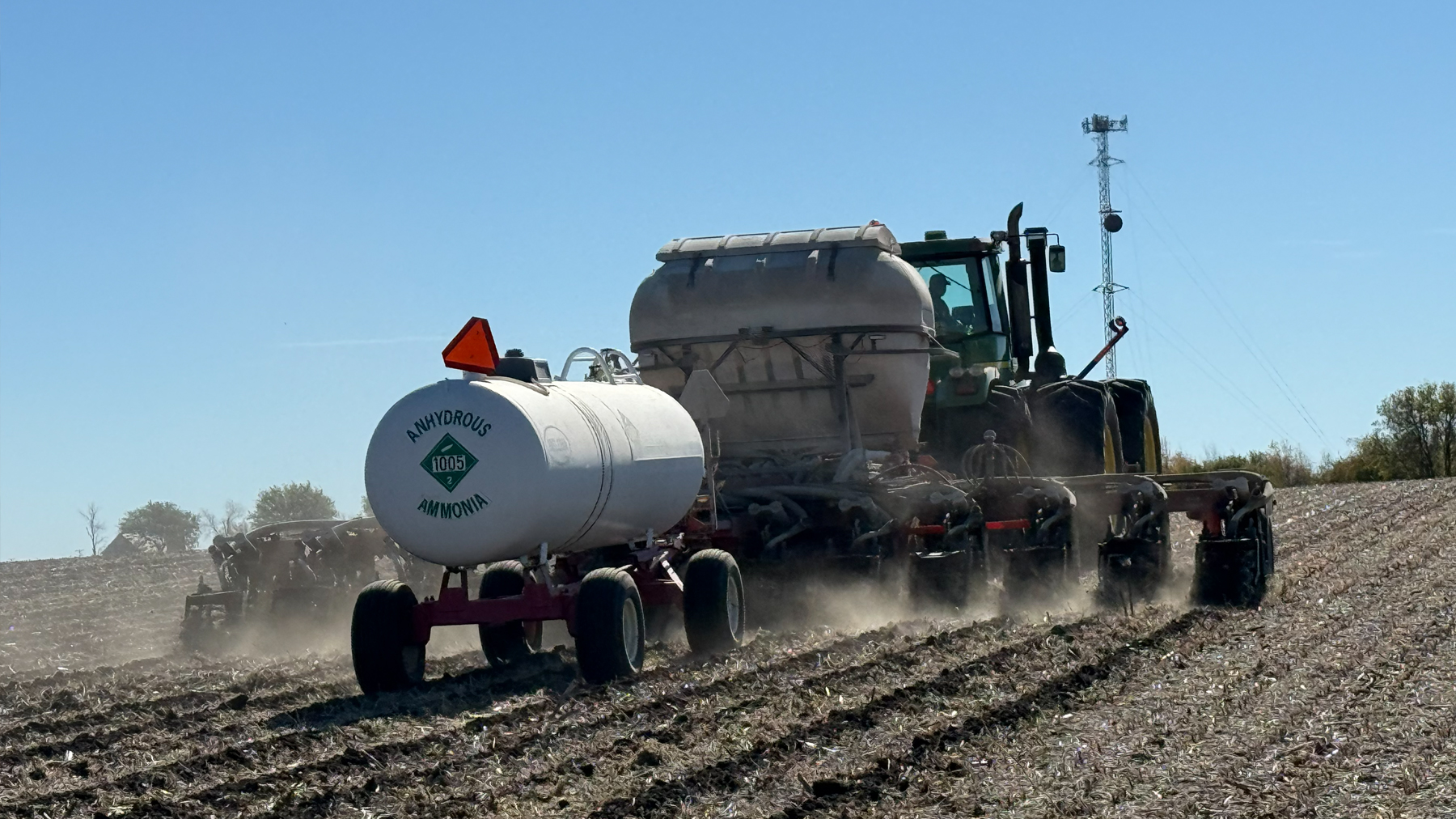
Iowa corn growers still favour autumn nitrogen for its lower price, spare time and machinery, better field conditions and one less spring job, but it only pays off if the nitrogen is still in the field at planting, Iowa State University Extension nutrient management specialist Richard Roth writes in Farm Progress.
The first rule has not changed in decades: do not start anhydrous ammonia applications until the soil temperature at four inches is below 50 degrees Fahrenheit and trending colder. Cooler soils slow the conversion of ammonium to nitrate, the form most easily lost over winter and early spring. Roth points growers to the Iowa Environmental Mesonet's soil temperature tool because readings can swing quickly.
Moisture matters too. Into dry, cloddy soil the knife track may not seal and ammonia can escape at the injection point; into soil that is too wet the track smears and stays open. Roth's advice is to wait for the profile to be wetted five or six inches deep and to apply at the recommended six to eight inches rather than going shallower. Nitrification inhibitors — nitrapyrin, pronitridine and DCD — all slow the conversion to some degree, his research has found, but they are an added layer, not a substitute for proper timing.
The column devotes a section to safety. Anhydrous ammonia pulls moisture from skin, eyes and airways and causes chemical and cold burns; every nurse tank should carry at least five gallons of emergency water, with a spare five gallons in the cab in freezing weather, and flushing for a full 15 minutes is the single most important response to exposure. Nobody should attempt a rescue in a continuous release without breathing apparatus.
For rate decisions Roth recommends N-FACT, the Iowa Nitrogen Initiative's free consultation tool, which draws on more than 1,400 on-farm nitrogen trials run across the state since 2022 and lets farmers compare scenarios by field, weather, residual soil nitrate, planting date and prices.
Feeding that tool is a free Nitrogen Soil Sampling Project run by the Iowa Nutrient Research and Education Council with the state agriculture department. It covers 22 counties in the Greater Des Moines watershed and four in the Middle Cedar watershed; participants receive field-level residual nitrogen results at no cost in return for sharing rotation, manure and cover crop history. Enrolment is open at iowanrec.org and is limited to 250 fields statewide.
Source: Farm Progress

Comments
(0)