
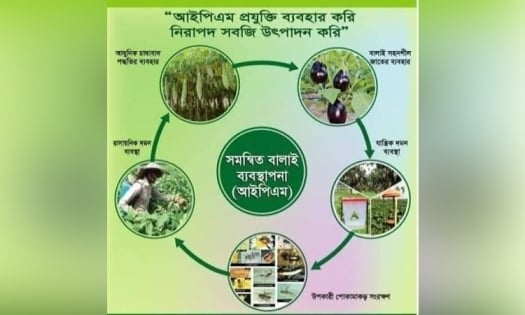
Agricultural researchers and experts say integrated pest management (IPM) must be spread widely to reduce dependence on chemical pesticides and ensure safe food. Indiscriminate and excessive pesticide use, they say, leaves harmful residues in crops, pollutes soil, water and air, and harms beneficial insects, aquatic animals and fish.
Several non-chemical methods are already used in Bangladesh: sex pheromone traps, yellow sticky traps and light traps. Perching is another eco-friendly method against rice pests: bamboo tips, twigs or branches are stuck into the paddy so that birds perch on them and eat the insects. Agronomists consider it particularly effective against stem borers.
Obaidur Rahman Mondol, director of the field services wing of the Department of Agricultural Extension (DAE), said IPM keeps pests and diseases below the economic damage threshold without polluting the environment, using beneficial insects, pest-tolerant varieties, modern cultivation practices and, as a last resort, timely and judicious pesticide use.
Professor Dr Khandaker Shariful Islam, former head of entomology at Bangladesh Agricultural University and now dean of agriculture at City University, said pesticide residues threaten human health and the environment, and uncontrolled use destroys natural enemies of pests and upsets the balance of nature. Experts note that many farmers do not know correct doses, timing or safe handling, and that unapproved products and wrong doses build pest resistance.
Md Rezaul Islam, deputy project director of a project developing and spreading biopesticide-based technologies for vegetables, fruit and betel leaf, said IPM aims to control pests with less pesticide and to prioritise biopesticides and biological control.
Md Majedur Rahman, DAE additional deputy director (pesticide quality control), said a shortage of IPM projects at the department over nearly three years has left gaps in safe-crop work in the field and in farmers' and officials' knowledge of IPM, and new projects are needed quickly. Experts say farmers need workable alternatives and training, not just advice to spray less.
The report is from Bangladesh Sangbad Sangstha (BSS).
Source: BSS

Comments
(0)