
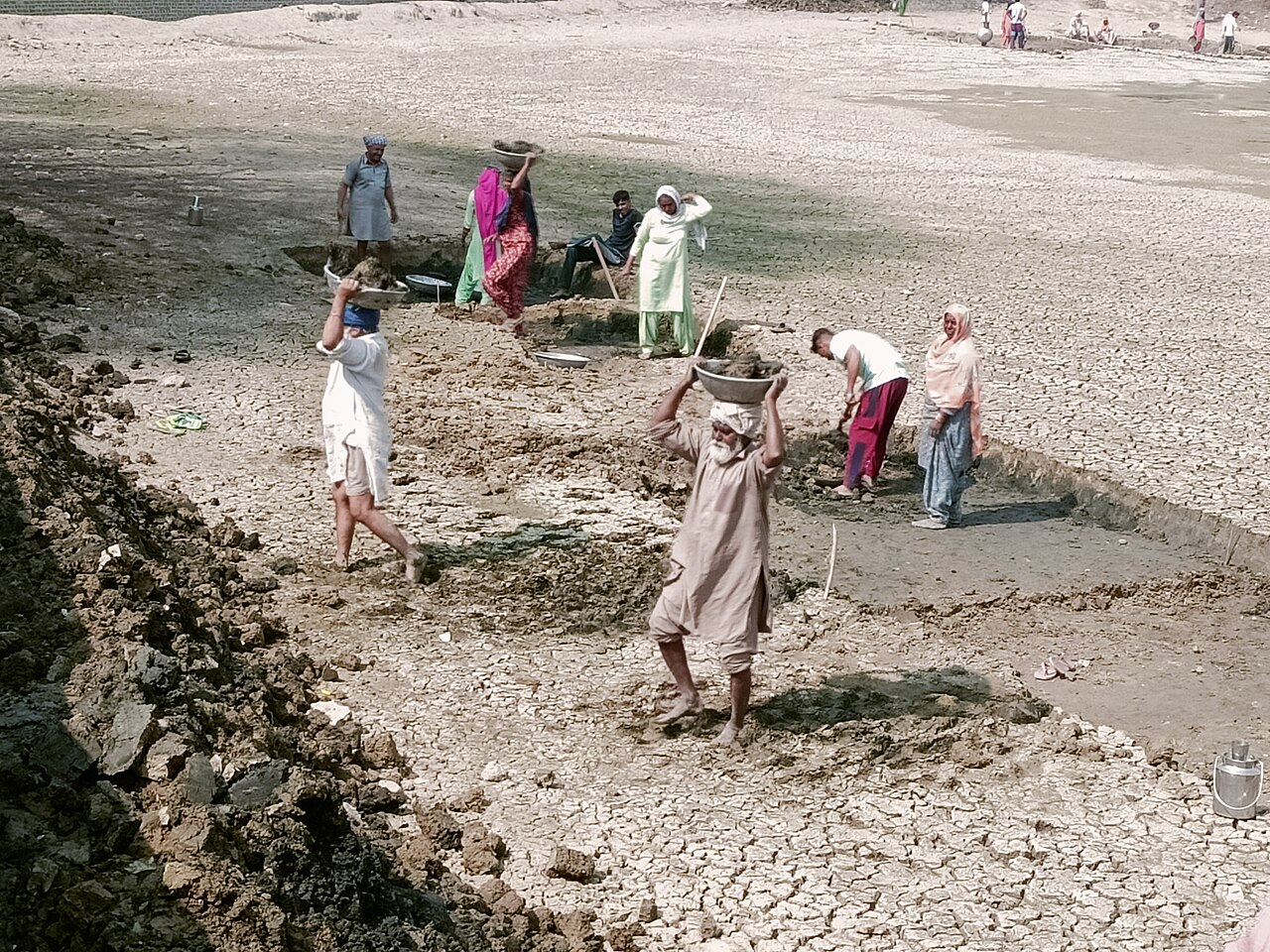
India's Ministry of Rural Development has notified 375 works that may be carried out under the Viksit Bharat Guarantee for Rozgar and Ajeevika Mission (Gramin) Act, 2025, known as VB-G RAM G, a 41% increase on the 266 works allowed under the previous MGNREGA framework, Rural Voice reported on 6 October.
Agriculture and allied activities account for 181 of the 375 works, covering water, land development, plantations, livestock and other productive assets that can directly benefit farmers. The new schedule groups works under four pillars: water security, core rural infrastructure, livelihood-related infrastructure, and special works for extreme weather and disaster preparedness.
Water security has the most works, 128, including check dams, gully plugs, underground dykes, recharge shafts and injection wells, river and channel rejuvenation, reclamation of waterlogged land, renovation of field channels, drip and sprinkler irrigation, rooftop rainwater harvesting, tankas, ice stupas and artificial glaciers.
Livelihood works rise to 98, or 26% of the total compared with 1.1% before, and include agro-processing, cleaning, grading and packaging facilities, cold storage, dairy infrastructure, mushroom and sericulture sheds, polyhouses, aquaculture structures and market yards. Core rural infrastructure has 111 works, from solar street lights and waste recycling plants to veterinary and health centres, and a new disaster category has 38 works such as flood shelters, embankment strengthening and forest-fire management.
The framework tags 107 works for the poorest and vulnerable households, 68 of them for individual beneficiaries, and 36 each for women's and youth groups. All works are to be planned through Viksit Gram Panchayat Plans approved by the Gram Sabha and tracked digitally through the Viksit Bharat National Rural Infrastructure Stack, which the government says will prevent duplicated investment.
Photo: Mulkh Singh / Wikimedia Commons (CC BY-SA 4.0)
Source: Rural Voice

Comments
(0)