
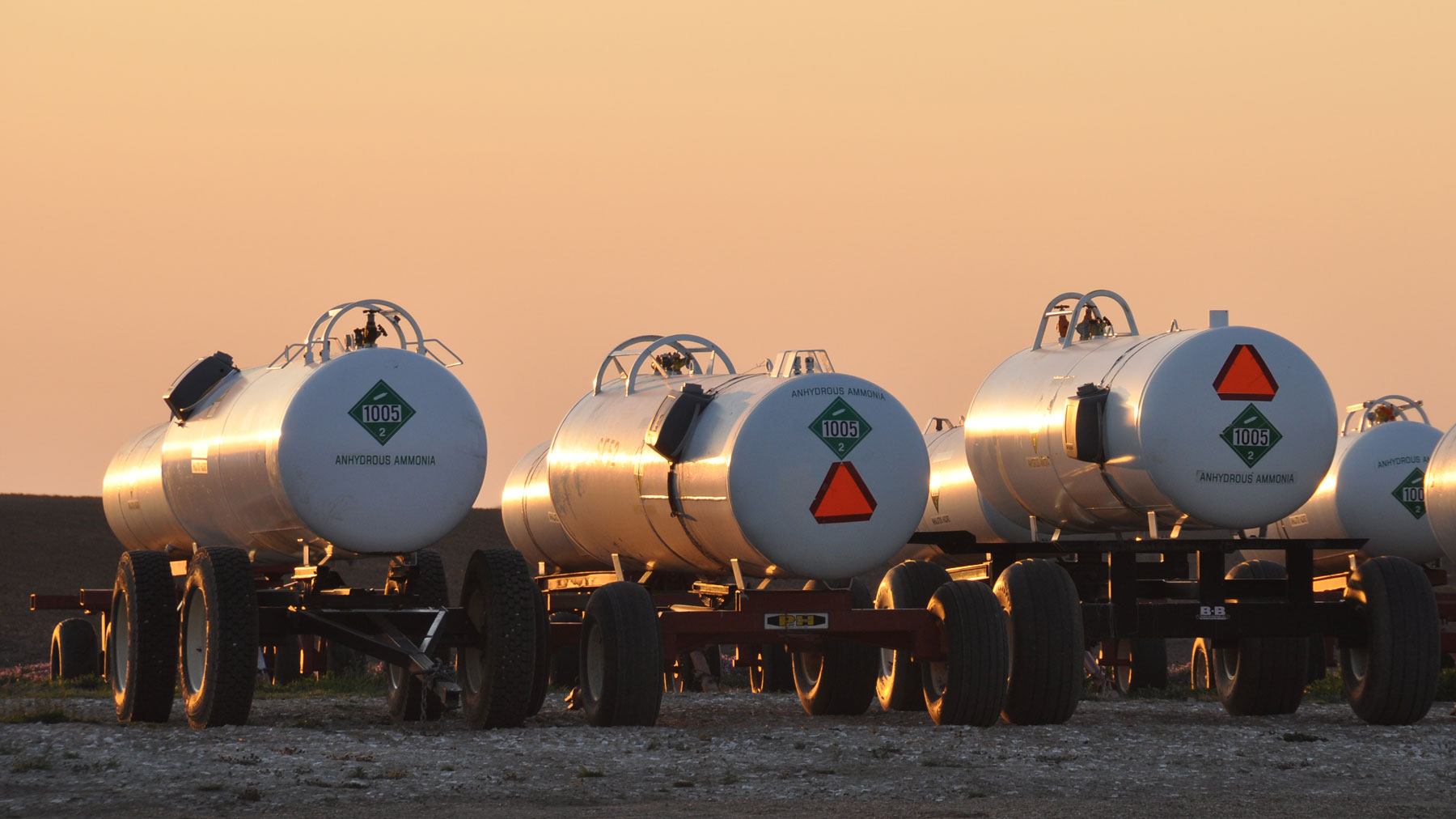
Nitrogen is the biggest factor under a farmer's control that drives corn yields, University of Illinois crop physiologist Fred Below told Farm Progress, and no grower can do without it, even with anhydrous ammonia averaging $1,057 a ton in early July, almost 33% more than a year earlier.
Below's argument rests on the crop's uptake curve. Peak uptake runs from the V8 to the R2 growth stages, and a 230-bushel crop takes up about 5 pounds of nitrogen a day for roughly 21 days. Yield cannot rise without a matching rise in that peak uptake, so the fertiliser must be there when the plant wants it. His first recommendation is not to apply in the autumn unless there is no alternative, and to use a nitrification inhibitor if that cannot be avoided, because the crop will not touch the nitrogen for months.
Where a farmer can split applications, Below advises 60% before or at planting and the remaining 40% as a sidedress.
How much to apply is the job of the maximum return to nitrogen calculator, maintained by Illinois soil scientist John Jones with colleagues at several universities. Corn following soybeans draws about half its nitrogen from the soil and half from fertiliser, Jones said; corn on corn takes 60% to 65% from fertiliser. The MRTN rate is the most economical rate, not the highest-yielding one, and Jones has found the two differ by only about 1.5 to 2 bushels an acre — a gap that widens as fertiliser prices rise or corn prices fall.
In a worked example for central Illinois corn after soybeans, with anhydrous at $892.50 a ton, the calculator recommends 172 pounds of nitrogen an acre at $4 corn and 181 pounds at $5 corn, which at the lower rate means 210 pounds of anhydrous ammonia. The net return to nitrogen in that scenario ranges from $340.52 to $449.50 an acre depending on the corn price.
Below's team is also testing a controlled-release nitrogen that responds to rainfall and temperature; this year's data are not in, but he expects a yield advantage. The group has already found that corn hybrids with wider root angles respond better to sidedress applications, and is evaluating nitrogen-fixing products.
Source: Farm Progress


Comments
(0)