
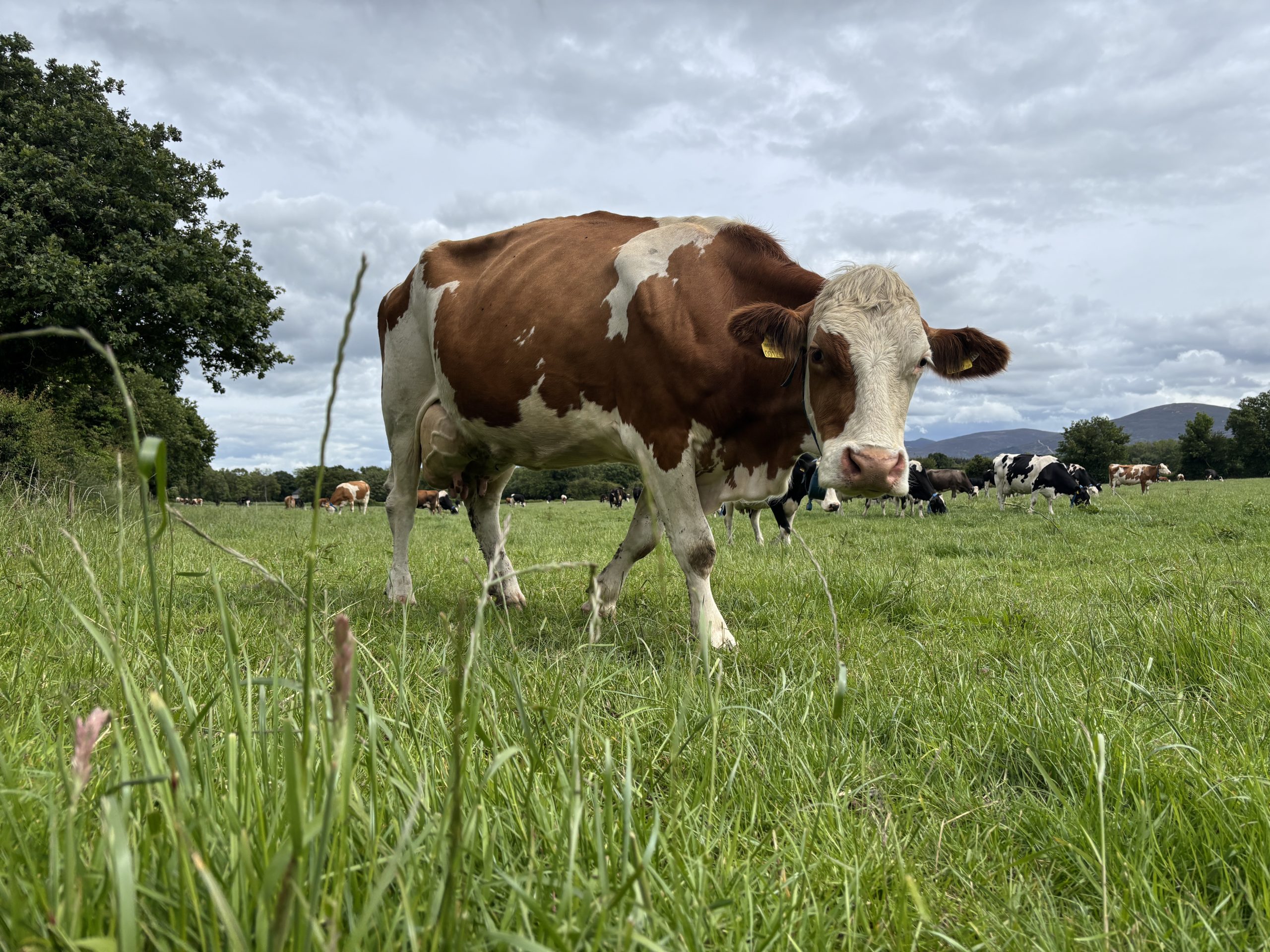
As spring-calving herds move into the last stage of lactation, the Irish Cattle Breeding Federation's (ICBF) milk-recording figures give dairy farmers a national yardstick for what their cows should be producing before the expensive winter months begin.
The latest ICBF data show 1,119,949 cows recorded so far in 2026, 0.8 per cent fewer than the 1,128,467 recorded at the same point in 2025. Some 8,902 herds have completed a milk recording this year, down from the 9,069 that had recorded by the week of the Ploughing Championships last year.
Between 8 and 18 September, 1,128 herds recorded, covering 123,544 cows, with an average herd size of 110 cows. Their average yield was 19.16 kg of milk per cow a day at 4.61 per cent fat and 3.86 per cent protein, which works out at about 1.62 kg of milk solids per cow per day.
The average somatic cell count among herds recording in the past ten days stood at 187,000 cells/ml. It has been creeping up over recent weeks, Agriland noted, and is something farmers should watch as the season closes.
Milk recording costs about €12 per cow a year and can disrupt the milking routine at a time when labour is short. The pay-off, the report argued, is constant tracking of each cow's cell count, identification of repeat offenders, a lower herd SCC and a better milk price, plus a farm summary of mastitis control that makes breeding and culling decisions data-driven.
Reported by Cathal O'Shea for Agriland.
Source: Agriland

Comments
(0)